17 Must-Visit Tourist Spots in Cebu City and Beyond
This article may contain affiliate links. This means we receive a small commission whenever you book or purchase something through our links (at no extra cost to you!). You can find more information in our disclaimer.
Cebu City is often the starting point for travelers visiting Cebu Province.
While many people head straight to Moalboal, Oslob, Bantayan Island, or Malapascua, spending at least a day or two in the city is worth your time.
Beyond being a transportation hub, Cebu City has a good mix of historical landmarks, mountain viewpoints, local food, museums, and modern attractions that suit almost every type of traveler.
I live a ferry away from Cebu Province and have visited Cebu City several times over the years for leisure trips or as a layover before going to another province or country.
Last summer 2026, I booked a joiner’s day tour in Cebu City where I was able to visit the places I missed on my previous trips.
I say, some places have changed a lot, while others have remained the same despite the city’s continuous growth.
If you’re planning your own trip, this guide covers the best tourist spots in Cebu City, along with practical tips to help you build your itinerary.
17 Must-Visit Tourist Spots in Cebu City
1. Sirao Garden

🎟️ Entrance Fee: ₱100.00
🕖 Opening Hours: 8:00 AM – 5:30 PM Daily
If you search for tourist spots in Cebu City, Sirao Garden will almost always appear near the top of the list.
Located in the mountain barangay of Sirao, this attraction became popular because of its colorful flower gardens and photo spots overlooking the mountains.
Many people call it the “Little Amsterdam of Cebu” because rows of celosia flowers bloom throughout the property during the right season.
Aside from the flowers, you will also find different viewing decks, decorative installations, swings, giant hands, and several areas designed for taking photos.
This tourist spot in Cebu City is owned by former flight attendant Maria Elena Sy-Chua and opened to the public in 2016.


I’ve visited Sirao Garden more than once, and one thing I noticed is that the place keeps adding new attractions. I also found out that there are actually two Sirao Gardens.
My first visit was to the newer garden, and on my recent trip, I finally visited the original one. If you’re using Google Maps, double-check which one you’re heading to, since they are separate attractions and can easily be confused.


Since Sirao sits in the mountains, you can easily combine it with nearby Cebu City attractions like Temple of Leah and Tops Lookout. Many travelers include all three in one trip.
📌 Travel Tip: Arrive early in the morning because the weather is cooler and you can avoid the larger crowds that usually arrive later in the day. Also, bring a hat or umbrella if you’re visiting around noon because most areas have limited shade.
2. Tops Lookout

🎟️ Entrance Fee: Adults and above 2 years old – ₱100.00
Senior and PWD – ₱70.00
Below 2 years old – FREE
🕖 Opening Hours: 24 Hours Daily
Located high above the city, Tops Lookout has been a favorite tourist spot in Cebu City, especially if you want to end the day with a good sunset and panoramic views of Cebu City, Mandaue, Lapu-Lapu, and the surrounding coastline. Yup, even the famous CCLEX.
During the day, you can clearly see the skyline and nearby mountains. At night, thousands of city lights transform the view into something completely different.


The attraction recently underwent a major redevelopment, so it’s much more organized than before. You’ll now find wider walkways, landscaped areas, restaurants, coffee shops, and a 360-degree view lookout.
One thing I like about Tops is that you don’t need to spend the whole day here. Even one or two hours is enough to appreciate the view and take photos before moving to your next destination.
Plus, it also has a direct daily shuttle service to and from Cebu IT Park for 50 pesos only.
📌 Travel Tip: Bring a light jacket if you’re visiting in the evening. The temperature is usually cooler than in downtown Cebu City.
3. Temple of Leah

🎟️ Entrance Fee: Adults – ₱150.00 | Seniors – ₱120.00
🕖 Opening Hours: 7:00 AM – 10:00 PM Daily
Just a few minutes from Sirao Garden sits one of the most recognizable tourist destinations in Cebu City.
Businessman Teodorico Adarna built the Temple of Leah as a tribute to his late wife, Leah Villa Albino-Adarna.
Because of its grand columns, marble staircases, and Roman-inspired architecture, many first-time visitors compare it to landmarks in Europe. Some people also call it the Taj Mahal of Cebu.
The first time I visited, I honestly spent more time walking around and taking in the details than taking photos. Back then, the second floor was still closed to visitors.
When I returned this year, it was finally open, so it gave me the chance to explore more of the mansion.


One thing many visitors don’t realize is that the temple isn’t just about the architecture.
Every room displays something different or a continuation of the previous room’s collection. You can see massive statues, chandeliers, ceramic pieces, China wares, paintings, and antique furniture.
You’ll also find memorabilia, antique collections, books, paintings, family pictures, and personal belongings that tell more about Leah’s life.


Another interesting thing I recently learned came from an interview with their granddaughter, Filipina actress Ellen Adarna.
She shared that Temple of Leah was never originally intended to become a tourist attraction. It mainly served as a place to keep many of Leah’s personal collections and antiques.


As more people became curious and wanted to see what was inside, the family eventually decided to open it to the public.
Today, you’ll also find several food stalls, a café, and a souvenir shop inside the grounds.
📌 Travel Tip: Visit on a weekday if possible. Weekends can get crowded, especially during holidays and school breaks.
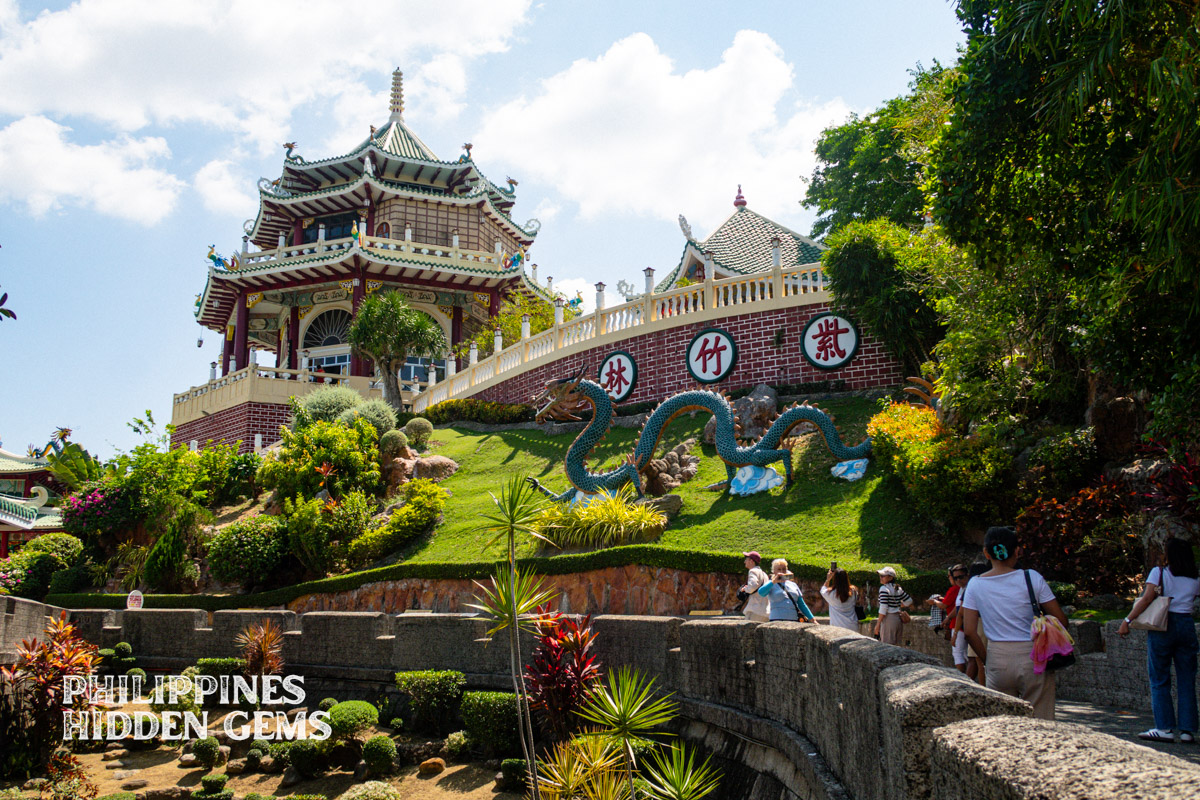
4. Cebu Taoist Temple

🎟️ Entrance Fee: FREE
🕖 Opening Hours: 6:00 AM – 6:00 PM Daily
If you need a quick break from museums and historical landmarks, head to the Taoist Temple in Beverly Hills Subdivision.
This Chinese temple has been one of the most visited tourist spots in Cebu City for years, not only because of its religious significance but also because of its location overlooking parts of the city.
Built in 1972 by Cebu’s Chinese community, the temple welcomes both worshippers and visitors.
Unlike many temples where access is limited, you can walk around most of the public areas as long as you respect the rules.


Keep your voice down, avoid entering restricted sections, avoid taking photos of the insides of the prayer room and saints, and remember that some areas are meant for prayer only.
The architecture itself is worth seeing but, again, be careful of what the dos and don’ts are.
Bright colors, dragon sculptures, intricate carvings, and traditional Chinese details make it different from the churches and Spanish-era structures found around Cebu City.
There is also a souvenir shop where you can get some charms, jades, and wind chimes. I got a keychain and an evil eye bracelet here.
📌 Travel Tip: It’s best to ask permission from the staff if you can take a photo of certain areas or products if you’re in doubt.
5. Cebu Heritage Monument

Located at Parian Plaza, the Cebu Heritage Monument tells the story of Cebu through a massive sculpture featuring important events and historical figures.
Instead of reading about Cebu’s history in a textbook, you get to see scenes carved into one large monument.
It includes Ferdinand Magellan’s arrival, the Battle of Mactan, the first baptism, and other important moments that shaped Cebu and the Philippines.
Since it stands in the middle of the old Parian district, it also serves as a good starting point before exploring nearby heritage sites.
6. Yap-San Diego Ancestral House

🎟️ Entrance Fee: ₱100.00
🕖 Opening Hours: 9:00 AM – 7:00 PM Daily
Speaking of nearby heritage sites, Cebu City not only has the oldest street in the Philippines (Colon Street), but it also has one of the oldest residential houses in the country.
Just a short walk from the monument, the Yap-San Diego Ancestral House dates back to the late 1600s and has remained remarkably well preserved.
Walking inside gives you a glimpse of how wealthy Filipino-Chinese families lived during the Spanish colonial period.
I didn’t get the chance to visit this place on my last trip, but as someone who enjoys visiting museums, it’s definitely on my list for next time.


This ancestral house will probably remind me of the Casa Manila in Intramuros, where rooms are filled with antique furniture, religious images, old photographs, wooden chests, porcelain collections, and household items that have been preserved for centuries.
If you are interested in Cebu’s history, I highly recommend visiting both the Cebu Heritage Monument and the Yap-San Diego Ancestral House on the same trip.
7. Magellan’s Cross

Magellan’s Cross marks one of the most important events in Philippine history.
Portuguese explorer Ferdinand Magellan planted the original cross in 1521 after the first recorded baptism of local rulers and their followers in Cebu.
Today, the cross sits inside a small octagonal pavilion beside the Basilica Minore del Santo Niño. A painted ceiling above the cross illustrates the arrival of Magellan and the historic baptism.

This place has become one of those places that both first-time visitors and locals continue to visit for photography and simply because it is one of Cebu’s most recognizable landmarks.
Since the site attracts many tourists throughout the day, you should visit early in the morning. It gives you more space to appreciate it and take photos.
Trust me, my photos have photobombers because we got here after lunch.
8. Basilica Minore del Santo Niño

Just a few steps away stands the Basilica Minore del Santo Niño, the oldest Roman Catholic church in the Philippines.
The church houses the image of the Santo Niño, which Ferdinand Magellan presented to Rajah Humabon and Queen Juana during their baptism.
Today, millions of devotees continue to visit the basilica every year, especially during one of Visayas’ most famous festivals, the Sinulog Festival held every January.
Regardless of your religion, the basilica is worth visiting because of its historical and cultural importance.
Inside, you will notice beautiful stained-glass windows, religious artworks, and a peaceful atmosphere despite the large number of visitors.
I’m a Roman Catholic, but I haven’t had the chance to attend Mass here or experience the Sinulog Festival yet. Even so, both of my visits gave me a glimpse of how devoted many Filipinos are.
I saw some devotees walking on their knees from the church entrance toward the altar while praying, while others quietly touched the religious images and offered their own prayers.


Outside the church, you will also often see devotees lighting candles and offering prayers at the candle area.
Watching locals and pilgrims carry out these traditions gives you another perspective on how deeply rooted the Santo Niño devotion remains in Cebu, probably in the whole country.
If this is your first time visiting Cebu City, I suggest exploring this area on foot.
Besides Magellan’s Cross and the Basilica, you will also find Plaza Independencia, Fort San Pedro, and several museums just a short walk away.
9. Fort San Pedro
Just a short walk from Magellan’s Cross stands Fort San Pedro, the oldest triangular fort in the Philippines.
The Spanish started building the fort in 1565 under the leadership of Miguel López de Legazpi to help protect Cebu from attacks.
Over the years, it served different purposes, including a military defense structure, a prison, and an army camp. Today, it functions as one of the city’s most important historical landmarks.
Although the fort is not very large and I wasn’t able to personally visit the place, just passing by and seeing it from afar, I saw that the thick coral stone walls were well preserved.
I also imagined the inside to be similar to Fort Santiago, where you can see old cannons and preserved courtyards that give you an idea of what it looked like during the Spanish colonial period.
If you’re already visiting Magellan’s Cross, the Basilica Minore del Santo Niño, and Plaza Independencia, it only makes sense to include Fort San Pedro since they’re all within walking distance of one another.

Sign up now to grab your FREE guide to 50 hidden gems in the Philippines!
10. National Museum of the Philippines Cebu
The National Museum of the Philippines in Cebu is one of the newer additions to the city’s cultural attractions.
It opened inside the restored Malacañang sa Sugbo building, giving the historic structure a new purpose while preserving its original architecture.
If you’ve visited the National Museum in Manila, you’ll notice that the Cebu branch focuses more on the history, culture, biodiversity, and natural heritage of the Central Visayas region.
Inside, you can see galleries for archaeological finds, marine life, traditional textiles, local art, and historical collections from Cebu and neighboring provinces.
The museum itself is well organized and fully air-conditioned. A good stop if you need a break from Cebu’s midday heat.
Admission is free, which makes it one of the best tourist attractions in Cebu City for travelers on a budget.
Since it sits close to several other historical sites, you can easily include it in the same itinerary without spending extra time traveling across the city.
11. Taboan Public Market

If you ask locals what food you should bring home from Cebu, chances are they will mention dried fish. And if you’re looking for the biggest selection of dried seafood, head straight to Taboan Public Market.
This market has become one of the most popular tourist spots in Cebu City for visitors who want to buy local products before flying home.
You will find rows of stalls selling danggit, dried squid, pusit, dilis, shrimp, and other seafood products. Some stores also sell dried mangoes, otap, banana chips, and other Cebu delicacies.
The first time I came here, I was surprised by how many choices there were. Almost every stall sells similar products, but prices can vary a little, so it pays to walk around before buying everything from the first vendor you see.
Honestly, I wasn’t planning to buy anything here because my luggage was already heavy, but I gave in and brought home two vacuum-sealed products: dried squid and Bantayan danggit.
Looking back, I wish I had bought more of the danggit because it turned out to be so good.
I ended up eating it not just for breakfast, but also for lunch, dinner, and even as a snack. Okay, that might sound like an exaggeration, but it really was that delicious!

Don’t be shy about asking for prices either if the numbers aren’t displayed. Most vendors are approachable, and some even offer discounts if you buy several packs.
One thing to expect is the smell. Since the market mainly sells dried seafood, the scent is noticeable as soon as you enter.
It can be overwhelming if it’s your first visit, but you eventually get used to it after a few minutes.
12. Museo Sugbo
🎟️ Entrance Fee: Regular – ₱50.00 | Seniors – ₱25.00
🕖 Opening Hours: Tuesday to Saturday – 9:00 AM – 4:00 PM
If you still want to learn more about Cebu’s history after visiting the National Museum, Museo Sugbo is another place worth adding to your itinerary.
The museum occupies what used to be the provincial jail of Cebu during the Spanish colonial period.
Today, the old prison has been converted into galleries that tell the story of Cebu from pre-colonial times to the present.
This museum focuses almost entirely on Cebu. Instead of presenting collections from different regions, the exhibits walk you through the province’s political history, trade, religious influences, and important historical events.
The galleries display old photographs, antique furniture, maps, coins, archaeological discoveries, religious artifacts, and personal belongings from notable Cebuanos.
There are also exhibits explaining Cebu’s role during the Spanish, American, and Japanese periods.
Even the building itself becomes part of the experience. As you move from one gallery to another, you’ll notice preserved stone walls, wooden doors, and sections of the former prison that remind visitors of the site’s original purpose.
Museo Sugbo usually attracts fewer visitors than some of Cebu City’s famous landmarks, so you can explore at your own pace without dealing with large crowds.
13. Cebu-Cordova Link Expressway (CCLEX)

When CCLEX opened in 2022, it quickly became one of the newest tourist spots in Cebu.
Although it mainly serves as a bridge connecting Cebu City and Cordova in Mactan, many people also visit it for the view alone.
Stretching over 8 kilometers, CCLEX is currently the longest sea bridge in the Philippines. Driving across it gives you wide views of the Mactan Channel, passing ships, and the Cebu skyline.
I finally got to cross it during my Cebu City day tour, and since I was sitting beside the driver, I had an uninterrupted view throughout the drive.
Honestly, I didn’t expect it to look so impressive. It reminded me of the large sea bridges I’ve seen in other countries.
If you’re coming from Cebu City, CCLEX also makes it much easier to reach several tourist spots in Mactan, Cebu, including 10,000 Roses, Lapu-Lapu Shrine, and nearby beach resorts.
You can’t stop on the bridge for photos if you’re riding in a vehicle. But if you’re crossing on foot during organized events or using the designated cycling lane, there are areas where you can pause and enjoy the view.
14. 10,000 Roses

🎟️ Entrance Fee: ₱20.00
🕖 Opening Hours: 2:00 PM – 10:00 PM Daily
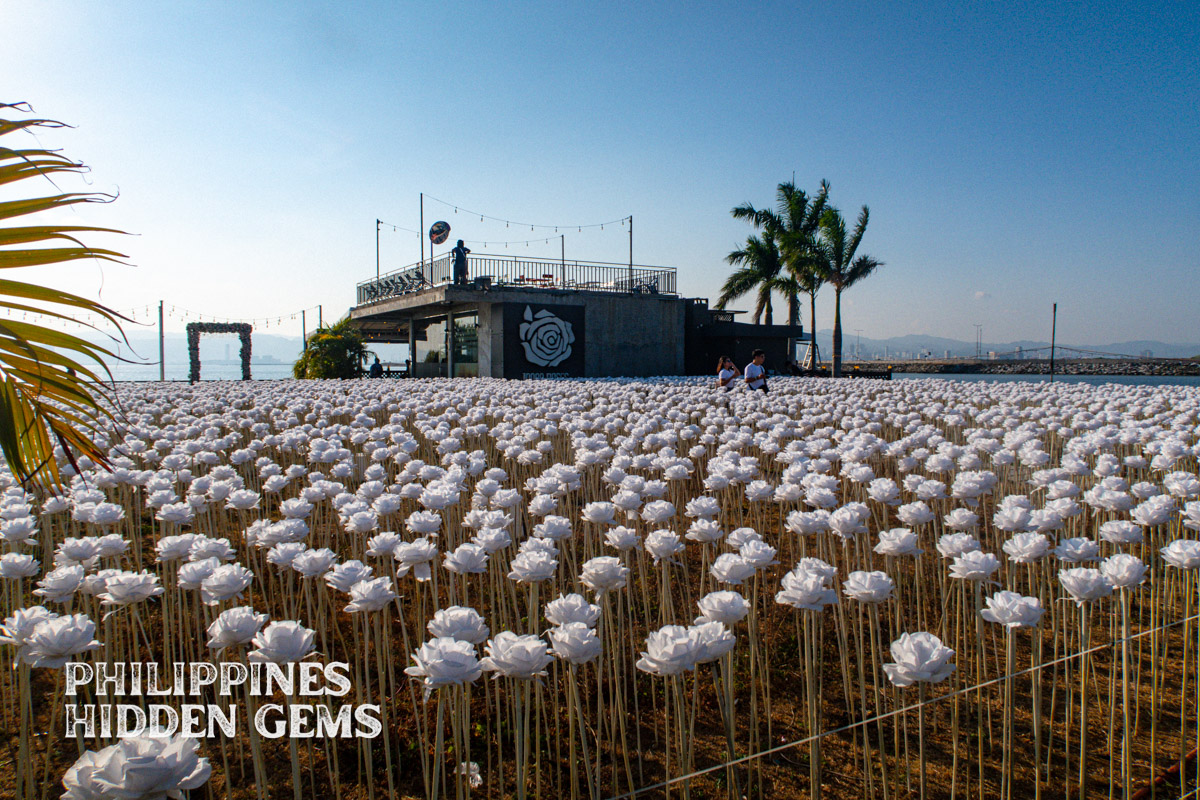
Located in Cordova, 10,000 Roses has become one of the most recognizable attractions near Cebu City. Thanks to CCLEX, getting here now takes much less time than before.
The attraction features thousands of white artificial roses spread across the waterfront. During the day, the flowers look bright against the sea, but most people visit before sunset and stay until evening when the LED lights turn on.
It was one of the stops on my Cebu City day tour, and while the roses were the main attraction, I actually enjoyed spending some quiet time by the waterfront while waiting for my drink.
The sea breeze, the view of the Cebu skyline, and the relaxed atmosphere made it a nice place to slow down after exploring the city.
By then, the summer heat had already caught up with me, so it was the perfect excuse to sit back, cool down, and hydrate.


There’s also a café inside if you want to grab coffee or a light snack while waiting for the roses to light up. If you’re looking for a full meal, Lantaw Restaurant is conveniently located right at the entrance.
I suggest arriving before sunset if you plan to eat there since the tables overlooking the water tend to fill up quickly.
Although many visitors come mainly for photos, I recommend staying a little longer instead of leaving right away. The view changes completely once it gets dark.
15. Cebu Ocean Park


🎟️ Entrance Fee: ₱750.00
🕖 Opening Hours: 10:00 AM – 6:00 PM Daily
I love the ocean, so when I visited Cebu City for leisure for the second time, I made sure to include Cebu Ocean Park in my itinerary.
It was also my first time visiting an oceanarium. Although it was still early in the post-pandemic period and a few areas were under renovation, it still ended up being one of the highlights of my Cebu trip.
As the largest oceanarium in the Visayas, it houses thousands of marine animals from the Philippines and other parts of the world.
Inside, you’ll find different themed zones featuring freshwater fish, reptiles, birds, crocodiles, colorful reef species, and many more.


I still remember walking through the Oceanarium tunnel and watching schools of fish and other marine animals swim overhead.
I also spent quite a bit of time at the crocodile exhibit, which was another highlight of my visit.
The park also offers scheduled animal encounters and educational presentations throughout the day.
If you’re visiting with kids, check the schedule before entering so you don’t miss the feeding sessions and live presentations.
16. Puso Village

If you’re wondering where to eat after exploring the tourist spots in Cebu City, Puso Village is a good option to consider.
This modern food destination brings together local vendors and a variety of cuisines in one place. You can try several Cebu specialties without hopping from one restaurant to another.
I had dinner here with my cousin on my first night in Cebu City during my latest trip. Since I wasn’t sure where to get dinner after arriving, he recommended this place instead.
It actually reminded me of Cebu Mercado but much better.


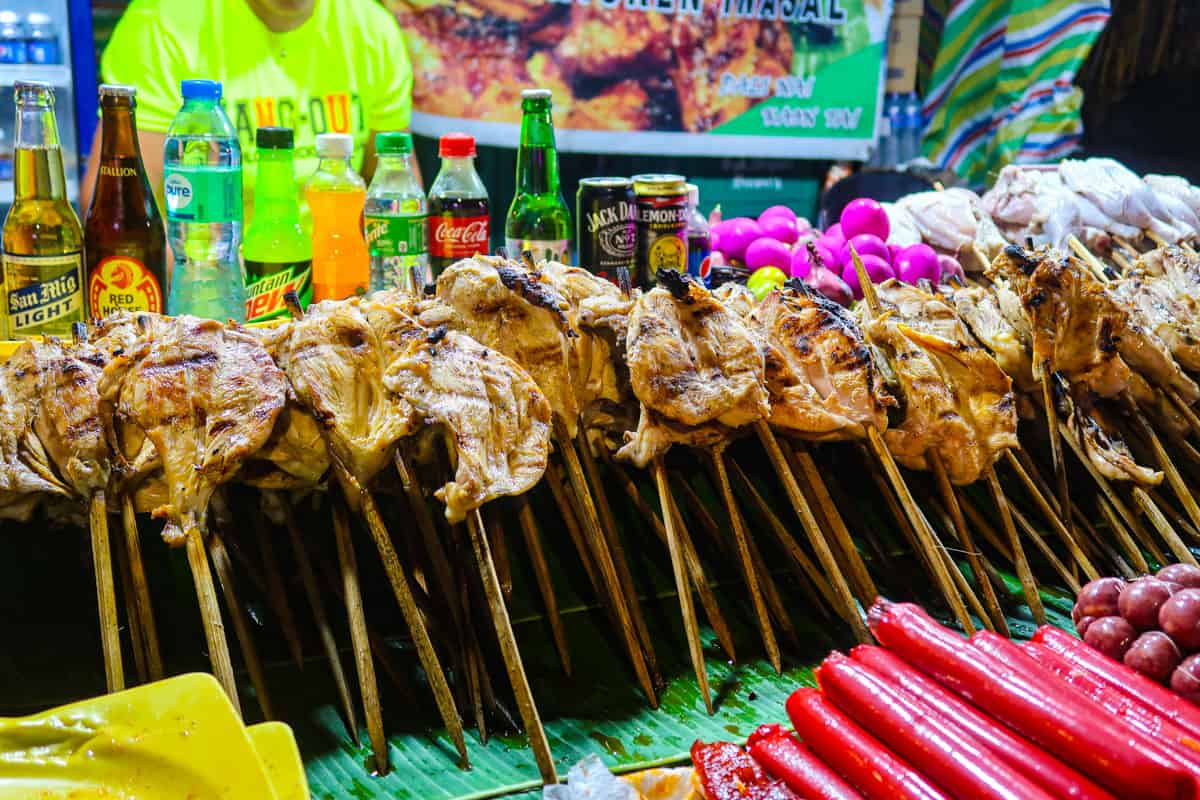
You can’t leave Cebu without tasting its famous lechon, and thankfully, several stalls here serve it.
Some stalls also sell barbecue, grilled seafood, puso, fresh fruit juices, Filipino dishes, Oriental cuisine, and even Western food.
Of course, don’t skip the puso. Short for “hanging rice,” it is rice wrapped in woven coconut leaves before being boiled.
It’s a Cebuano staple that’s commonly paired with lechon and barbecue, and you’ll find it in almost every stall selling grilled food.
If you’re staying within Cebu City, this is a convenient place to have dinner before calling it a day or heading back to your hotel.
17. Carbon Night Market

Lastly, if you want to experience local street food and buy local produce without spending a lot, head to Carbon Night Market.
Located beside Carbon Market, this food strip comes alive in the evening with dozens of stalls serving fresh fruit shakes, local desserts, vegetables, and other local produce.


This place was introduced to me by my cousin after our dinner at Puso Village, and we thought of grabbing some desserts.
He told me that he often goes here to buy vegetables and other food that he can store in his dorm.
Honestly, I enjoy visiting places like this because they give a better picture of everyday life in Cebu. It’s an authentic experience and a very much recommended place when you’re in the Queen City of the South.
What’s the Best Month to Visit Cebu?


You can visit Cebu any time of the year, but if you plan to explore several tourist spots in Cebu City and nearby attractions, the dry season usually gives you the best experience.
From December to May, you can expect more sunny days; this is better if you’re going to visit mountain attractions.
This period also works well if you’re planning to continue your trip to Moalboal for Kawasan Canyoneering, Oslob for diving, Bantayan Island, or Malapascua for a tropical beach trip after exploring the city.
Personally, I enjoy visiting between March and June, just before the rainy season starts.
For others, January is especially exciting because Cebu celebrates the Sinulog Festival, one of the biggest festivals in the Philippines.
The only downside is that hotels sell out quickly and transportation becomes much busier than usual.
If you want to visit during Sinulog, book your flights and accommodations several months in advance.
If you prefer fewer crowds, consider visiting around February, March, or early April. The weather generally remains good, and you can explore most attractions without competing with festival crowds.
However, April and May are peak summer months so you need to stay hydrated and avoid getting under the sun without any sun protection. Trust me, I learned it the hard way.
📢 Join the community! Make sure you join our Philippines Hidden Gems – Travel Community. This is the place to ask any questions about your trip, to be inspired, and to connect with other Philippines travelers. Click here to join!
Best Cebu City Tours
If you’re visiting Cebu for the first time or simply want a more convenient trip, joining a guided tour can save you time.
I joined a private tour with my friends before and a joiner’s tour on my recent visit.
Most Cebu City tours already include transportation, entrance fees, and hotel pick-up, so you don’t have to worry about navigating the city yourself.
✨ Cebu City 8-Hour Private Mountain Tour

This tour is perfect if your main goal is to visit Cebu’s mountain attractions in one day and at your own pace.
It usually includes Sirao Garden, Temple of Leah, Buwakan ni Alejandra, and several nearby stops depending on your chosen package.
Since some of these attractions are close to one another while others may not, joining a private tour saves you from booking multiple rides throughout the day.
✨ Private Cebu & Mactan Twin City Tour

If you only have one full day in Cebu City, this is probably the private tour I would recommend.
It combines historical landmarks in Cebu City with attractions in Mactan.
You’ll visit places like Magellan’s Cross, Fort San Pedro, Taoist Temple, Lapu-Lapu Shrine, and other famous tourist spots without worrying about transportation.
It also works well for cruise passengers or travelers with limited time.
Since it’s a private tour, you will not have to wait and depend on other people if you want to leave a tourist spot in Cebu City earlier or spend more time in another destination.
✨ Cebu Panoramic Night Tour
Cebu looks completely different after sunset.
Instead of historical sites, this tour focuses on the city’s skyline, evening viewpoints, and local dining spots.
This Cebu itinerary includes Tops Lookout, 10,000 Roses, CCLEX, and a French dining experience at La Vie in the Sky with scenic overlooks where you can enjoy Cebu’s city lights.
If you’ve already explored Cebu during the day, this makes a nice addition to your trip.
✨ Cebu City Food Discovery Private Tour
Food plays a huge part in Cebu’s identity.
A food tour lets you try local specialties while learning more about the city’s culinary culture. “Pungko-pungko sa Fuente” and “siomai sa tisa” are some of the stops.
Depending on the itinerary, you may also get to sample Cebu lechon, puso, ngohiong, fresh seafood, local desserts, and other dishes that many visitors miss when exploring on their own.
If you’re someone who plans trips around food, this tour is definitely worth considering.
Frequently Asked Questions
Wrap-Up of the Must-Visit Tourist Spots in Cebu City and Beyond
Many travelers treat Cebu City as nothing more than a stop before heading to the province’s beaches and islands. I used to think the same until I started spending more time here.
After several visits, I realized the city has much more to offer than people often expect. The best part is that many of these tourist spots in Cebu City are close to one another.
If it’s your first time visiting Cebu, don’t rush straight to the islands. Give yourself enough time to explore the city first.
You might be surprised by how much history, culture, food, and scenery you can experience before even leaving the capital.
⭐ Travel Resources for Your Cebu Trip
Planning a trip to Cebu in the Visayas? Here are trusted resources to book flights, ferries, hotels, tours, and everything you’ll need for a smooth trip around Cebu.
✈️ How to Get to Cebu
Fly into Mactan-Cebu International Airport (CEB) from Manila, Clark, Davao, or international cities with Cebu Pacific, Philippine Airlines, and AirAsia through 12Go or Skyscanner. If you’re coming from nearby islands like Bohol, Siquijor, or Leyte, you can also book ferry connections through 12Go.
🏨 Where to Book Your Stay
Find city hotels and budget stays in Cebu City, beachfront resorts in Mactan, or accommodations near Moalboal and Oslob using Booking.com, Agoda, Airbnb, or Vrbo. For island trips and longer stays, consider booking accommodation close to the activities or beaches you plan to visit.
🚗 Getting Around
Use Grab for convenient rides around Cebu City and Mactan, or take taxis, jeepneys, and buses for cheaper transportation. For exploring destinations outside the city, such as Moalboal, Oslob, or northern Cebu, rent a car through Rentalcars.com or DiscoverCars, or hire a private van and driver for day trips on Klook.
🌴 Book Tours and Activities
Book island-hopping trips, canyoneering in Kawasan Falls, diving and snorkeling in Moalboal, and city tours through Klook, Viator, or GetYourGuide. For activities in more remote areas, your hotel or local tourism office can also help arrange accredited guides and boat operators.
📶 Stay Connected
Stay online with an Airalo eSIM, rent pocket WiFi through Klook if you’re traveling with a group, or pick up a local Globe or Smart SIM card at Mactan-Cebu International Airport, malls, or convenience stores.
💸 Cash, ATMs, and Payments
ATMs are widely available in Cebu City, Mactan, and other major towns, while cards are accepted at most hotels, malls, and established restaurants. Carry enough pesos for jeepneys, local eateries, markets, entrance fees, and smaller businesses, especially when traveling to rural areas.
🧳 Travel Insurance
Get covered for flight delays, ferry cancellations, road trips, lost luggage, or emergency medical needs with SafetyWing, HeyMondo, or World Nomads.
Check Out These Recommended Articles:
- 7 Must-Do Cebu City Tours for Every Type of Traveler
- Discover the Visayas’ Best Hidden Spots Beyond Bohol
- Kawasan Falls Cebu 2026: How to Get There, What to Expect & Travel Tips
- Planning Kawasan Falls Canyoneering? Read This First (2026 Complete Guide + Tips)
- 15 Hidden Adventures in Visayas That Prove Paradise Still Exists
- Cebu to Dinagat Island: Step by Step Travel Guide for First Time Visitors
- The Best Way to Get from Cebu to Siquijor: Tips, Tricks, and Recommendations

About the Author
Hi! I’m Kristine (aka KR). I’m the main developer of Philippine Hidden Gems. My work includes going to places to cover events and places that I’m happy to share with the readers.
Even though I’m an introvert who loves to read and stay indoors all the time, I love to travel outside the country (at least once a year) and nearby regions within PH.
My recent hobbies include learning Japanese culture and exploring the world of K-Pop as a Carat.