Pottery in Vigan: A Guide to Burnay Jar Making
This article may contain affiliate links. This means we receive a small commission whenever you book or purchase something through our links (at no extra cost to you!). You can find more information in our disclaimer.
Burnay is Vigan’s centuries-old pottery tradition that’s still very much alive today.
I visited both pottery workshops in town, and at one of them, I got to see the whole process up close, and the owner even gave me a tour and answered my questions.
If you’re curious about pottery in Vigan, how these iconic jars are made, and where to see them for yourself, here’s everything I learned.
What is Burnay Pottery?
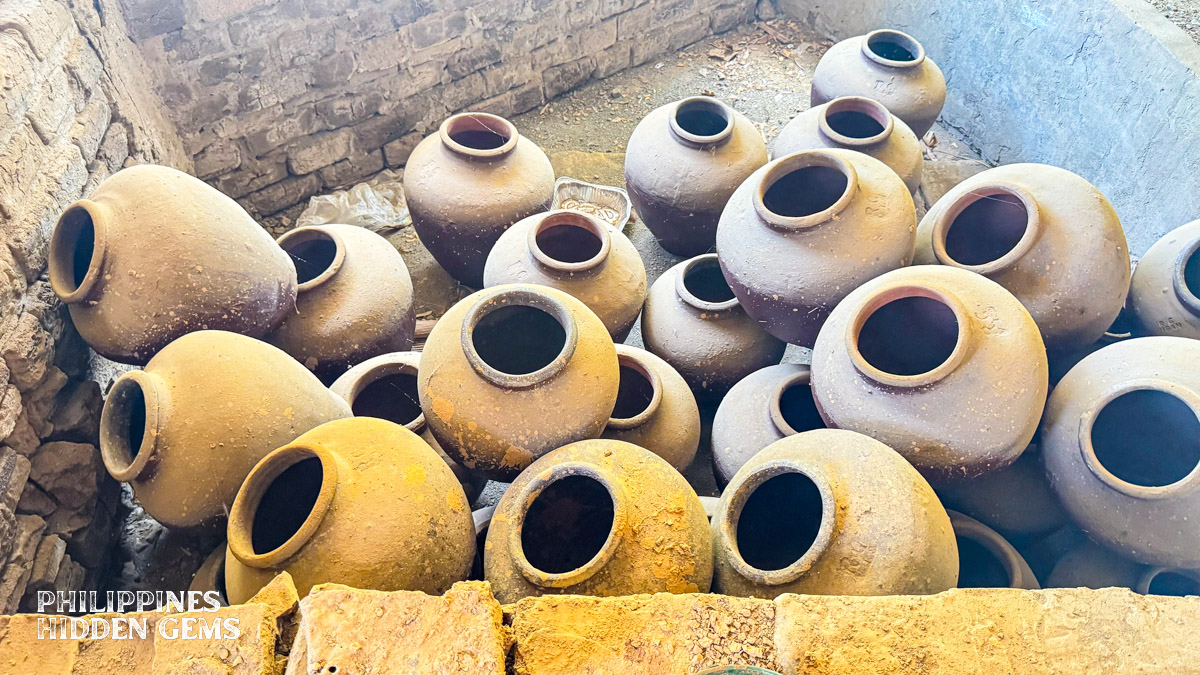
Burnay is Vigan’s traditional pottery, and the word covers both the process and the jars themselves.
It’s a craft that goes back to Chinese settlers who arrived generations ago and brought the technique with them.
The whole thing is done by hand and by foot. Potters spin the wheel using their feet while shaping the clay with their hands, without machines or shortcuts.
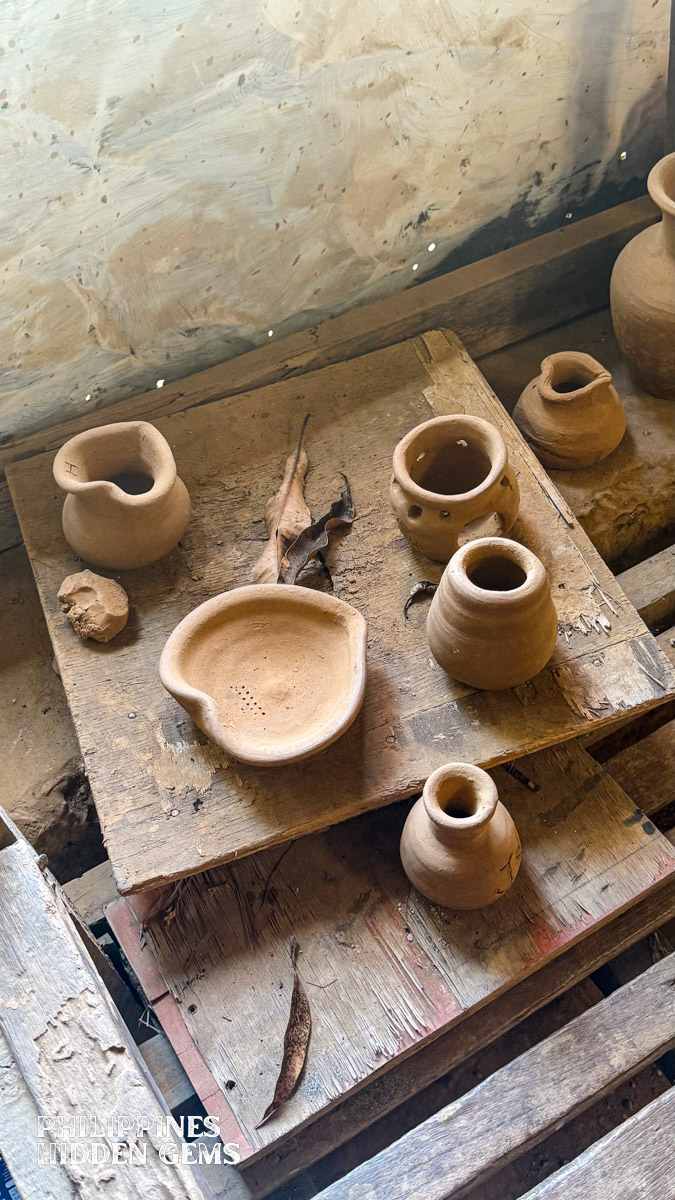
What comes out is a sturdy, reddish-brown jar. But burnay expanded past jars, too. You’ll find planters, incense holders, and other pieces made the same traditional way!

Sign up now to grab your FREE guide to 50 hidden gems in the Philippines!
History of Pottery in Vigan
Long before the Spanish arrived in the Philippines, around the 1500s, Chinese traders and settlers had already made their way to Vigan. They were drawn by the area’s high-quality clay.
They brought their pottery techniques with them, and that’s where burnay began.
The industry we see today really took shape around the 1890s, when a Chinese settler named Pedro Go set up one of the city’s first jar factories.
His relatives followed not long after, including Ramon Go, whose family factory is still running today as RG Jar Factory.
Back then, burnay jars were incredibly practical, used to ship local goods to China and other parts of Asia.
Ilocanos also relied on them for cooking, storage, fermenting food like fish sauce, vinegar, and wine, and even as coffins.
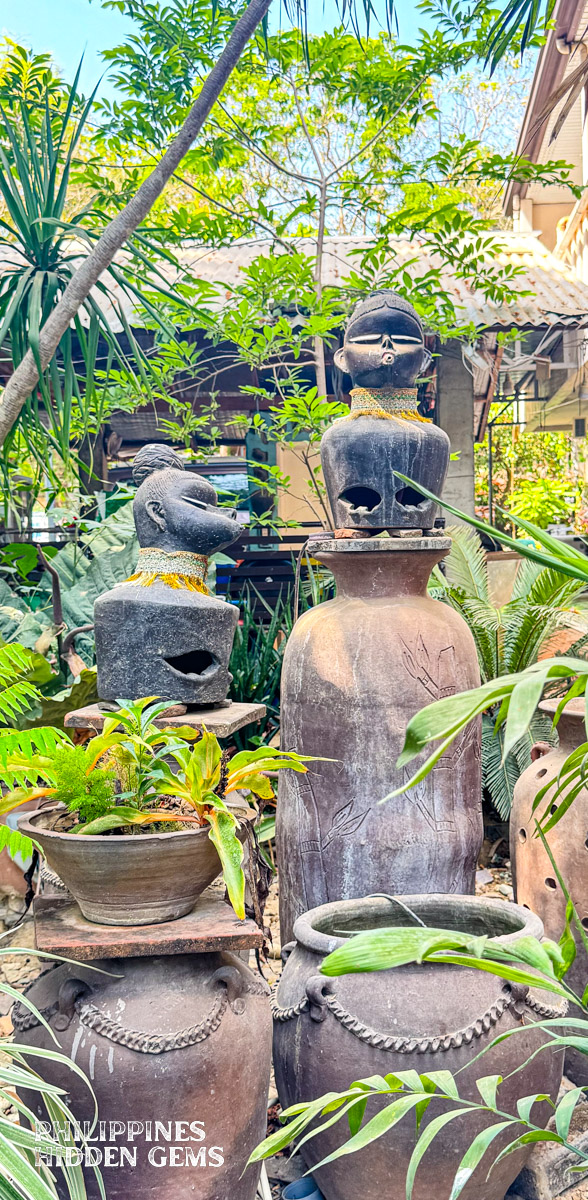

Today, artisans also produce decorative planters, vases, incense holders, and other pieces alongside the traditional storage jars.
Pagburnayan District


Pagburnayan is the neighborhood where Vigan’s burnay tradition lives. The name was literally derived from the word “burnay” itself.
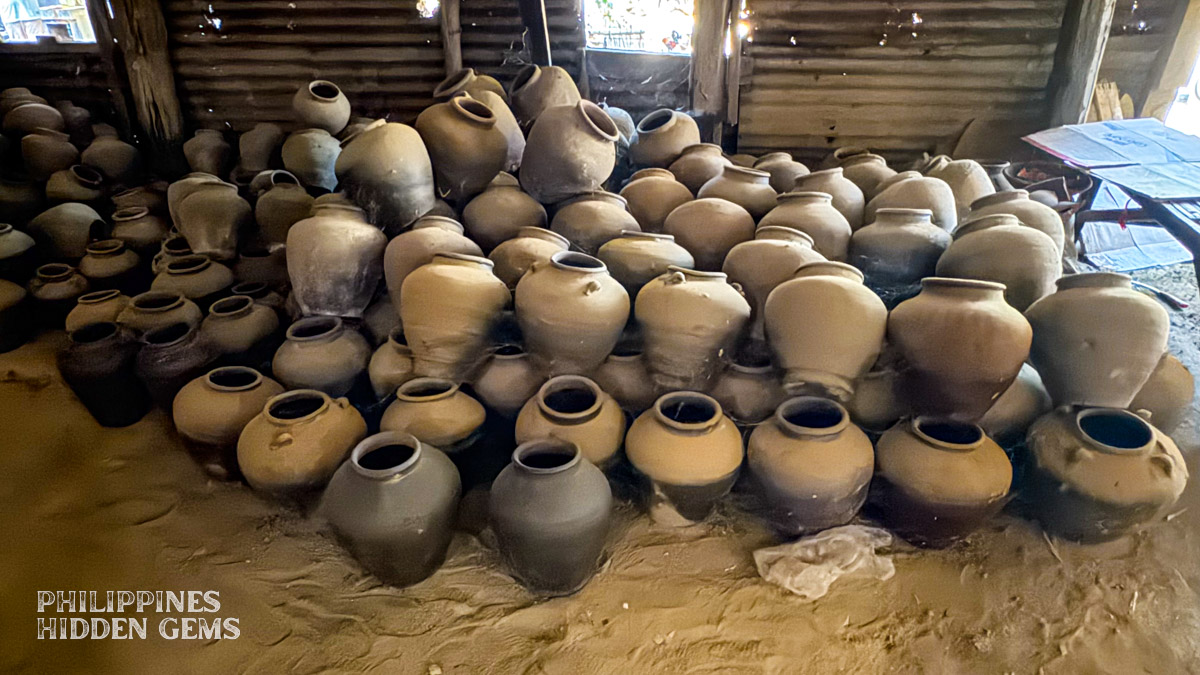
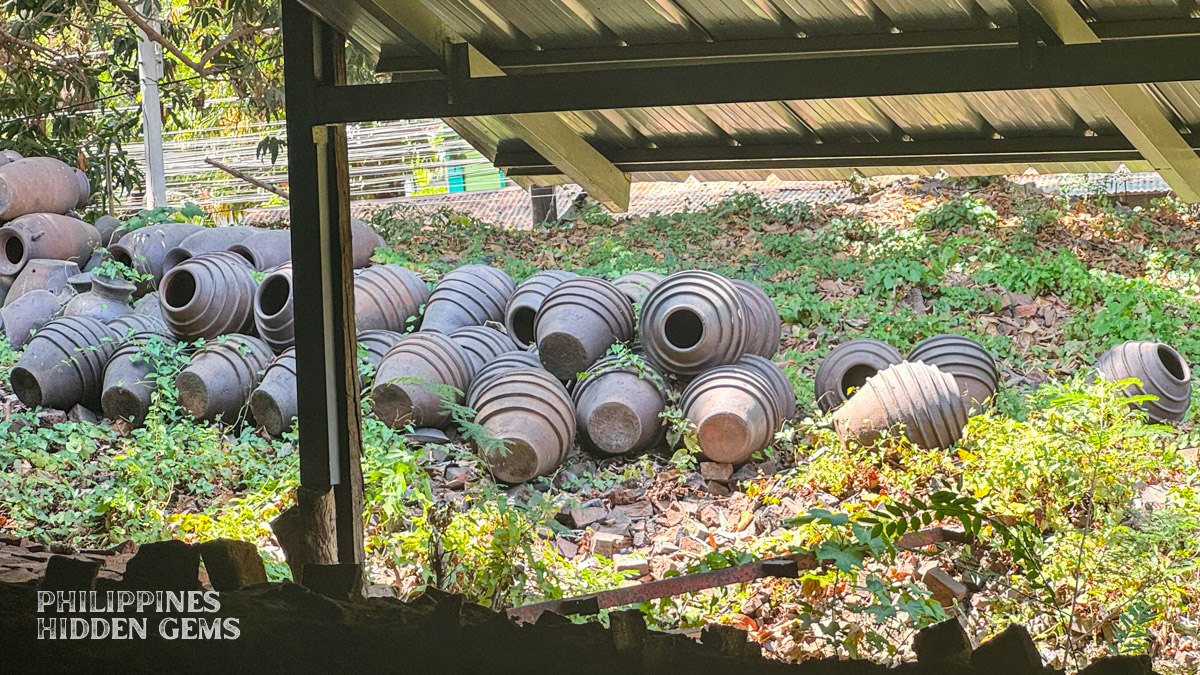
Walking through the neighborhood, you’ll pass open-air workshops where artisans shape clay by hand, stacks of finished jars waiting to be fired, and kilns that have been used for generations.
Where to See Pottery in Vigan
Two names come up the most here: RG Jar Factory and Ruby Jar Factory. Both sit right across the street from each other. This means you can easily hit both in one stop!
RG Jar Factory
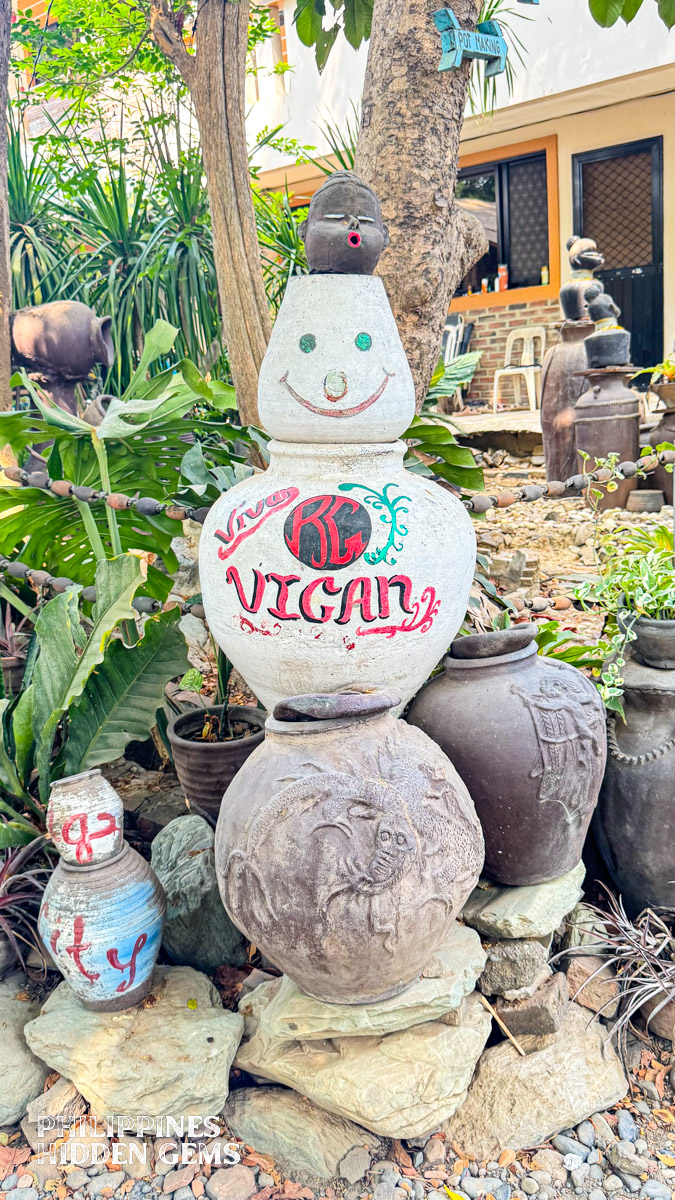
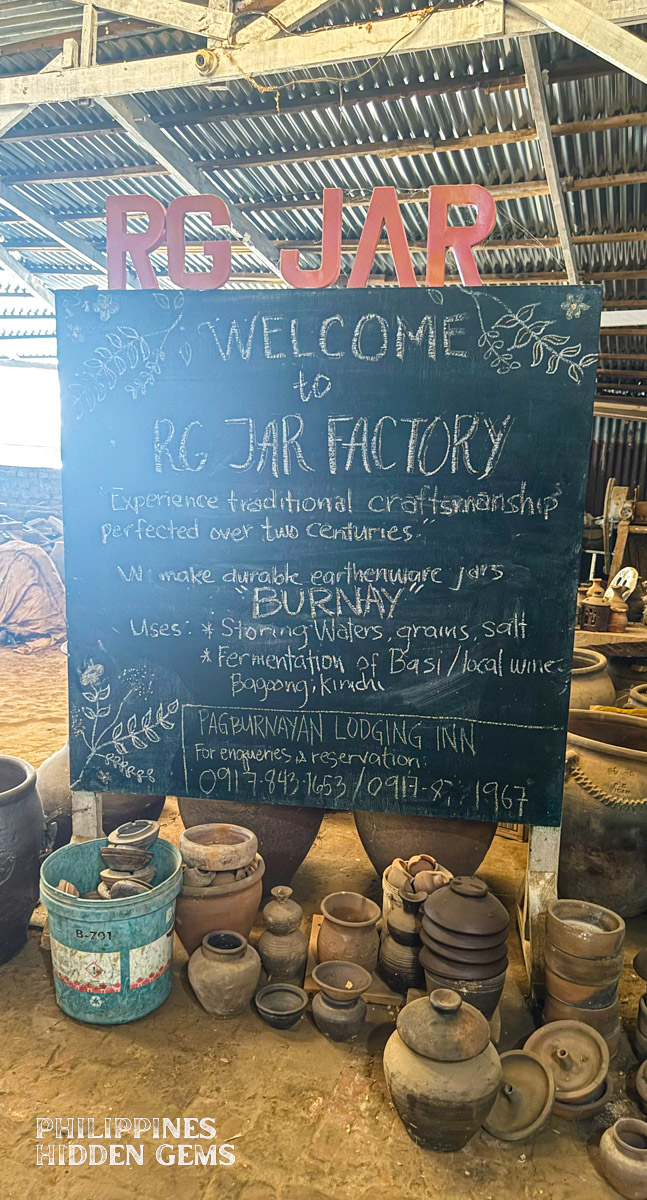
RG Jar Factory gets its name from the initials of its founder, Ramon Go, a Filipino-Chinese potter. It’s the first jar factory I visited, and it’s the one I’d recommend if you want a genuinely enriching experience.
The factory is co-owned by the eldest living generation of siblings and sits right behind their family home.
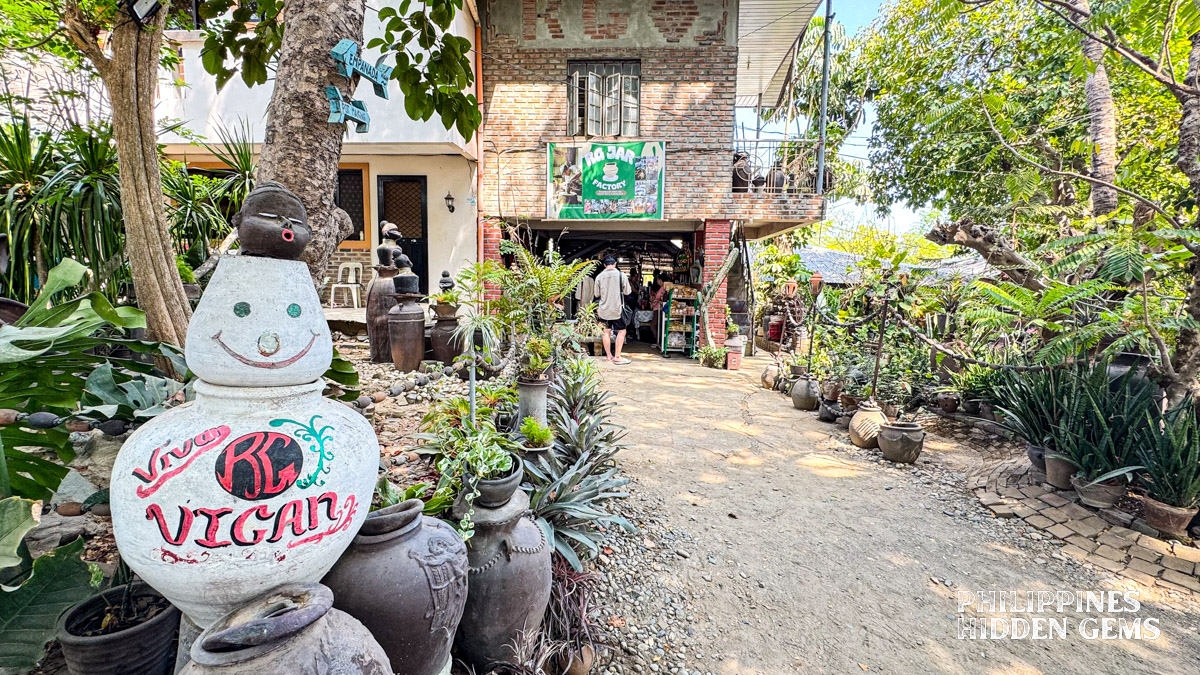
On my first visit 8 years ago, I felt instantly welcomed, even though I showed up just 30 minutes before closing.
My last visit (May 2026) was different. The place was packed with tourists that morning, and it took asking around a few times before I found someone free to talk, Ms. Preciosa, the eldest of the oldest living generation. She more than made up for it, welcoming me with so much warmth.
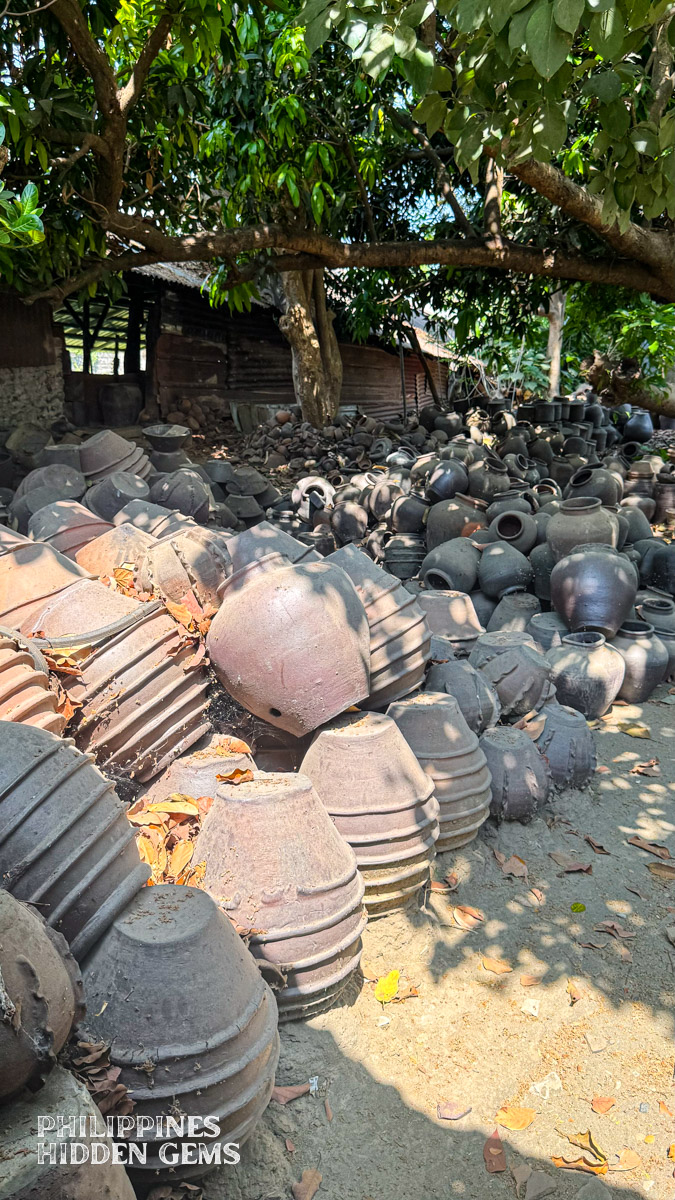
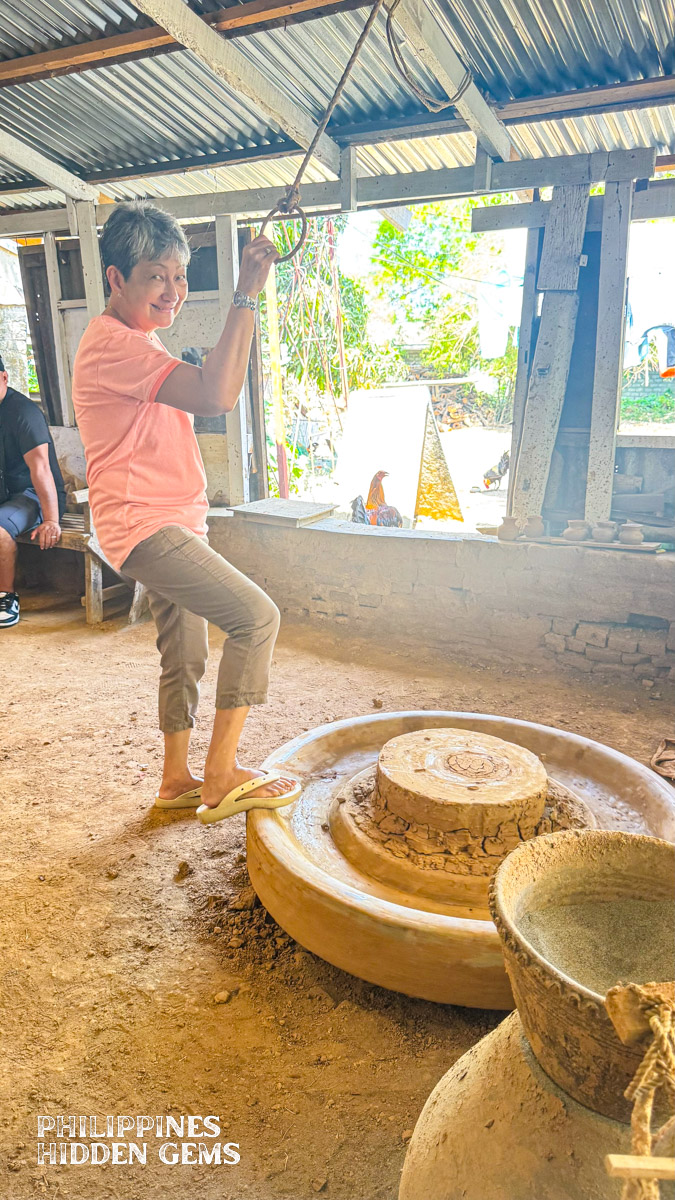
She walked me through the entire factory while sharing the family’s history, the process of pagburnay, and the range of products they make.
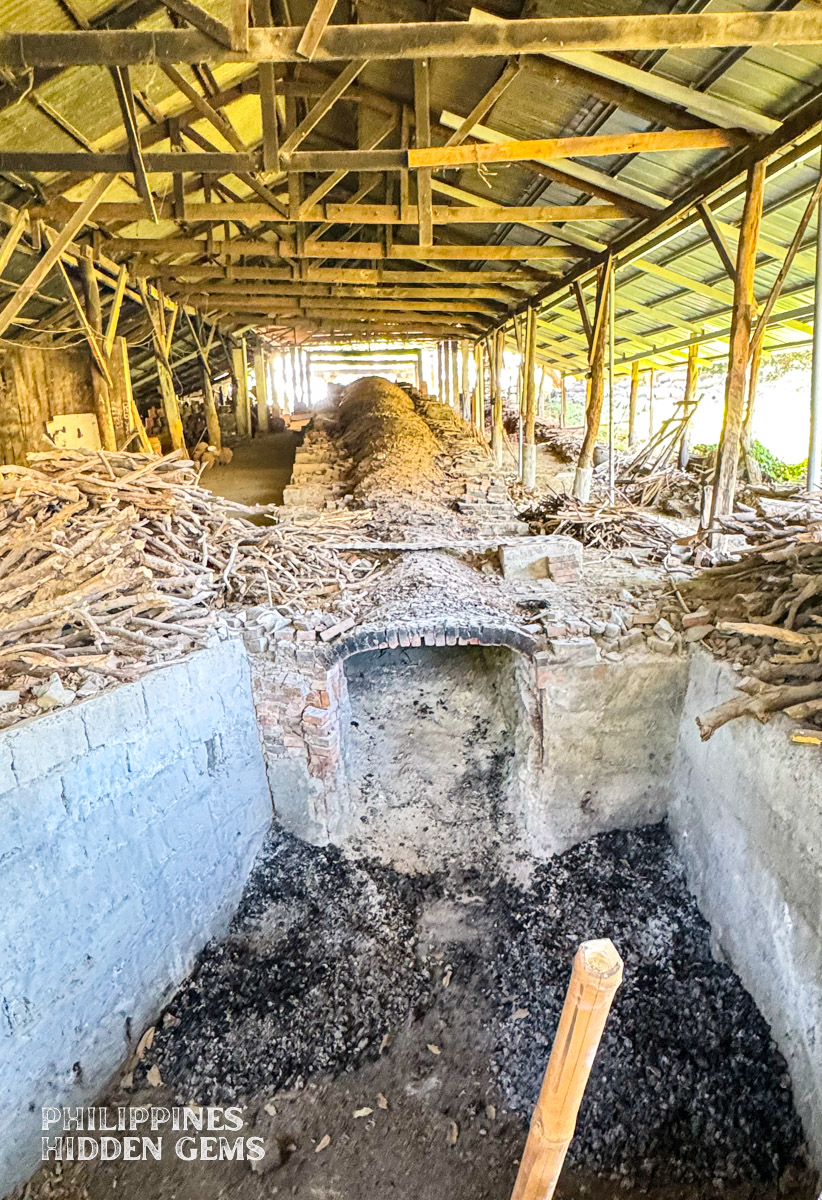
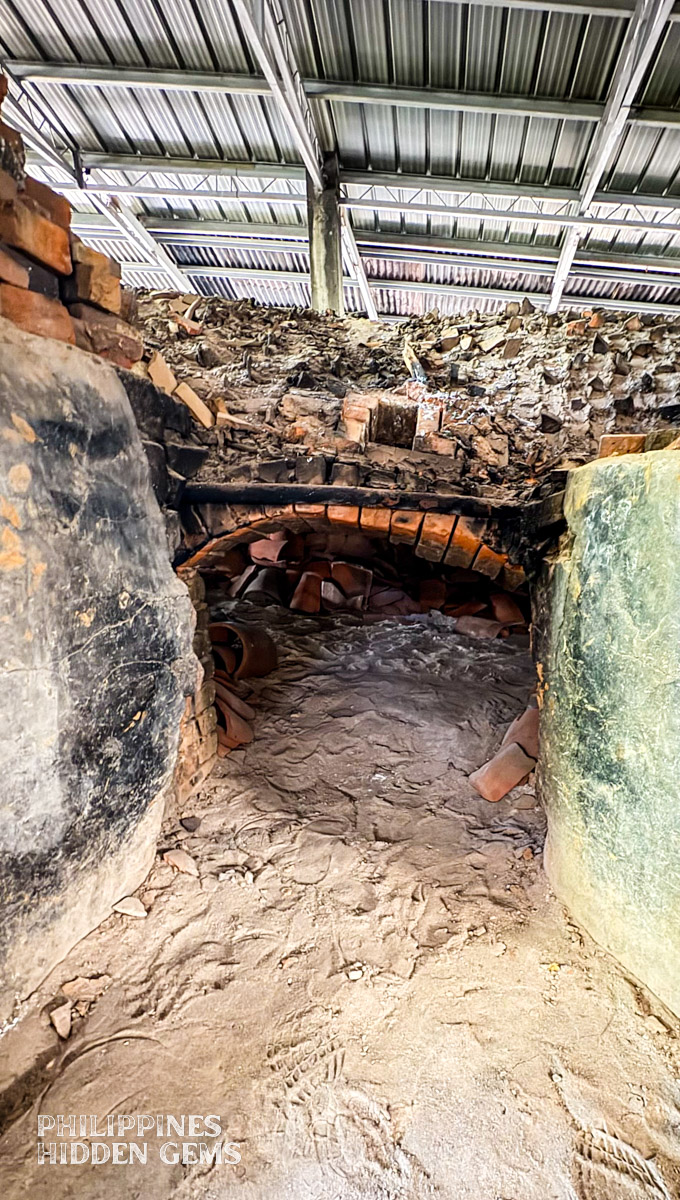
What surprised me most was the kiln. It’s massive, big enough that you’d mistake it for the back of a dragon because of its scaly appearance, not to mention it holds heat for hours after firing.

Ms. Preciosa also showed me jars made by older generations of the family.
Ruby Jar Factory

Ruby Jar Factory sits just across from RG’s, but when I visited, it looked pretty much closed down. Their master potter, Fidel Antiporda Go, a National Folk Artist, had passed away, and it shows.

📢 Join the community! Make sure you join our Philippines Hidden Gems – Travel Community. This is the place to ask any questions about your trip, to be inspired, and to connect with other Philippines travelers. Click here to join!
What to Expect on Your Visit
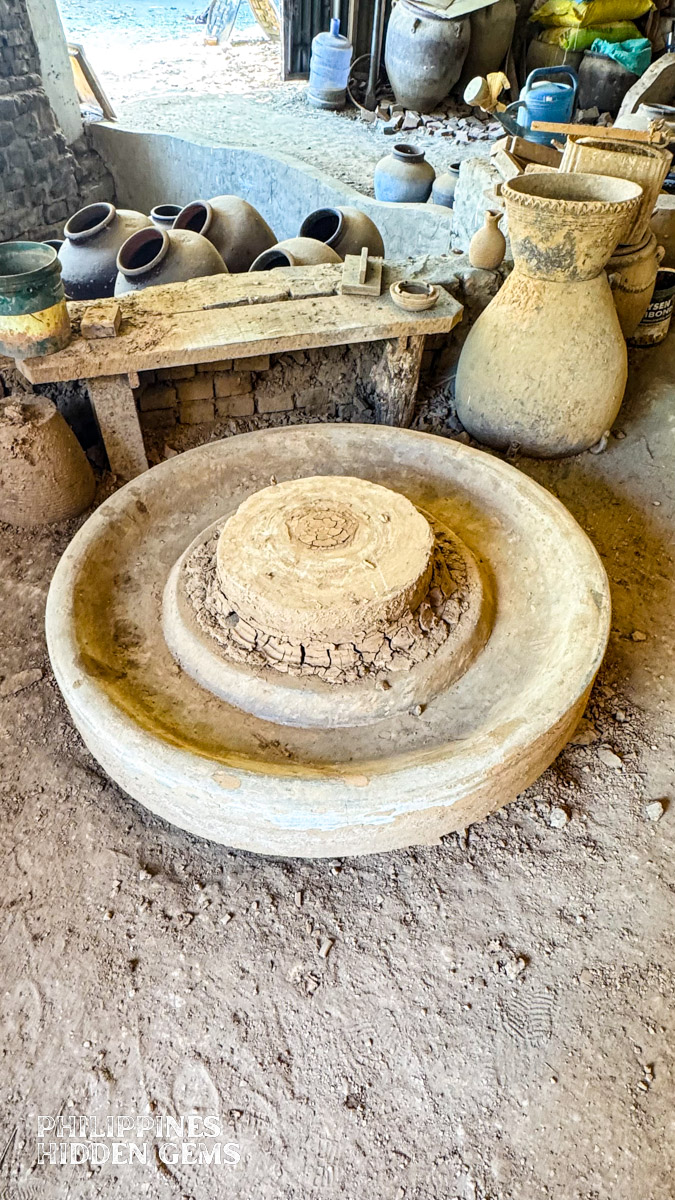
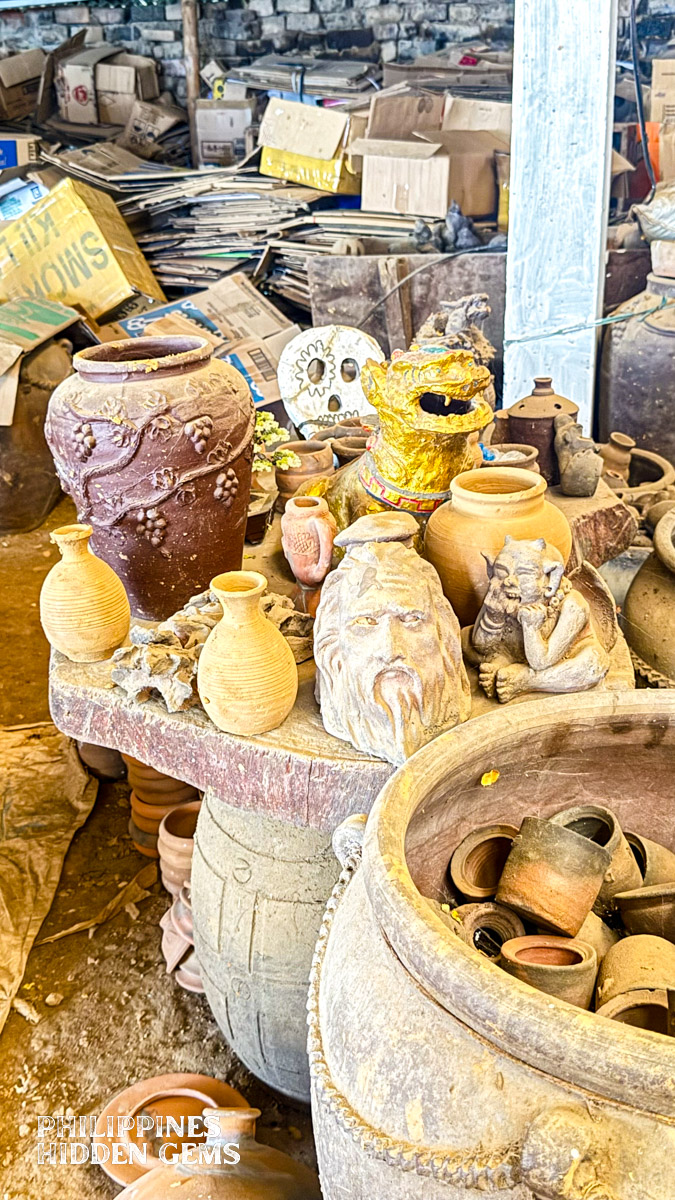
Once you’re inside RG Jar Factory, you’ll get to see the entire workshop and materials, browse the finished pieces on display, watch the artisans work the clay in real time, and if you’re up for it, try your hand at the wheel yourself.
An instructor will walk through wedging the clay, centering it on the wheel, and slowly shaping it into form. Every step took way more focus and control than I expected. It’s a lot harder than it looks.
Up front, there’s also a small store selling souvenirs and other burnay trinkets, in case you want to bring a piece home.
How Burnay Jars are Made
Here’s how burnay jars come together, according to Ms. Preciosa.
1. Digging up the clay – It all starts with sourcing and digging up the clay itself.
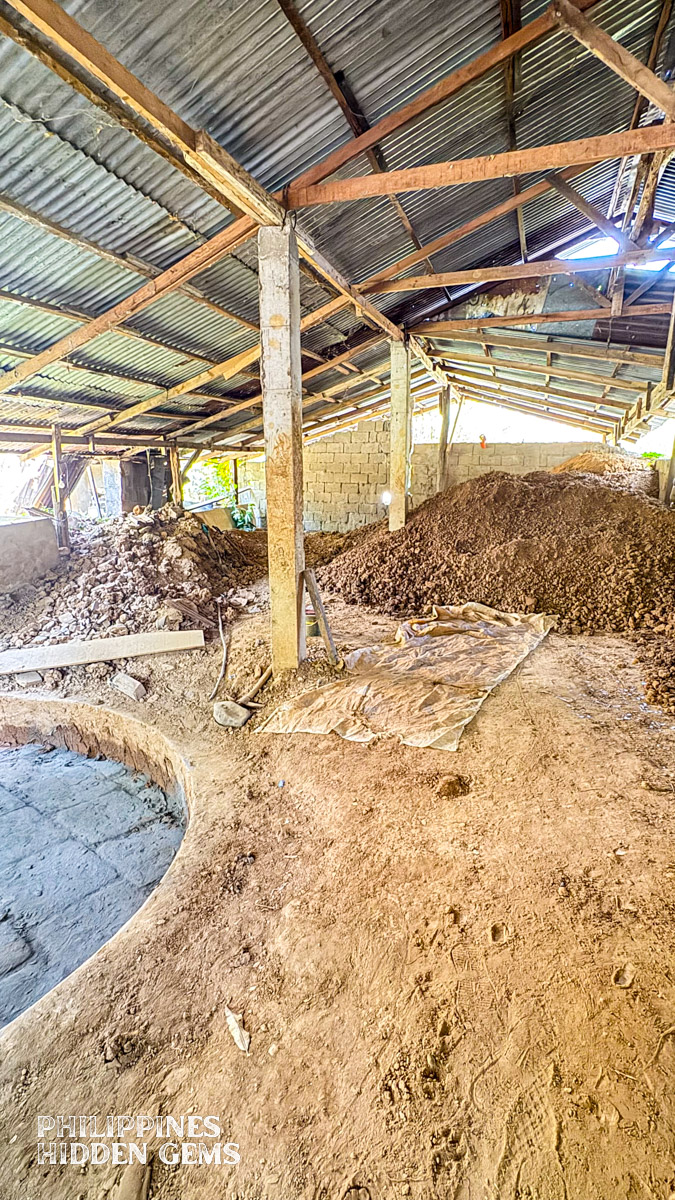
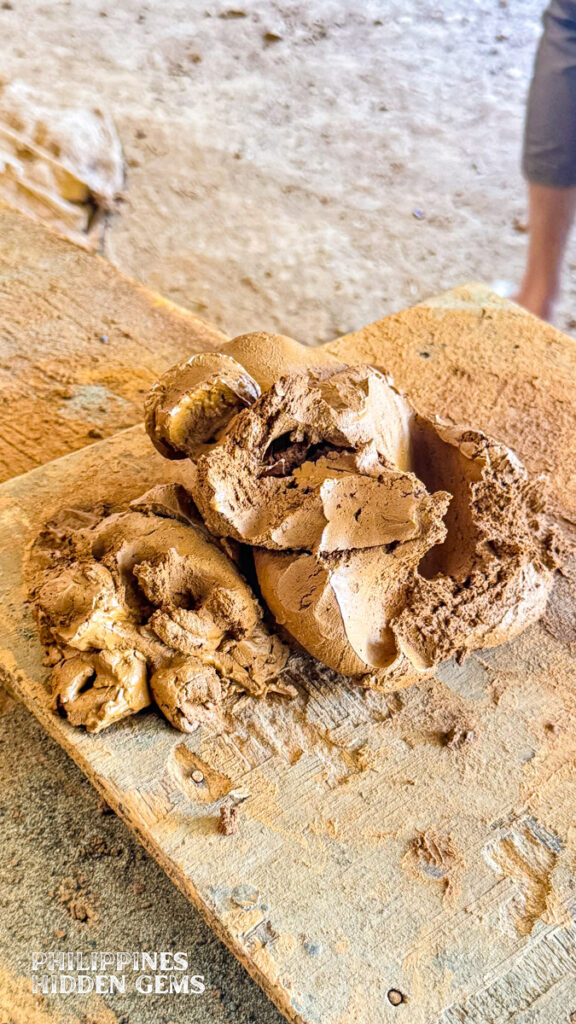
2. Soaking and mixing – The clay gets soaked in a huge container along with fine river sand and water.

3. Kneading (the fun part) – This is where their trained pet carabao (Philippine water buffalo, the country’s national animal), Kevin, comes in. Kevin steps and walks on the clay for hours to refine and knead it.
4. Resting the clay – The mixture is then left sitting for at least a day so it reaches the right consistency and loses any excess moisture.
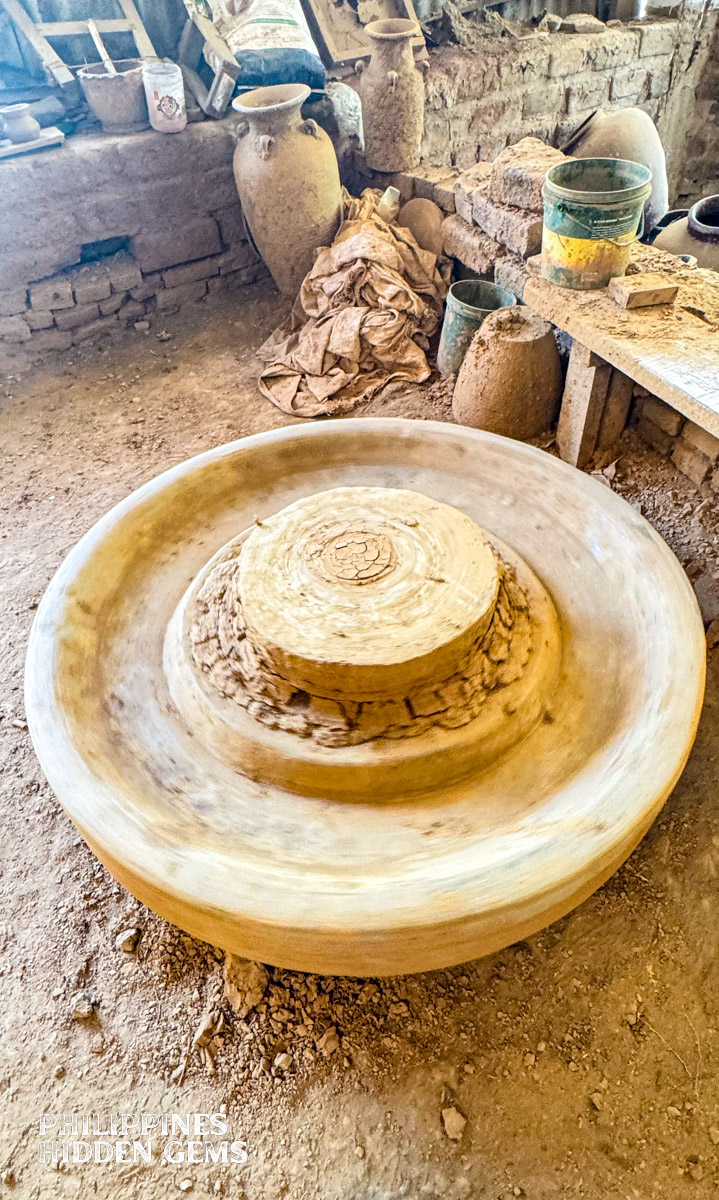
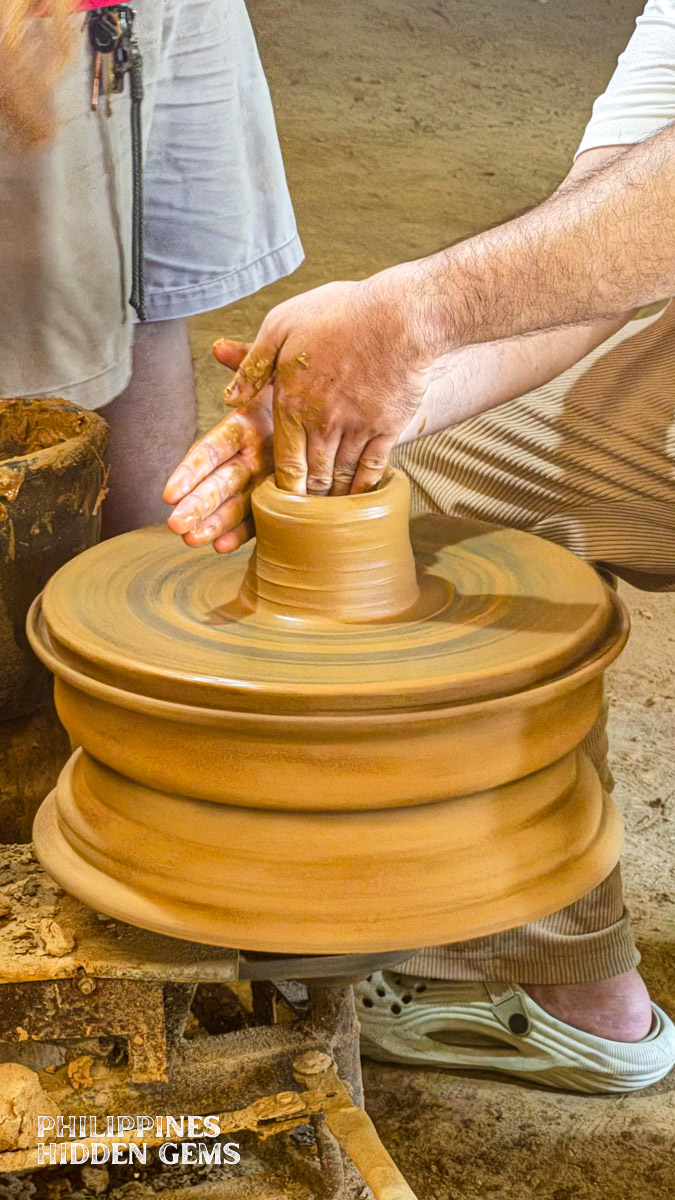
5. Shaping on the wheel – Artisans shape the clay using a potter’s wheel, a revolving table operated entirely by foot. They sit on a wooden seat, spinning the wheel with their feet while shaping the clay with their hands at the same time.
6. Drying – Once molded, the piece needs to dry, and depending on its size, that can take a while. A regular-sized jar takes about a week.
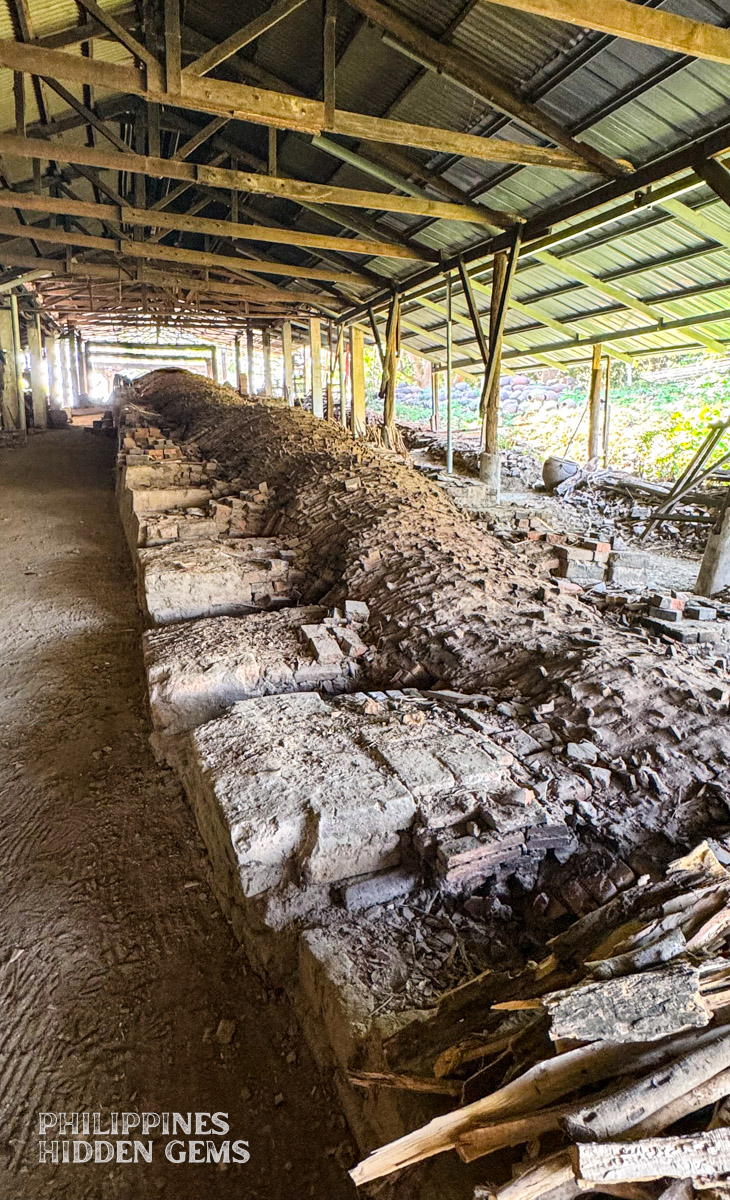
7. Firing in the kiln – Once it’s dry and intact, it goes into a kiln for firing, using wood from ipil-ipil or madre de cacao trees. Keeping the kiln’s temperature high is crucial here. If it dips too low, the jar can end up deformed. Firing alone takes 12 to 24 hours.
What to Buy
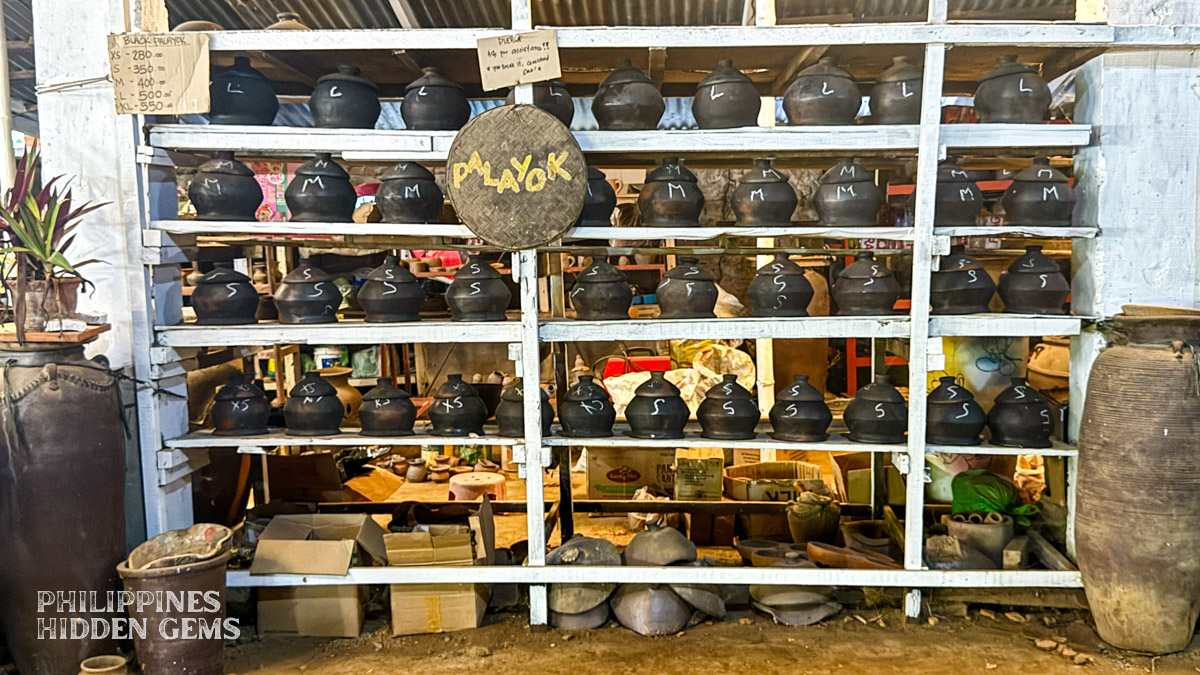
There’s a lot to choose from here. Traditional pieces like storage jars, water jars, and wine jars run anywhere from P200 for the small ones to P5,000+ for the bigger jars.
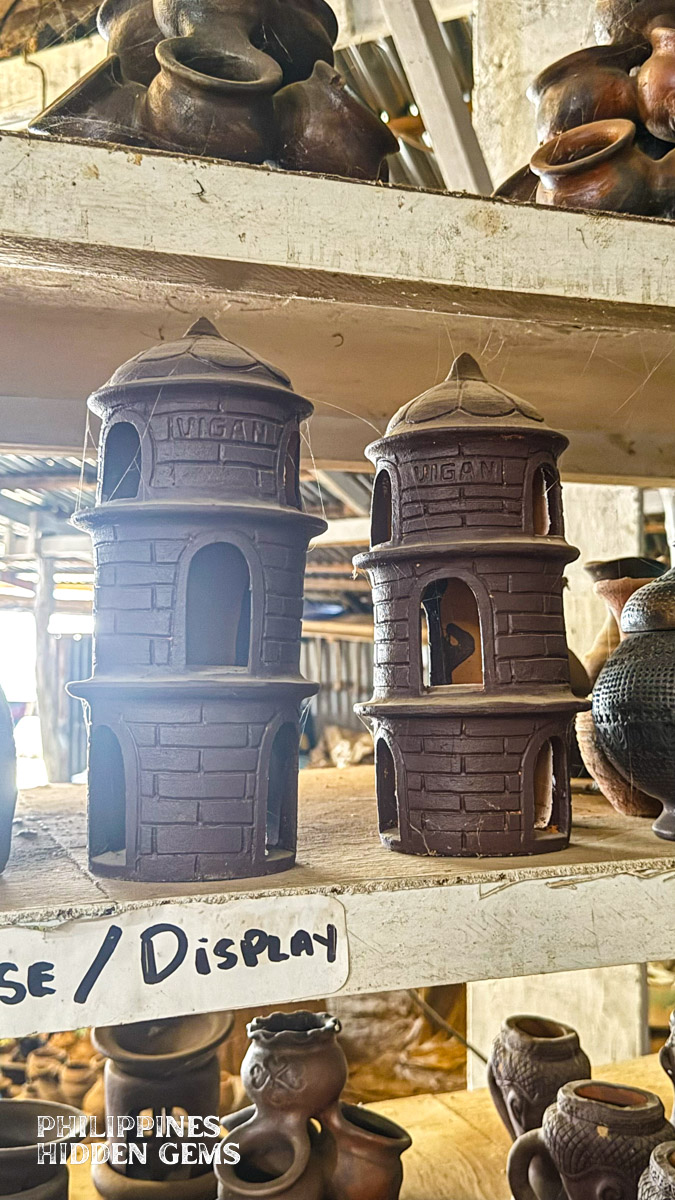

If you’re after something more decorative, plant vases, incense holders, and other artsy pieces are more wallet-friendly, usually at P50 – P1,000.
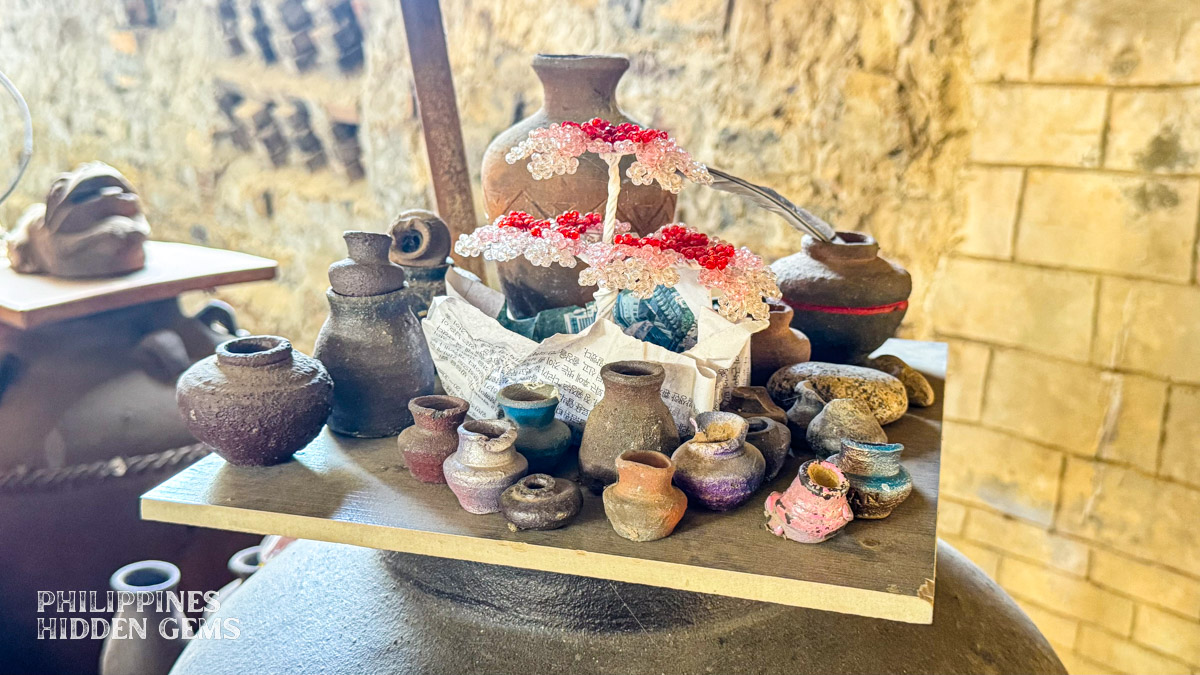
They also sell non-jar souvenirs like mats and keychains, in case you want something to bring home that won’t break or take up half your luggage!
How to Get to Pagburnayan

From Calle Crisologo, just hop on a tricycle or kalesa. Drivers know exactly where Pagburnayan is, so you won’t need to give directions. A one-way tricycle ride costs around ~P50, while a round-trip kalesa fare runs about ~P200.
If you’re coming from Laoag, this city tour covers both Vigan in Ilocos Sur and Juan Luna in Ilocos Norte. It’s worth checking out if you’re combining the two.
Tips When Visiting Pagburnayan
Here are some tips to help you make the most of your visit:
🌅 Go in the morning. I went at 9-10 AM on a Friday, and while there were tourists around, it was also when the factory was busiest, with artisans actively working on their pieces.
Support the workshop by buying something, even if it’s just a small burnay keychain.
🏺 Try your hand at pottery while you’re there. Pottery itself isn’t a unique experience, but burnay definitely is!
🤎 Go knowing this craft might not be around forever. Pagburnayan’s last remaining pot makers may not have anyone to pass it down to, which makes visiting now feel a little more special.
🪙 These shops don’t charge entrance fees, but donations are appreciated, especially if you’re trying the pottery wheel yourself.
📍 Combine both jar factories into one stop. They’re literally across the street from each other.
👚 Wear clothes you don’t mind getting dusty or muddy.
Pottery in Vigan: Frequently Asked Questions
Conclusion
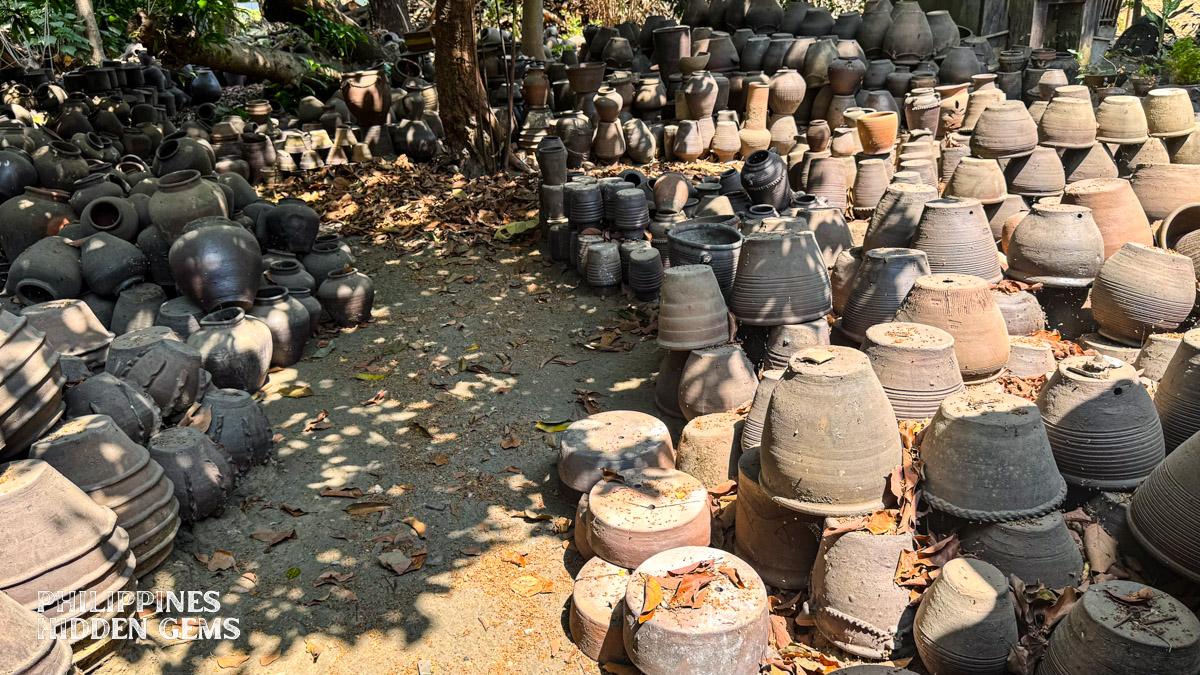
Pottery in Vigan is one of the city’s oldest living traditions, kept alive today by only a handful of artisans.
Watching burnay artisans work and trying the wheel myself made this one of my favorite attractions in Vigan, especially as an arts and crafts lover.
If you’re already planning your trip, squeeze this into your Vigan itinerary.
Bring cash for donations, wear clothes you don’t mind getting dirty, and give yourself enough time to actually try the wheel!
🗺️ Travel Resources for Your Ilocos Sur Trip
Planning to visit Vigan or explore the rest of Ilocos Sur? Here are the websites and tools to help you book transportation, hotels, tours, and other travel needs.
How to Get to Ilocos Sur – Book a direct bus from Manila to Vigan through Partas, Farinas Transit, or check routes and prices on 12Go for updated schedules and seat selection.
Where to Book Your Stay – Find colonial-style hotels in Vigan or beachfront stays in towns like Narvacan and Santiago via Booking.com, Agoda, Airbnb, or Vrbo for group stays or unique heritage homes.
Getting Around the Province – Rent a car through Rentalcars.com or Discovercars.com for more freedom, hire tricycles for short town rides, ride a bus or jeepney for long trips within the province, or arrange private vans for group tours through your hotel or local travel agencies.
Book Tours and Activities – Discover Calle Crisologo, Baluarte Zoo, and hidden spots like Pinsal Falls with local guides or book curated tours through Klook, Viator, or GetYourGuide.
Stay Connected – Stay online with an Airalo eSIM, rent pocket WiFi from Klook if you’re traveling with friends, or buy a local SIM from Smart or Globe at convenience stores and terminals in Vigan or nearby cities.
Cash, ATMs, and Payments – Bring pesos for food stalls, tricycles, and small shops, as many places don’t accept cards, and rural areas may have limited ATM access.
Travel Insurance – Protect your trip with flexible coverage from SafetyWing, HeyMondo, or World Nomads, especially if you’re joining outdoor adventures like ziplining or hiking.
Check Out These Recommended Articles:
- Everything You Need to Know Before Visiting Calle Crisologo in Vigan
- Best Attractions in Vigan: Things to Do & Places to Visit
- Vigan Itinerary: How to Spend 2-3 Days in This Heritage Town
- Where to Stay in Vigan: 12 Best Hotels for Every Budget
- 11 Top Tourist Spots in Ilocos Sur for Your Next Adventure (+3 Awesome Activities To Try!)

About the Author
Hi! I’m Ellie, a matcha lover, creative, and one of the writers behind Philippines Hidden Gems. I travel to document joys: sights that leave you in awe, a patch of nature that asks for nothing, a meal that surprises you, a new restaurant or cafe worth lingering in, and museums and galleries that slow you down. The Philippines has no shortage of these, and I have a particular soft spot for its culinary scene, local businesses, and the stories behind them!