
Best Attractions in Vigan: Things to Do & Places to Visit
This article may contain affiliate links. This means we receive a small commission whenever you book or purchase something through our links (at no extra cost to you!). You can find more information in our disclaimer.
Vigan is the oldest surviving Spanish colonial town in Asia. Walking through it, you half-expect to be back a few centuries ago. If you love history, there’s really nowhere else quite like it in the Philippines.
As someone from Manila, I must say Intramuros gives you a glimpse of what used to be the colonial capital, but Vigan is the whole town.
I’ve been here more than once, and I love going back every once in a while.
Top Things to Do & Attractions in Vigan
If you’re figuring out what to do in Vigan, most of it starts right here in the heritage village, and you can cover a lot of ground without much planning. That’s part of what makes it so easy to love.
You can just show up, start walking, and the city does the rest.
🏛️ Museums & Heritage Houses
Most of Vigan’s museums and heritage houses are within the heritage village, so you can easily hop from one to the next without a plan.
Each one tells a different part of the city’s story, and together, they give you a much better picture of Vigan before you hit the streets.
If you only have a day, I’d still set aside a good chunk of the morning for these.
📍 National Museum Ilocos Complex

🎟️ Entrance Fee: Free
🕖 Opening Hours: 9:30 AM – 5:00 PM Daily
If you love history, the National Museum of the Philippines (Ilocos Complex) is the best place to start your Vigan trip.
It brings together anthropological artifacts and cultural treasures that tell the story of the region.
The complex has two parts.
The first is the ancestral house of Padre Burgos, one of the three Filipino Catholic priests executed by Spanish colonial authorities.
The second is the Old Ilocos Sur Provincial Jail, where you can see old prison cells and explore exhibits on the life of former President Elpidio Quirino, whose father served as a commissioned officer in the Spanish army and later as warden of this very jail.


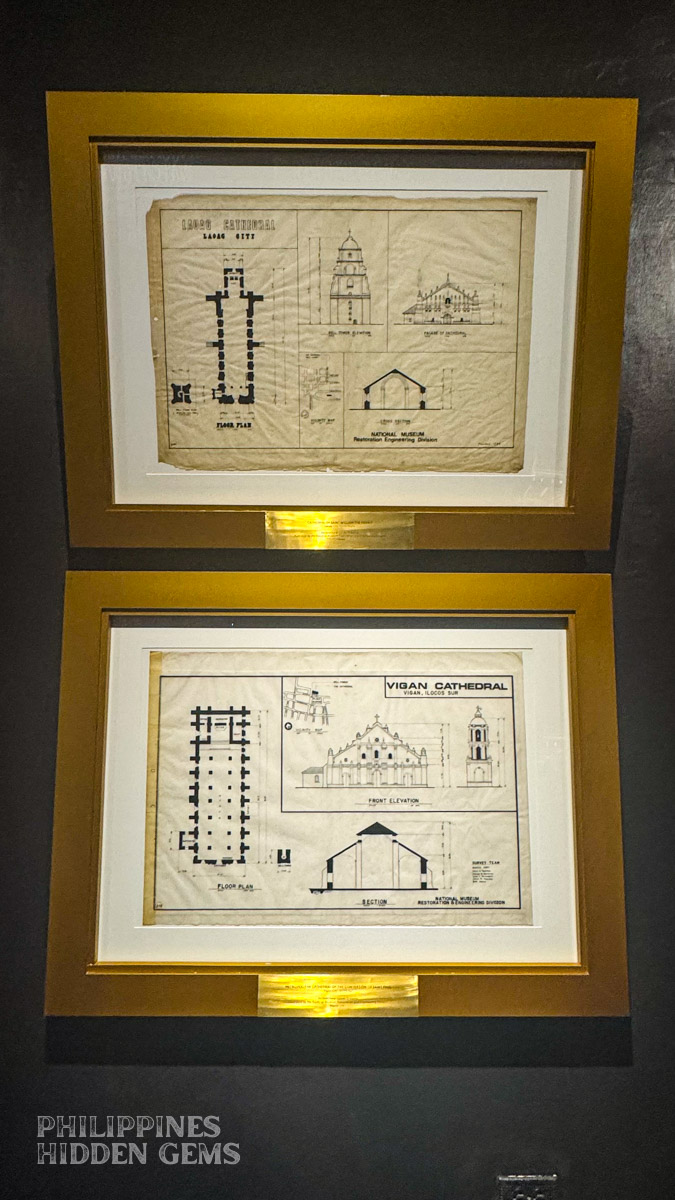
There are also exhibits featuring artwork on Filipinos’ fight for freedom, and architectural illustrations of significant structures across the Ilocos Region, including the Vigan Cathedral and the Paoay Church.
In between buildings, there’s a garden that I really love. It’s quiet, and a perfect place to catch your breath before moving on to the next exhibit.

Sign up now to grab your FREE guide to 50 hidden gems in the Philippines!
📍 Crisologo Museum

🎟️ Entrance Fee: Donation (though the caretaker won’t welcome you in without dropping something in the donation box!)
🕖 Opening Hours: 8:30 AM – 11:30 AM | 1:30 PM – 4:30 PM Daily
The Crisologo Museum is the ancestral home of former Congressman Floro Crisologo and his wife, former Governor Carmeling Pichay Crisologo, one of Vigan’s most prominent political families.
The house has been restored and turned into a museum.
Floro is best known as the father of the Social Security System, a program that has helped countless Filipinos over the decades.
He was also a descendant of Marcelino “Mena” Crisologo, the statesman, author, and first civil governor of Ilocos Sur, the same person Calle Crisologo is officially named after.
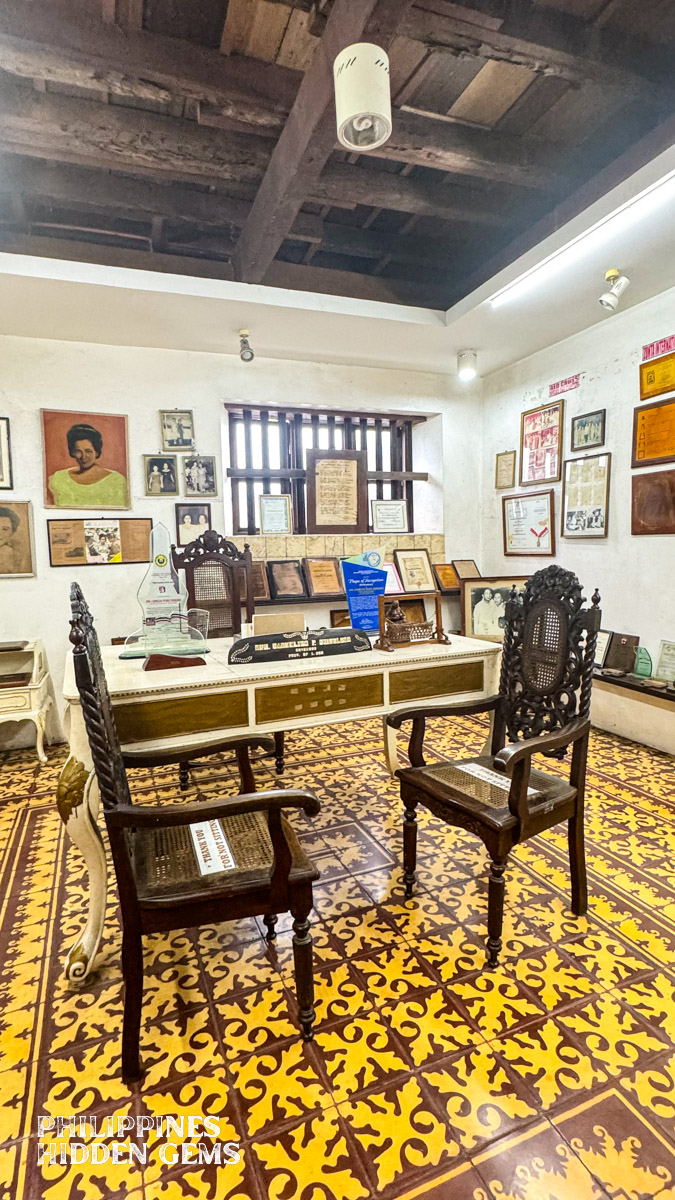
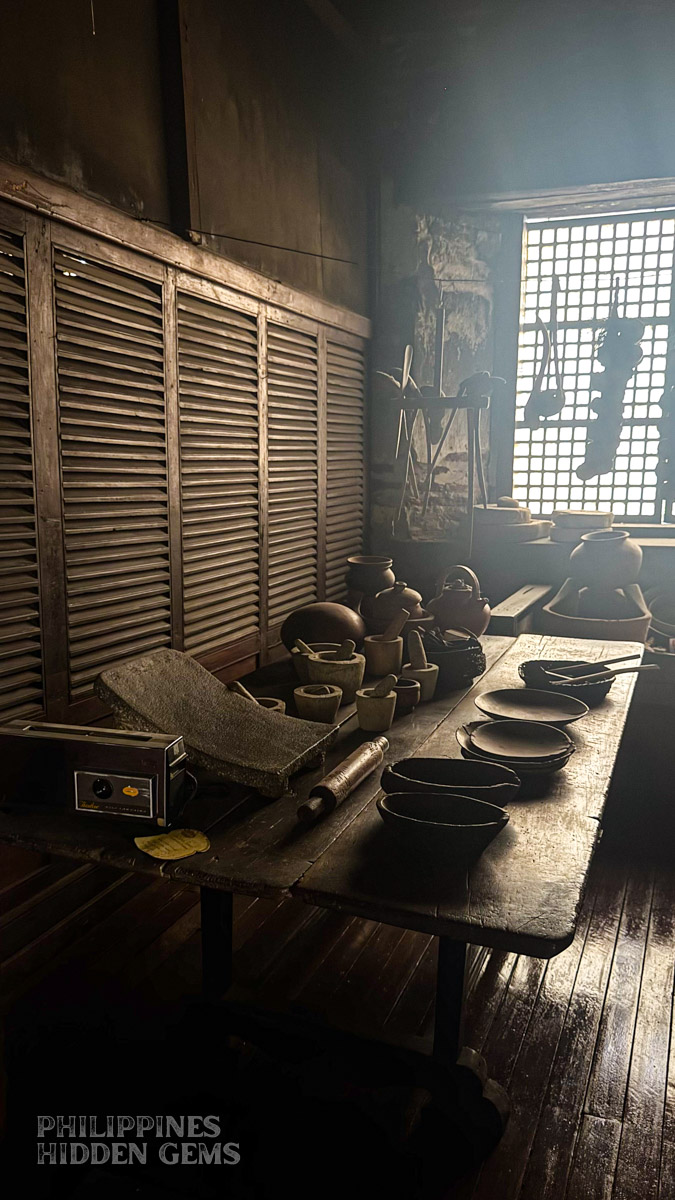
Inside, you’ll find the couple’s offices and a collection of personal items, including clothing, perfume, shoes, furniture, and tableware that show you what life looked like for a wealthy Ilocano family in the early to mid-20th century.
💡 Fact: You’ll also find a piece of clothing that Floro wore on the day he was assassinated.
📍 Vigan City Museum

🎟️ Entrance Fee: 80
🕖 Opening Hours: 9:00 AM – 4:00 PM Daily
The Vigan City Museum might be my favorite museum in the city. It’s divided into three sections, and each one covers a completely different side of Vigan’s story.
The first section walks you through the people’s religion, with figures of religious icons and important artifacts like detached bells from old bell towers.
The second is about civics and politics.
Here, you’ll find displays of burnay jars, woven textiles, and other Ilocano products alongside the histories of significant Ilocano figures like Padre Burgos, Gabriela and Diego Silang (the legendary husband-and-wife revolutionary who fought the Spanish), Elpidio Quirino, and the city’s mayors.


The third section is dedicated to the design and upkeep of Casa Bigueño, the old Spanish colonial houses of Vigan.
You’ll find displays of floor plans, interior and exterior designs, and guides on how these heritage structures are maintained.
💡 Tip: The Vigan City Museum is a little outside the heritage village buffer zone, so you’ll need to drive or take a tricycle to get here. Personally, I find it the most informative museum of the lot.
📍 Hotel Luna Museum

🎟️ Entrance Fee: Free
If you love art, Hotel Luna might be your favorite stop in Vigan. It’s the first museum hotel in the country, and even if you’re not staying here, you can walk in and look around.
The lobby is already lined with artworks, and so is the staircase leading up. The second floor is a living room, except the walls and corners are filled with art.
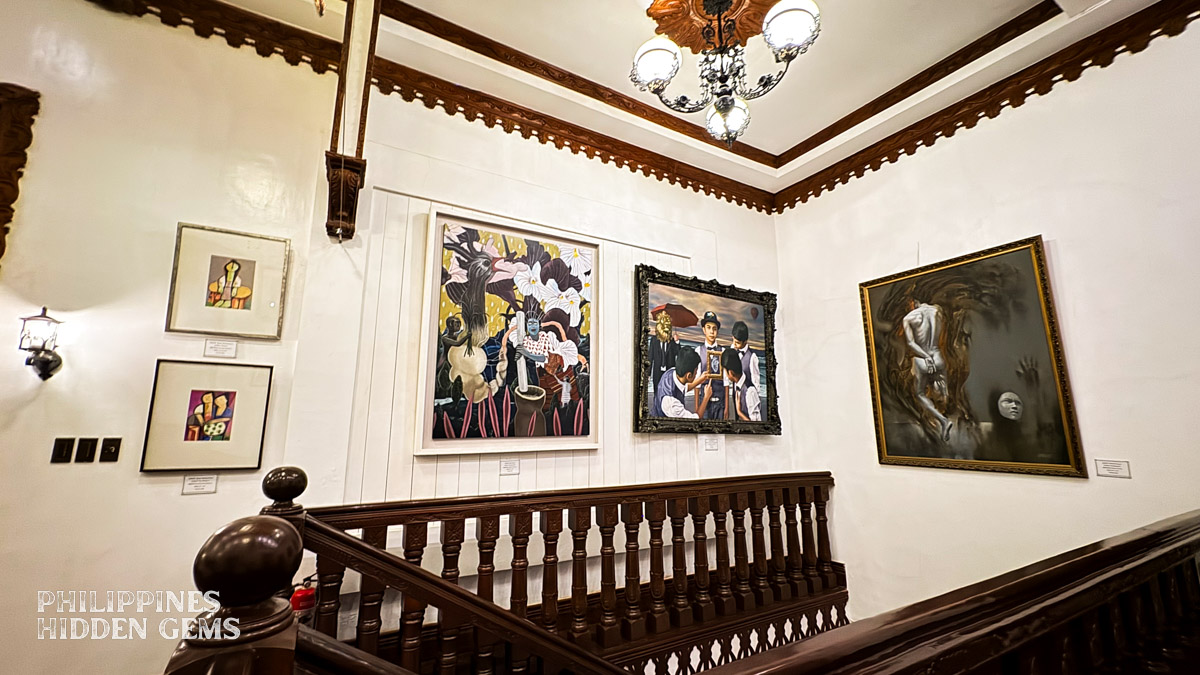
You’ll find works by some of the biggest names in Filipino art, including:
- Juan Luna – the painter, sculptor, and political activist of the Philippine Revolution;
- Abdulmari Asia Imao – the first Muslim National Artist for Visual Arts; and
- Benedicto Cabrera – who’s famously known as BenCab. Also a National Artist for Visual Arts and one of the most celebrated contemporary artists in the country.
📢 Join the community! Make sure you join our Philippines Hidden Gems – Travel Community. This is the place to ask any questions about your trip, to be inspired, and to connect with other Philippines travelers. Click here to join!
📍 Villa Angela

🎟️ Entrance Fee: Donation
Villa Angela is one of the best places to stay in Vigan. I remember visiting here as a kid, but my memory’s blurry now, so I’m glad I got to revisit and actually take it all in this time.
This heritage house was built in 1873 by husband and wife Don Agapito Florendo Bonifacio, who served as Gobernadorcillo of Vigan, and Dona Maria Villanueva.
The couple merged their own adjacent lots into one full block when they married.
It comprises a house and a garden with a kalesa and a big tree that shades most of the garden. I visited right after lunch, and big thanks to that tree for being a sanctuary from the sun.
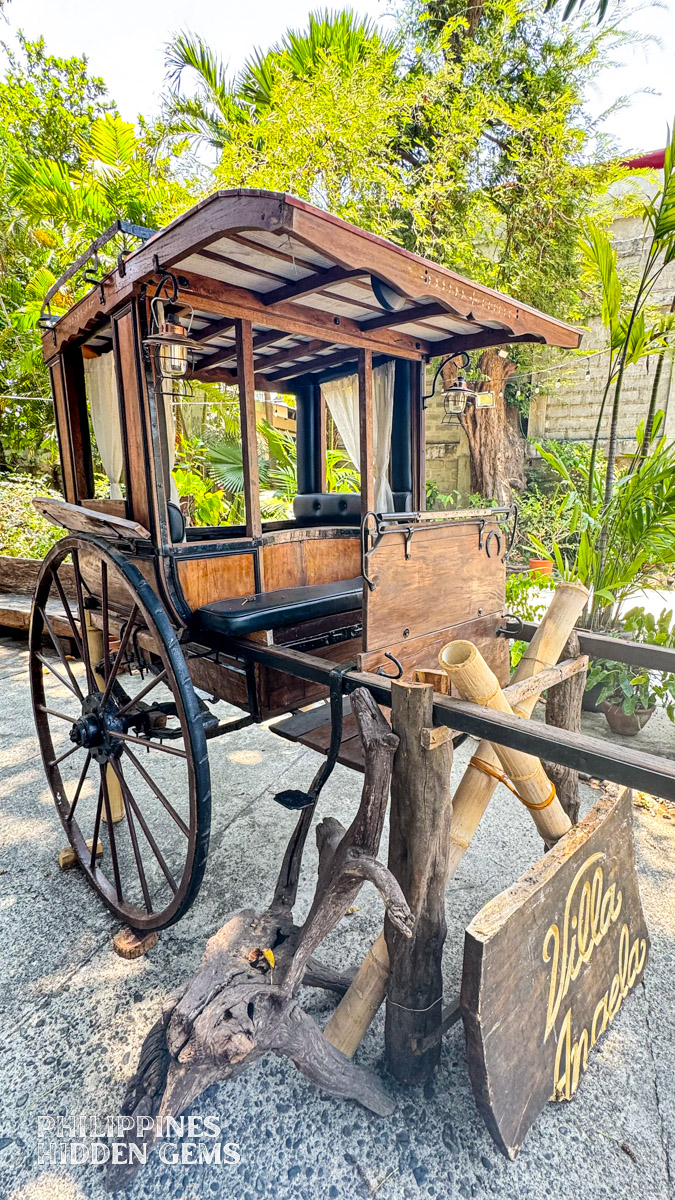
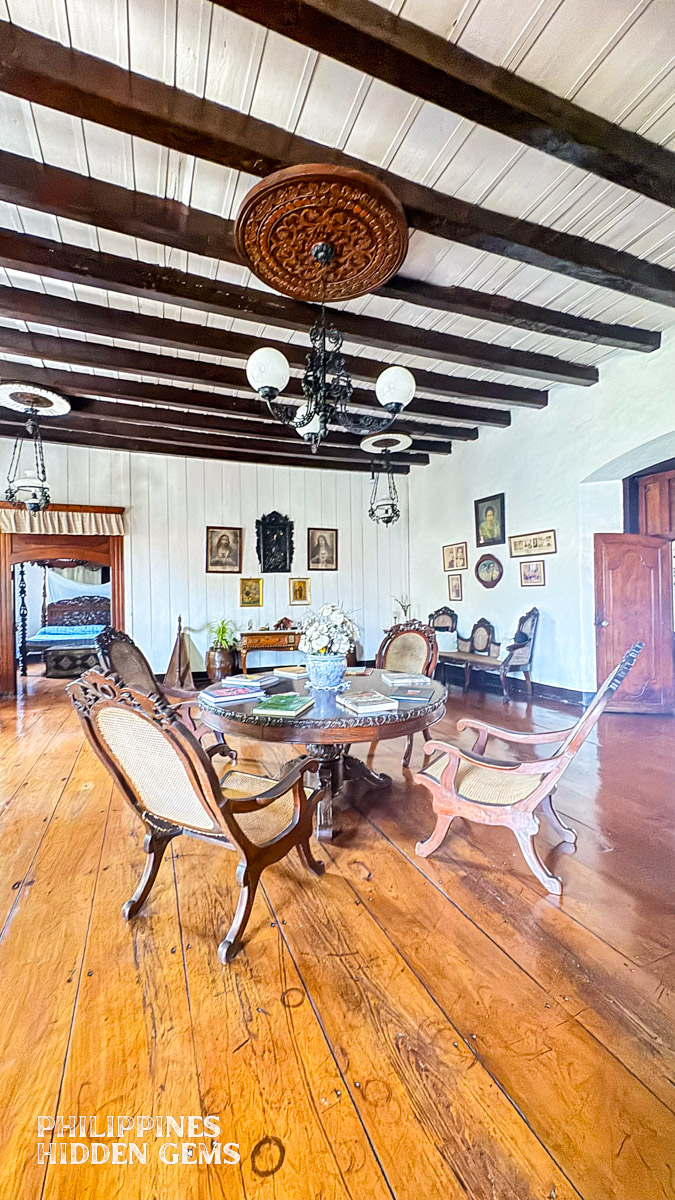
The house passed through generations of the same family, eventually landing with Dona Angela Villanueva y Florendo, the woman it’s named after.
The upper floor has been kept the way it was over a hundred years ago. You’ll find old photographs, antique furniture, capiz shell windows, a victrola, and a giant harp in the living room.
The dining room, where guests have breakfast, is lined with porcelain and chinaware. There’s also an old well on the property, and large burnay jars that were used to keep food fresh.
The house has had some notable guests, too. In 1989, actor Tom Cruise stayed here while filming Oliver Stone’s Born on the Fourth of July (1989). You’ll find a photo of him with the owner hanging in the room he stayed in.
It’s also been a filming location for Jose Rizal (1998), Noli Me Tangere (1961), and Maria Clara at Ibarra (2022).
💡 Tip: This was my favorite heritage tour in Vigan. The caretakers go above and beyond. They walked me through everything, including how they used old back door locks and how the household worked in the kitchen and managed waste centuries ago.
⛪ Churches & Landmarks
Vigan’s churches are hard to separate from the city’s history. They’ve been here through colonial rule, wars, and earthquakes, and most of them are still standing and still active today.
📍 Vigan Cathedral

The Vigan Cathedral, officially known as the Metropolitan Cathedral of the Conversion of St. Paul the Apostle, sits right in front of the main square of the city.
Built in the 18th century, the cathedral blends Baroque and Neo-Gothic styles, with an interior filled with stained glass windows and religious artwork. It serves as the seat of the Archdiocese of Nueva Segovia, and the Archbishop’s Palace sits right beside it.
The cathedral has been rebuilt multiple times after earthquakes and fires over the centuries, and it’s now part of Vigan’s UNESCO World Heritage Site declaration.
📍 Bantay Church and Belfry Tower

🎟️ Entrance Fee: Donation
🕖 Opening Hours: 8:00 AM – 5:00 PM Daily
Bantay Church (Parish of Saint Augustine of Hippo) is one of the oldest churches in Ilocos Sur.
It and its belfry tower are about a 4-minute drive from the heritage village, just north of the city center across the Govantes River. They’re technically outside of Vigan, but worth the short trip.
The belfry was built in 1591 and sits on a hill overlooking the city. You can climb the circular staircase up to the top, where you get great views of the surrounding area.
Ask the caretakers about the bells while you’re there. They ring differently depending on the occasion, with a distinct sound for births, weddings, and funerals.
The name Bantay means “to watch” or “to guard,” which makes sense given its history as a lookout for raiders during the Spanish colonial era. It also played a role during World War II.
⛲ Streets, Parks, & Plazas
Vigan’s streets and plazas are where the city slows down, locals hang out, and you get a feel for everyday life in a heritage city. Don’t rush through these!
📍 Calle Crisologo
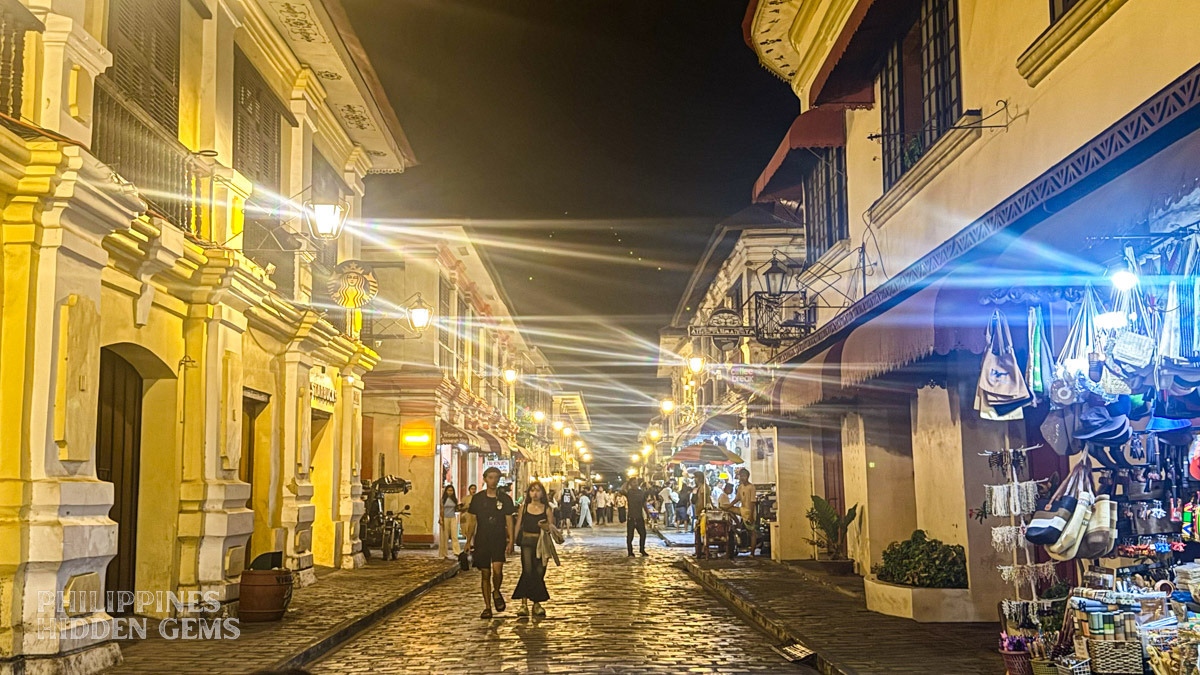
Calle Crisologo (or Crisologo Street) is one of the top tourist spots in Ilocos Sur and the heart of Vigan. It’s a short cobblestone street lined with old Spanish colonial houses, souvenir shops, restaurants, coffee shops, and hotels.
The street has kept so much of its original feel.
In the early morning, it’s quiet and unhurried. By afternoon, it fills up with tourists. At night, it’s fully lit up and buzzing with diners, and that’s my favorite time to visit!

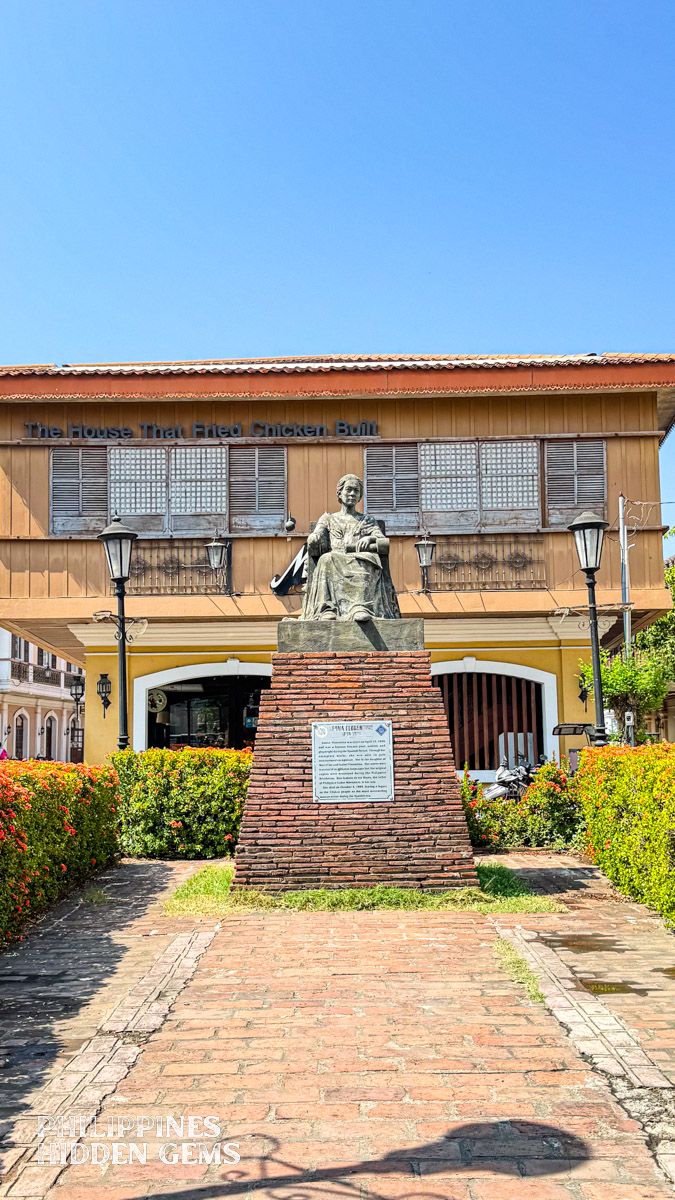
I loved diving in and out of the shops, picking up souvenirs, grabbing a cup of orange coffee at Cafe Amian, and stopping to admire the architecture and people watch.
📍 Plaza Salcedo & Dancing Light Show
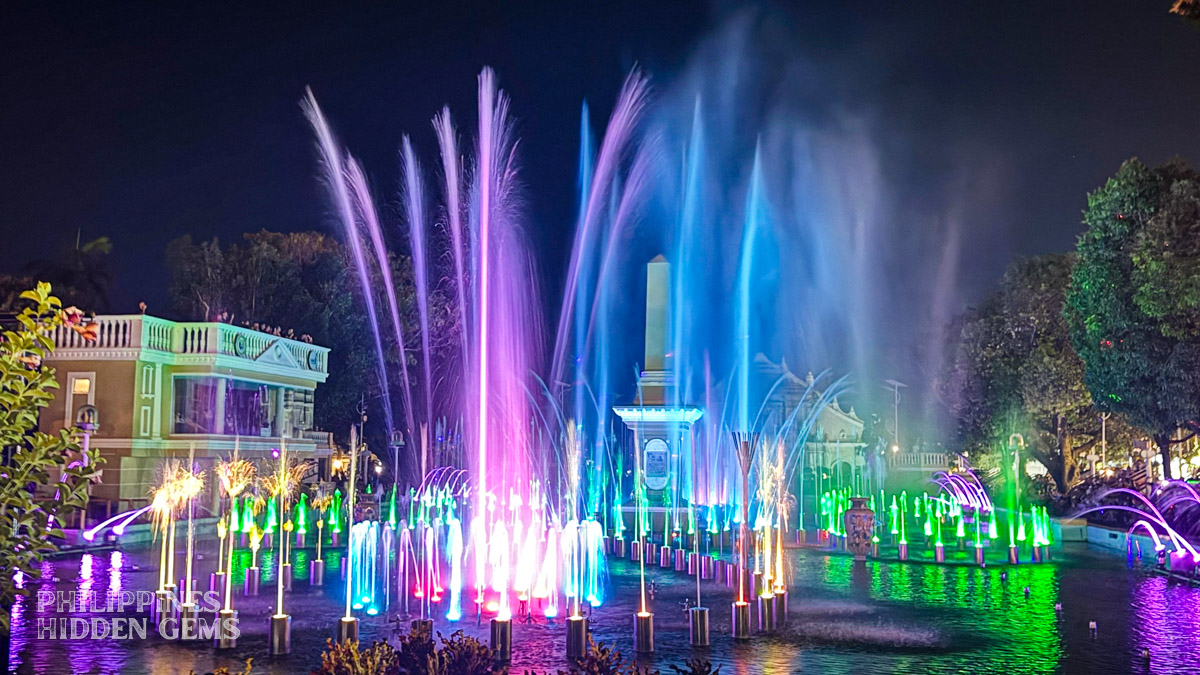
Plaza Salcedo, the main square, is sandwiched between Vigan Cathedral and the Ilocos Sur Provincial Capitol building.
It is named after Juan de Salcedo, the Spanish conqueror who founded Vigan.
During the day, it’s a great spot to sit down, catch your breath, and watch the city go about its business.

But the real reason to come here is the dancing fountain show, which is one of the best things to do in Vigan at night.
Every evening, at 7:30 PM, the plaza comes alive with laser lights and dancing water set to a mix of pop and local songs.
It runs for about 30 to 45 minutes. Weekdays are much less crowded than weekends, so if you can time it, go then.
💡 Tip: Arrive 15-20 minutes early to find a nice spot to sit, especially on weekends and holidays.
📍 Plaza Burgos

Plaza Burgos is named after the Filipino priest Padre Jose Burgos. It’s sandwiched between the Vigan Cathedral and the opening of streets to the heritage village.
What I love about this place is it’s so chill. You’ll find families and kids playing at a little playground, and there are small restaurants and stalls where you can grab local snacks while you hang out.
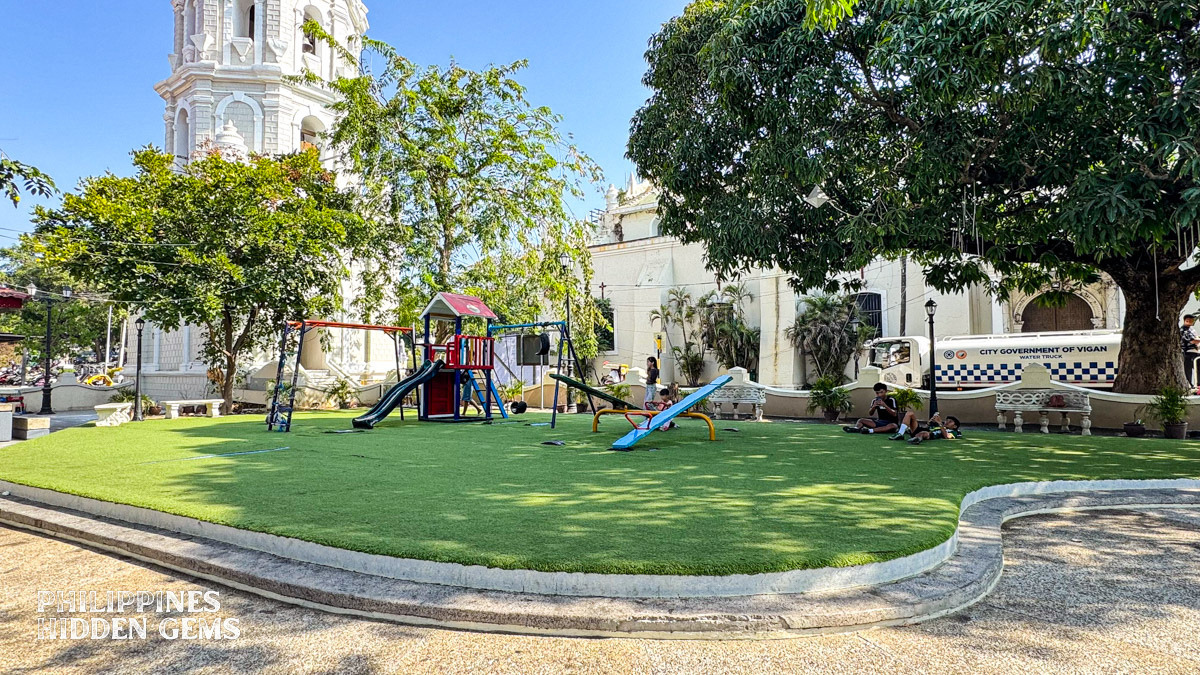
The plaza also has a stage, since it also holds various events and celebrations.
🇵🇭 Activities & Experiences
Some of the best experiences in Vigan go beyond the museums and churches, giving you a chance to actually participate in the city’s culture rather than just observe it.
✅ Kalesa Ride

In the Philippines, nothing screams “old city” more than kalesas, or horse-drawn carriages.
First introduced by the Spanish in the 1700s, these were once the primary mode of public and private transportation across the country. In Vigan, they never really went away.
Taking a kalesa around the city is the most romantic way to explore it, and most coachmen double as tour guides along the way.
💡 Tip: If you’re touring on a kalesa, make sure to agree with your driver on the price, length of tour, and places to visit before you set off, so you know what to expect.
✅ Pagburnayan Pottery District
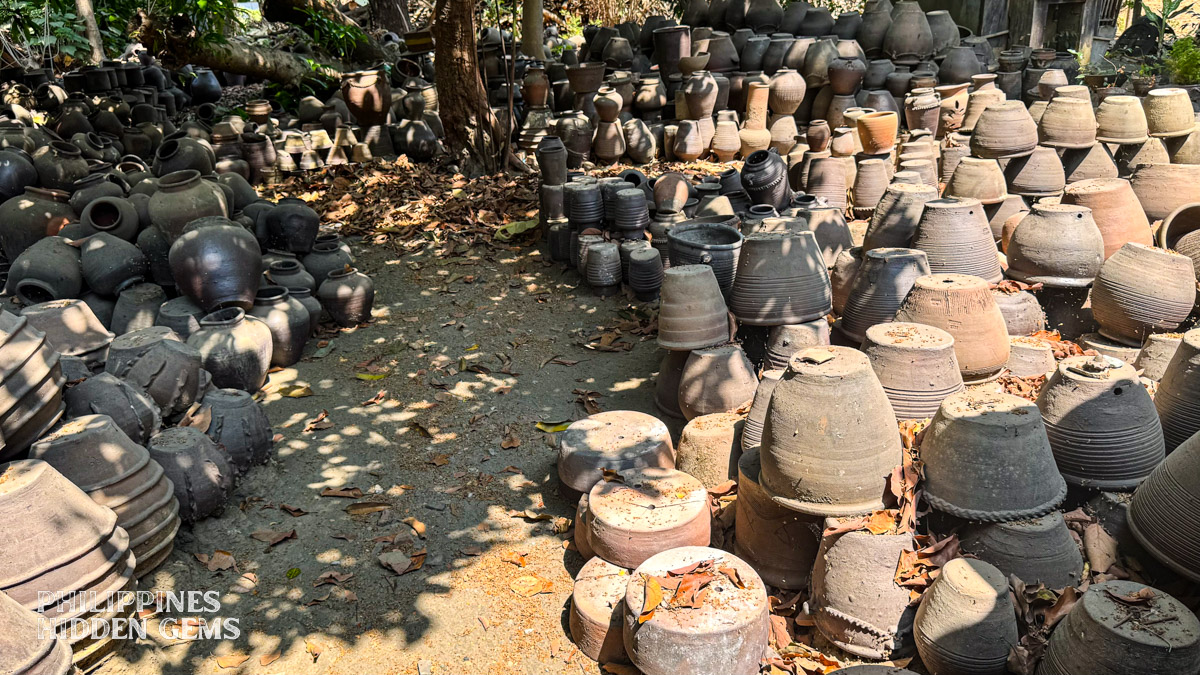
The burnay jar-making tradition in Vigan dates back to pre-colonial times, when Chinese immigrants settled in the area and discovered the abundance of high-quality clay in the western part of the city.
The word “burnay” is an Ilocano term for earthen jars made from clay and baked in a traditional kiln, historically used to store local condiments like bagoong (fermented fish or shrimp paste) and suka (vinegar), and even as burial urns.
That tradition is still very much alive today, and the neighborhood where it all happens is literally named after it.


You’ll find two famous jar factories here: RG Jar Factory and Ruby Jar Factory.
RG is the one to prioritize. They offer pottery demos and workshops where you can try making your own jar, and the family behind it will take you through the whole process.
Ruby Jar Factory is just across the street, though during my visit, it looked closed. Apparently, their master potter, Fidel Antiporda Go, a National Folk Artist, passed away.
If you want to learn more about the history of this place and the process of pagburnay, read my full guide about Pagburnayan Pottery District.
✅ Ilocos Sur Adventure Zone
If you’re traveling with kids or just want a break from history, the Ilocos Sur Adventure Zone is worth the short drive. It’s technically in Bantay, about 34 minutes from the heritage village.
The park has a good mix of activities: wall climbing, rappelling, a roller coaster zipline across the river, and a rope course with nine challenges, including a wire bridge, cargo net, bike bar, and plate bridge.
It’s a good stop if you’re traveling with kids or just want something more active.
✅ Abel Iloco Weaving
Inabel is the handwoven textile of the Ilocos region, and it’s been part of Ilocano life long before it became a tourist attraction.
The word abel means “to weave” in Ilocano, and the fabric has been used for just about everything, from blankets and bed linen to wedding dresses and burial wraps.
It’s made from cotton and woven on pedal looms, with patterns like binakul and pinilian that are unique to Ilocano weavers.
One piece can take up to three days to finish by hand, which tells you a lot about the craft.
While you can get inabel from souvenir shops along Calle Crisologo, Abel Loom Weaving in Caoayan is still worth a visit if you want to see the process.
It’s about 11 minutes from the heritage village. You can watch the weavers work and pick up a few pieces while you’re there.
It’s one of the better souvenirs you can bring home from Vigan.
🌊 Nature, Parks, and Beaches
Vigan isn’t all cobblestone streets and colonial architecture. The natural attractions in Vigan are easy to overlook, but a short drive from the heritage village, you’ll find a zoo and two black sand beaches.
📍 Baluarte Park & Zoo

🎟️ Entrance Fee: P100. There are also a package tour w/ the shuttle service that range from P100-300.
🕖 Opening Hours: 8:00 AM – 5:00 PM Daily
Baluarte Zoo is one of the more unexpected stops in Vigan.
Owned by former governor Chavit Singson, the park sits on a hill with views stretching out to the ocean, and has a surprisingly diverse collection of animals, including tigers, ostriches, and zebras.
Some roam freely around the grounds while others are kept in caged or fenced areas that you can view from a distance.

Inside the zoo is the Baluarte Safari Gallery, which houses an extensive collection of preserved animals from around the world.
Each exhibit includes a statue of the animal alongside a photo of Singson from his hunting expeditions.
It’s an unusual addition, but one that makes the place hard to forget.
📍 Mindoro Beach

Most people go to Pagudpud (further north) for beaches, but if you want to take a breather away from crowds, Mindoro Beach is a nice escape.
A 15-minute drive from the heritage town, it’s technically the only beach in Vigan City.
Here, you’ll find a black sand beach (due to magnetite) and strong, intimidating waves, which don’t deter local kids from swimming!
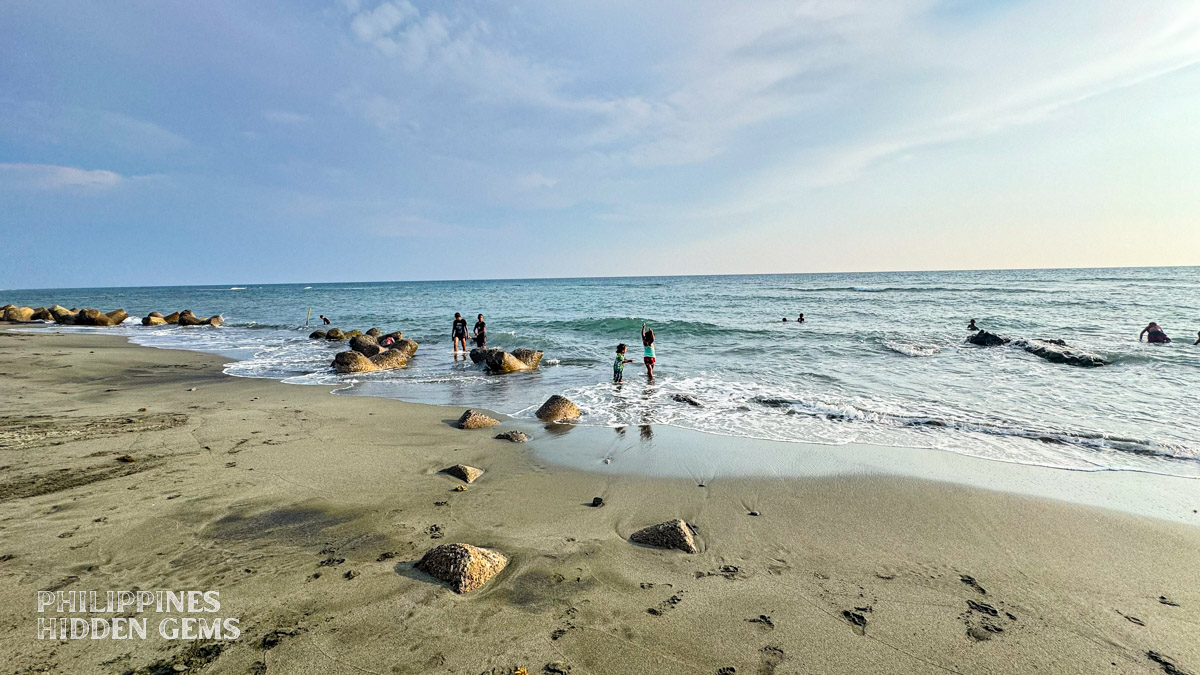
That is why the road is elevated, and you’ll find jackstone-shaped breakwater armors on the shore.
Still, the sound of the waves and the view, especially at sunset, will relax you.
During my last visit on a late afternoon, there was a group of kids who, apparently, biked their way to the beach and expertly swam along the waves together. It was fun to watch.
📍 Santa Catalina Beach

Also, 15 minutes away from Vigan heritage town, but on the other side, is Santa Catalina Beach, a calmer and prettier beach.
But because of these, expect crowds, especially at sunset! Still, the black-sand stretch is pretty clean.
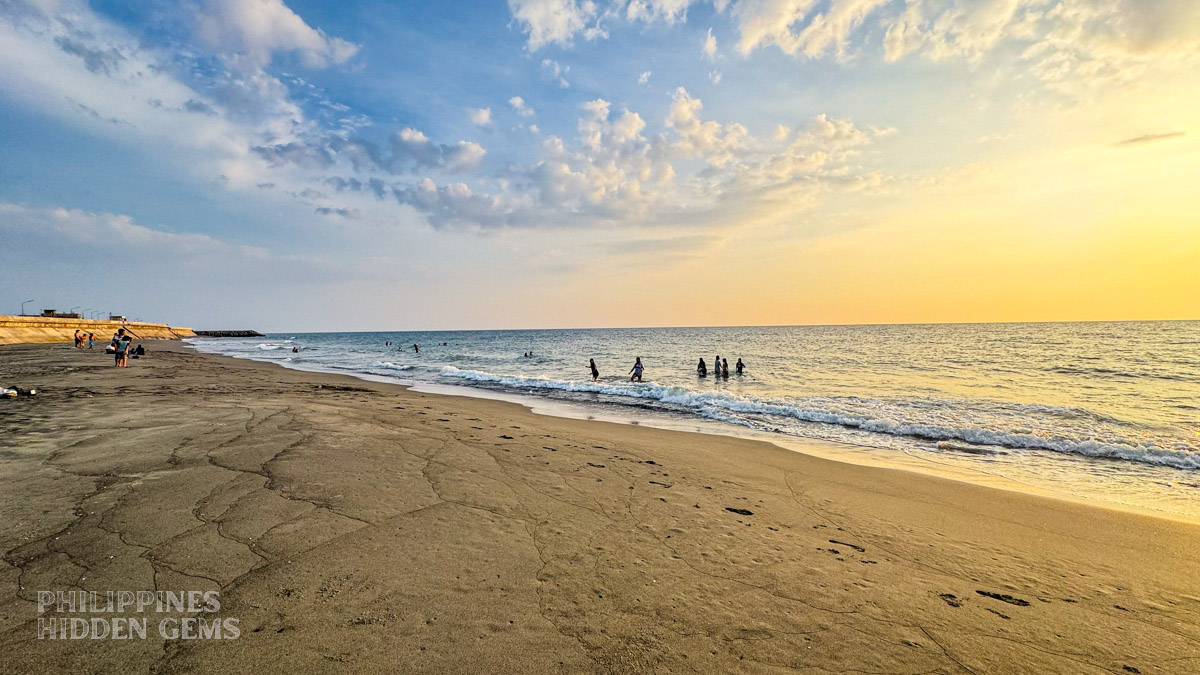
Here you’ll find people bringing their cars just for sunset time! There are also vendors who offer quick snacks and refreshments!
🍽️ Eat Local Food in Vigan


No trip to Vigan is complete without eating your way through it. Ilocano food is bold, filling, and deeply rooted in tradition, and Vigan is one of the best places in the country to try it.
Start your morning at First Sinanglaoan for sinanglao, a beef innards soup with a distinctly sour and slightly bitter broth that’s hard to stop eating once you start.
Then grab a Vigan empanada, a crispy rice flour shell filled with shredded green papaya or cabbage, egg, and Vigan longganisa, best eaten with sukang Iloko (Ilocos vinegar).
Casa Jardin and Irene’s are the two spots for the best Vigan empanada.
If you want to sit down for a proper meal, Casa Felicitas is the go-to for Vigan longganisa and bagnet, which, for me, are must-try food in Vigan.
For a more budget-friendly option, Panganan ken Ihawan toy Ciudad Vigan serves longganisa and other local dishes without breaking the bank.
And before you leave Calle Crisologo, stop by Cafe Amian for their orange coffee. It sounds unusual, but it works.
For a complete list of where to eat in the city, I also have a guide to the best restaurants in Vigan.
How to Get to Vigan
If you’re wondering how to go to Vigan from Manila, the most common route is by land. There’s also a flight option, though you’ll still need to travel by land for the last stretch.
🚌 By Land
If you’re driving from Manila, the trip from Cubao takes about 7 hours.
You can also take a night bus.
I once made the mistake of showing up at the Partas terminal in Cubao on a Saturday at 5 AM, only to find it packed with travelers headed to La Union for the weekend. I had to wait 2 hours for the next available bus.
Don’t make the same mistake. Book your bus in advance!
Buses from Manila leave from the PITx terminal in Parañaque and the Partas terminal in Cubao at 7:30 PM and 9 PM, respectively.
You can choose between luxury and super deluxe options, both more spacious than the typical airbuses, with screens, chargers, and a restroom onboard.
Once at the terminal, just exchange your booking voucher for a physical ticket.
From Vigan, return buses depart at 7 PM and 9 PM.
You can also browse more transport options and schedules here.
✈️ By Air
There’s also an option to fly for 1 hour from Manila to Laoag, which, depending on traffic, is more or less 2 hours by car and bus from Vigan.
Conclusion: Attractions in Vigan
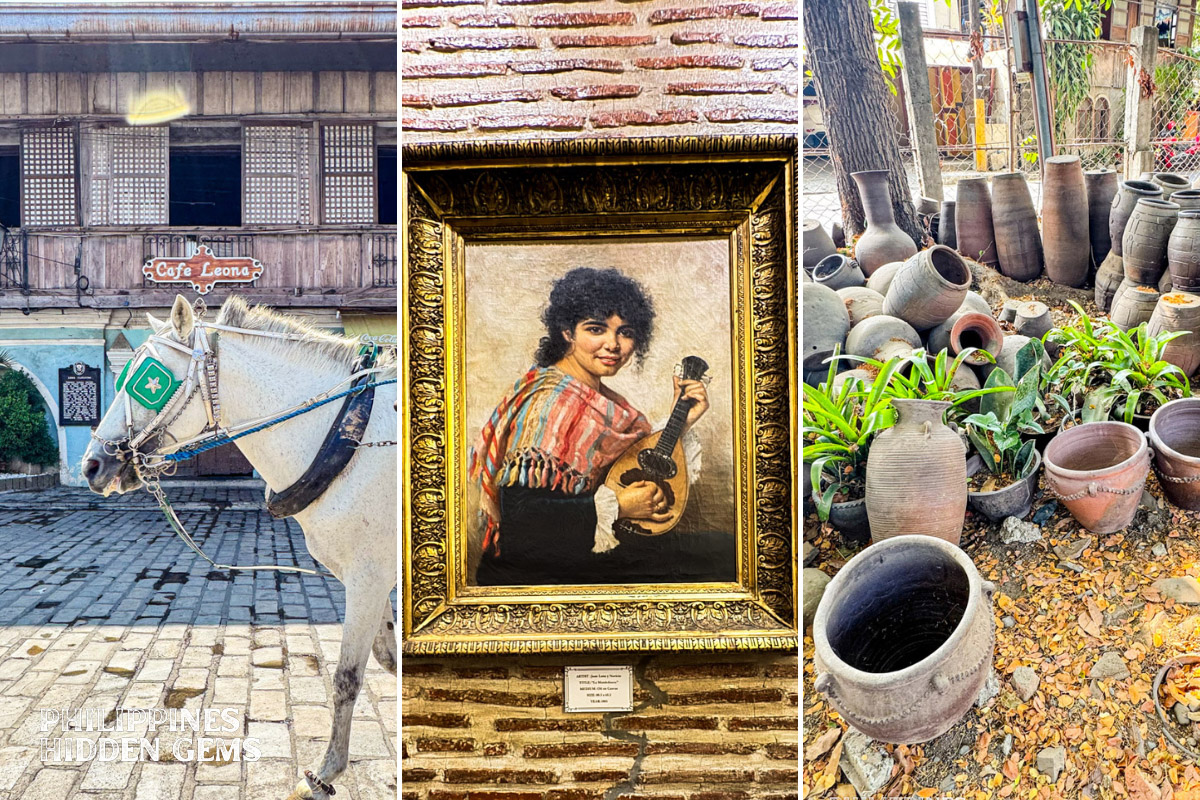
Vigan earns a spot on every traveler’s list. Most people come for the cobblestone streets and leave with a list of places to go in Vigan they didn’t even know existed.
If you’re ready to plan your trip, you might find this Vigan itinerary handy!
🗺️ Travel Resources for Your Ilocos Sur Trip
Planning to visit Vigan or explore the rest of Ilocos Sur? Here are the websites and tools to help you book transportation, hotels, tours, and other travel needs.
How to Get to Ilocos Sur – Book a direct bus from Manila to Vigan through Partas, Farinas Transit, or check routes and prices on 12Go for updated schedules and seat selection.
Where to Book Your Stay – Find colonial-style hotels in Vigan or beachfront stays in towns like Narvacan and Santiago via Booking.com, Agoda, Airbnb, or Vrbo for group stays or unique heritage homes.
Getting Around the Province – Rent a car through Rentalcars.com or Discovercars.com for more freedom, hire tricycles for short town rides, ride a bus or jeepney for long trips within the province, or arrange private vans for group tours through your hotel or local travel agencies.
Book Tours and Activities – Discover Calle Crisologo, Baluarte Zoo, and hidden spots like Pinsal Falls with local guides or book curated tours through Klook, Viator, or GetYourGuide.
Stay Connected – Stay online with an Airalo eSIM, rent pocket WiFi from Klook if you’re traveling with friends, or buy a local SIM from Smart or Globe at convenience stores and terminals in Vigan or nearby cities.
Cash, ATMs, and Payments – Bring pesos for food stalls, tricycles, and small shops, as many places don’t accept cards, and rural areas may have limited ATM access.
Travel Insurance – Protect your trip with flexible coverage from SafetyWing, HeyMondo, or World Nomads, especially if you’re joining outdoor adventures like ziplining or hiking.
Check Out These Recommended Articles:
- 11 Top Tourist Spots in Ilocos Sur for Your 2025 Adventure (+3 Awesome Activities To Try!)
- Best Food in Vigan: Must-Try Dishes and Where to Eat
- Pottery in Vigan: A Guide to Burnay Jar Making
- Best Beaches in Vigan and Nearby
- Everything You Need to Know Before Visiting Calle Crisologo in Vigan
- Vigan Itinerary: How to Spend 2-3 Days in This Heritage Town
- Best Restaurants in Vigan and Other Great Food Spots
- Where to Eat the Best Empanada in Vigan

About the Author
Hi! I’m Ellie, a matcha lover, creative, and one of the writers behind Philippines Hidden Gems. I travel to document joys: sights that leave you in awe, a patch of nature that asks for nothing, a meal that surprises you, a new restaurant or cafe worth lingering in, and museums and galleries that slow you down. The Philippines has no shortage of these, and I have a particular soft spot for its culinary scene, local businesses, and the stories behind them!


