Everything You Need to Know Before Visiting Calle Crisologo in Vigan
This article may contain affiliate links. This means we receive a small commission whenever you book or purchase something through our links (at no extra cost to you!). You can find more information in our disclaimer.
For most travelers, Calle Crisologo is the highlight of a trip to Vigan.
It’s one of the most photographed streets in the Philippines, but there’s more to it than a good photo op.
Most people spend 15 minutes here for photos, but there’s enough to do that you can easily stay half a day if you plan it right.
I’ve visited Vigan multiple times, usually with family and friends. On my last visit, I finally went solo, which meant I could take my time actually exploring Calle Crisologo instead of just passing through.
Here’s everything I wish I’d known before visiting.
Calle Crisologo in Vigan
What is Calle Crisologo?
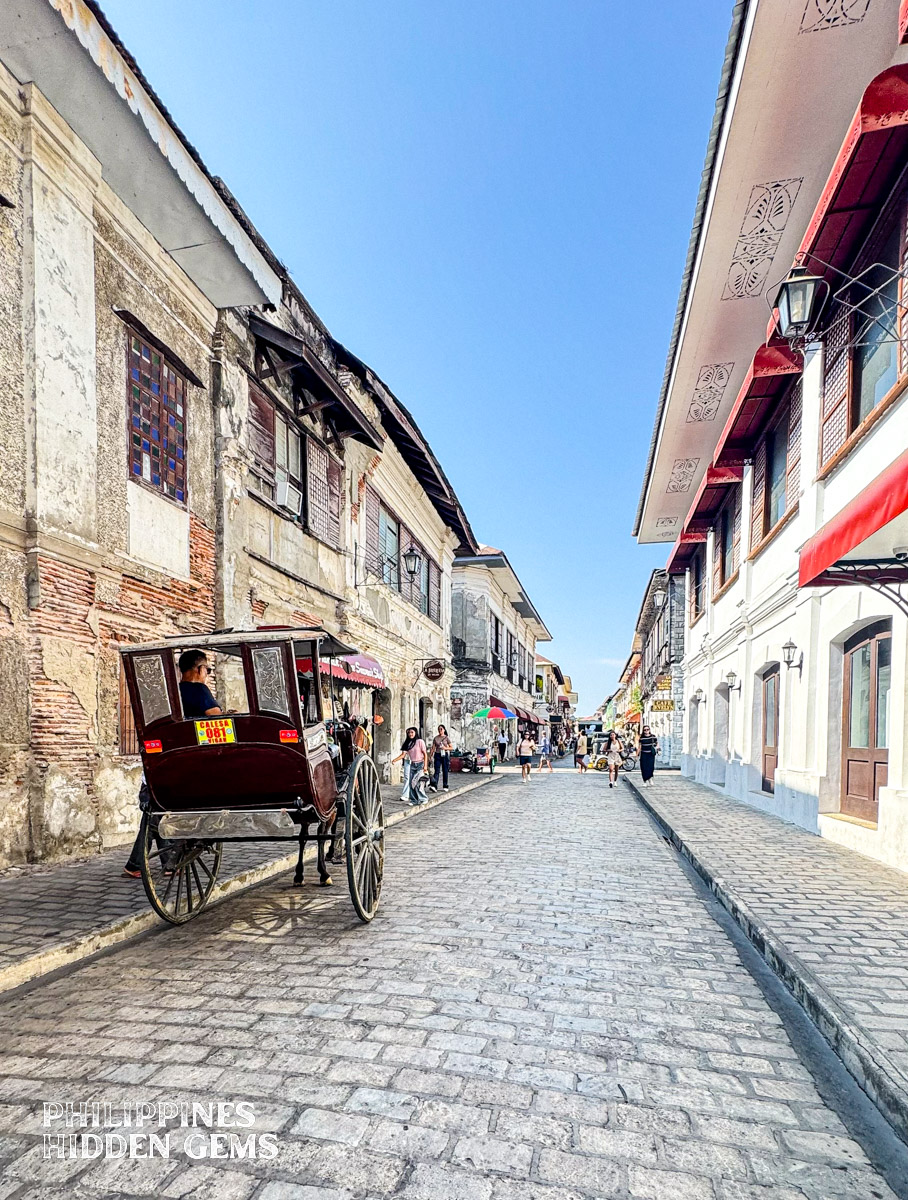

Calle Crisologo (or Crisologo Street) is the most visited historical spot in Vigan.
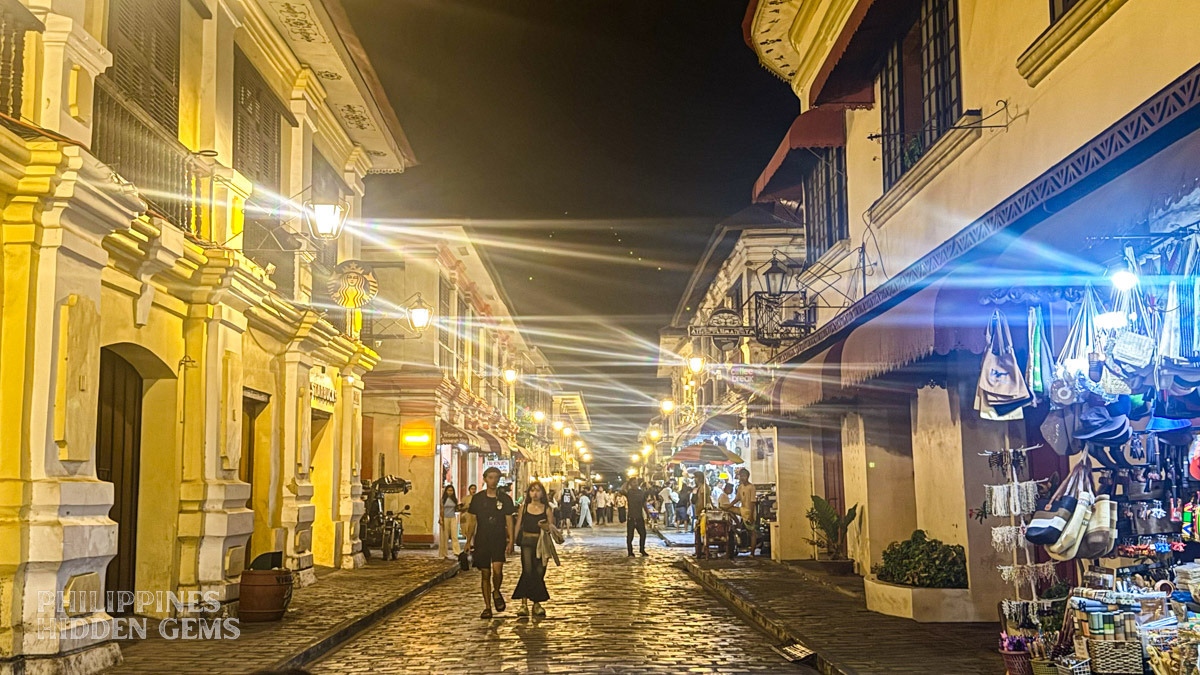
It’s a short, cobblestone street lined with old Spanish-era stone houses, strung with tungsten lamps that give the whole street a warm, romantic glow once the sun sets.
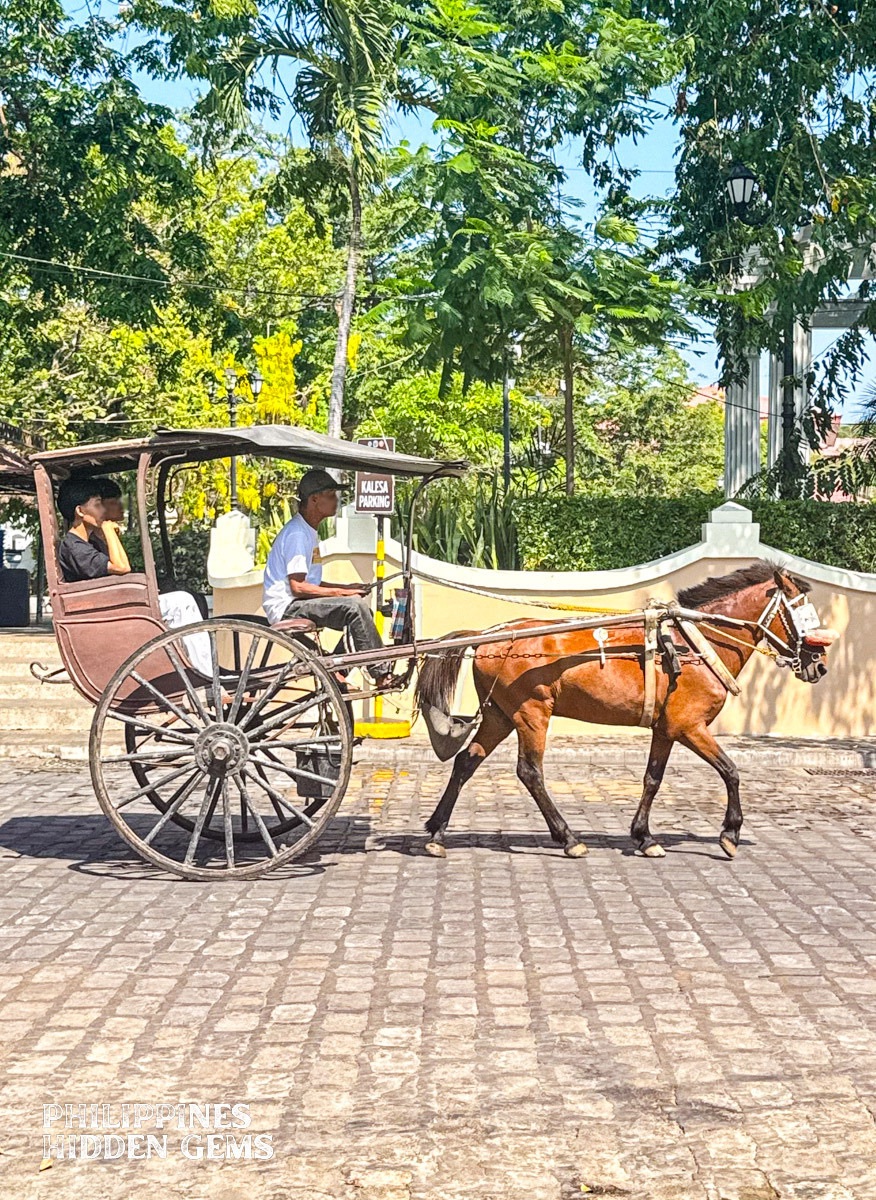
To keep its old-world feel intact, it’s pedestrian-only, aside from kalesas (traditional horse-drawn carriages), which are still very much in use today.
Back during the Spanish colonial era, when Ilocos played a key role in the galleon trade, this street went by a different name: Calle de Escolta de Vigan. It was where the city’s wealthiest families lived.
When the Americans took over, it got renamed Washington Street.
It wasn’t until Ilocos Sur got its first civil governor, Marcelino “Mena” Crisologo, that the street eventually took on the name we know it by today, officially renamed in his honor after his death in 1927.
Calle Crisologo is now the centerpiece of the Historic Town of Vigan, which is a UNESCO World Heritage Site.
The town is regarded as the best-preserved example of a planned Spanish colonial town in Asia, because of the architecture that reflects a unique fusion of Filipino, Chinese, and European influences.
What is the Crisologo family known for?


The Crisologos are one of Vigan’s most prominent political families. The family’s most well-known figure is Marcelino ‘Mena’ Crisologo, the statesman and author the street is named after.
Another notable descendant is former Congressman Floro Crisologo, best known as the father of the Social Security System, a program that has helped countless Filipinos over the decades.
Floro and his wife, former Governor Carmeling Pichay Crisologo, are also the namesakes behind the Crisologo Museum.
It’s the restored ancestral home where you can still see personal items that once belonged to the couple.

Sign up now to grab your FREE guide to 50 hidden gems in the Philippines!
What to See and Do on Calle Crisologo in Vigan
Calle Crisologo is 500 meters long, and you can finish your stroll in less than half an hour.
Even after several visits, it still feels surreal how little the street has changed. To make the most of your visit, let me walk you through the best things to do here.
Heritage Walk & Architecture Spotting


Before you get distracted by the shops (and you will), spend a few minutes simply admiring the architecture.
Every house here follows the bahay na bato style, literally “house of stone,” with a solid stone or brick ground floor and a wooden upper floor that juts out slightly over the street.
That overhang isn’t just for looks, either. It kept the lower floors shaded and cool long before anyone had air conditioning.
The real showstopper, for me, is the capiz shell windows.
Instead of glass, Ilocanos used thin, translucent shells cut into small panes and set into sliding wooden frames, so the whole window could be pushed open like a screen.
A lot of houses still have their original ones.
💡 Tip: Go early before the crowds show up if you want photos without 50 other people in the shot.
Kalesa Ride
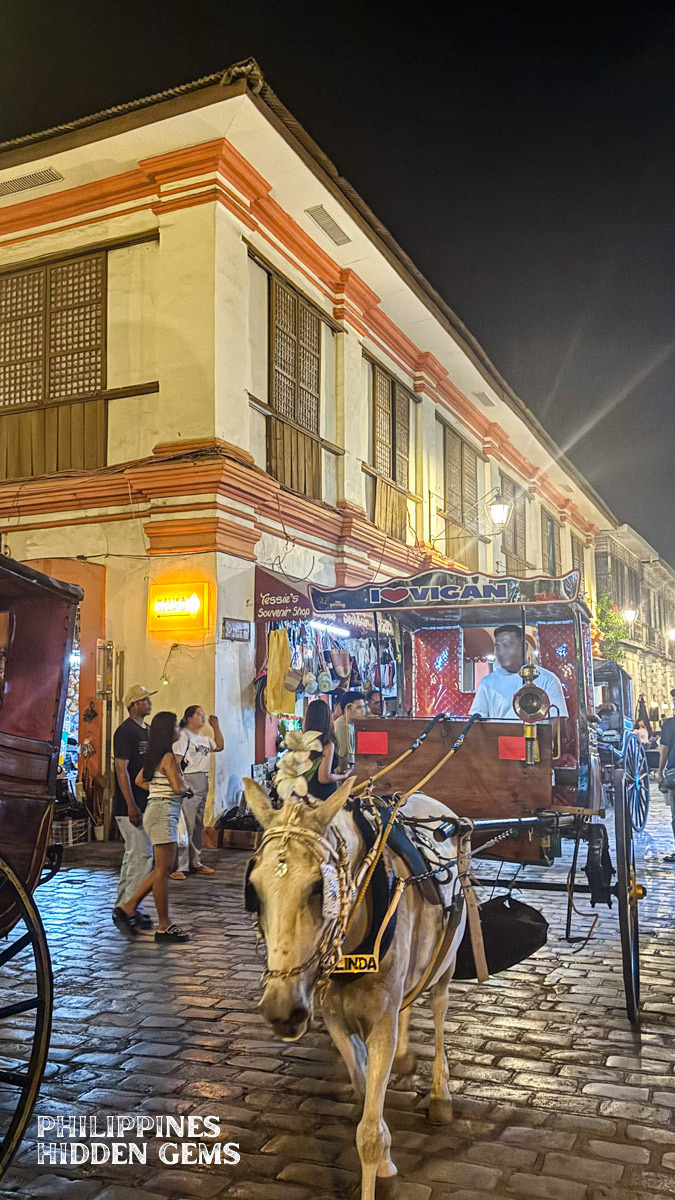
If there’s one thing that screams “old Vigan,” it’s the kalesa, the two-wheeled horse-drawn carriage that’s been rattling over these cobblestones since the Spanish first introduced them in the 1700s.
Most of the country moved on from kalesas decades ago, but Vigan never really let go of them, and that’s part of the city’s charm.
You’ll find drivers (called kutseros) waiting around the entrance to Calle Crisologo, ready to take you on a short loop through the heritage village for around 200 pesos.
It’s an easy, relaxed way to see the street, and a lot of drivers double as informal tour guides, pointing out old houses and establishments, and sharing bits of history you wouldn’t have known to look for on your own.
💡 Tip: Agree on the price and route before you hop on, so there’s no confusion once the ride’s over.
Shopping


Calle Crisologo doubles as one big open-air souvenir strip. It’s easy to lose an hour just browsing in and out of shops.
You’ll find locally made bags, barong (the traditional Filipino formal wear), inabel woven textiles, and the usual fridge magnets and keychains if you want something small to bring home.
A lot of the shops blend into each other, so don’t feel like you have to commit to the first one you walk into.
You’ll also find stores selling bagnet, Vigan longganisa, and freshly made empanadas.
Keep an eye out for cornick, too, a garlicky, crunchy corn snack that is common all over Ilocos and dangerously easy to finish a pack of in one sitting.
💡 Tip: Prices are more or less the same from shop to shop. It’s still worth comparing a few before you buy, especially for the pricier items like barong or woven pieces.
Food & Dining on Calle Crisologo


After a few laps around the street, you’ll probably end up hungry anyway. Some of the best food in Vigan is sitting right along this street, so save some room while you walk.
- Cafe Leona: Housed inside the old Florentino ancestral home right at the entrance of the street, this is one of the most famous restaurants in Vigan. Opinions on the food are honestly split, but their pinakbet pizza is worth trying before you pick a side.
- Amian Cafe: One of the newest spots on the street, and already my favorite cafe in Vigan. Get their orange coffee, it’s the reason I ordered a takeaway cup before finishing my first glass.
- 1995 Studio Cafe: A nice breakfast spot with pasta, pizza, and cafe drinks. The Ilocano Platter, loaded with longganisa, bagnet, and pinakbet, is the one to get if you want local flavors.
- Cafe Uno: This restaurant in Grandpa’s Inn has a branch on Calle Crisologo. Try the pasta tossed with poqui-poqui or bagnet, or the longganisa burger if you want something less traditional.
📢 Join the community! Make sure you join our Philippines Hidden Gems – Travel Community. This is the place to ask any questions about your trip, to be inspired, and to connect with other Philippines travelers. Click here to join!
Best Time to Visit Calle Crisologo in Vigan
Calle Crisologo feels completely different depending on what time you visit. So, see it in the morning, come back in the afternoon, and then again at night.
☀️ Calle Crisologo in the Day
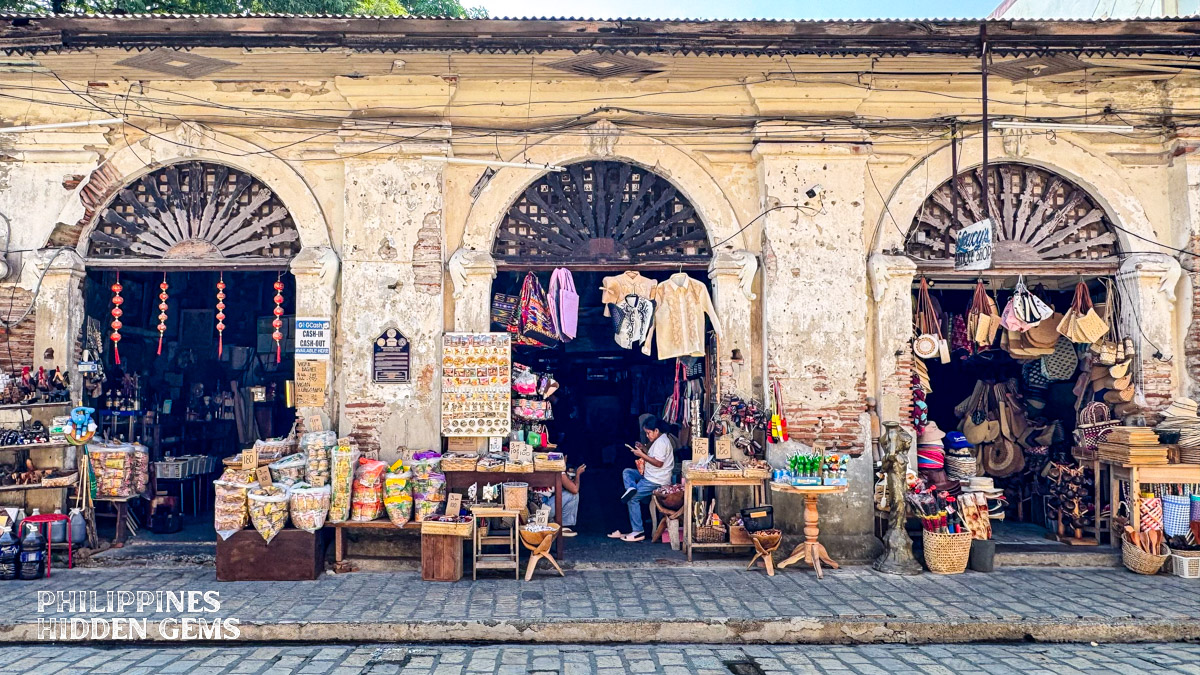
Early morning is when Calle Crisologo is at its quietest. The street is nearly empty, and the shops are just opening up. It’s the best time to get photos without a crowd of tourists in the frame.
By mid-morning to afternoon, the street becomes busier and more energetic. It’s still worth experiencing, especially if you want to shop or grab a bite, but expect to share the sidewalk with a growing crowd.
🌕 Calle Crisologo at Night
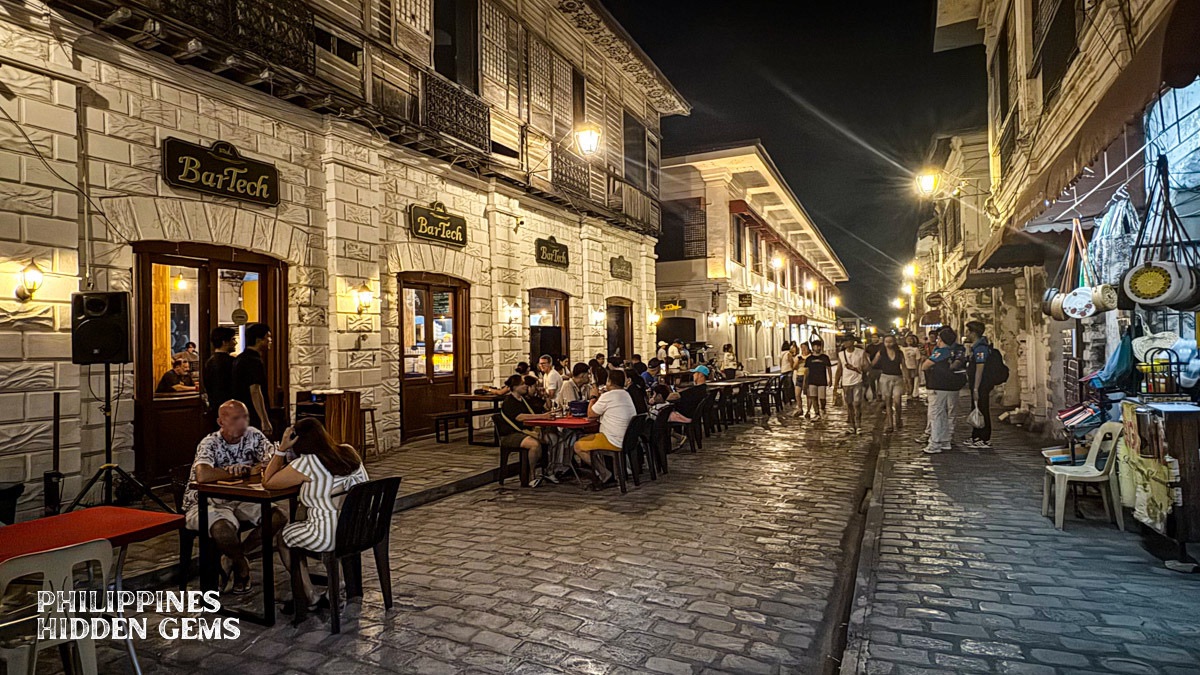
Once the sun sets, Calle Crisologo turns into a completely different street.
The old tungsten lamps come on, some restaurants set up al fresco dining right on the cobblestones, and the whole place fills with people out for dinner.
It’s romantic and the best time for a slow meal or an evening stroll. The street stays lively without ever feeling too crowded or too bright!
🎉 Festivals in Vigan
If you can time your trip around one of these, do it. Vigan City throws four major annual festivals that give a completely different reason to visit.
- Vigan Town Fiesta (Jan. 25): The city’s biggest celebration, held in honor of St. Paul the Apostle, Vigan’s patron saint. It runs for a full week with parades, street dancing, carnival rides, and cultural shows, and overlaps with the city’s cityhood anniversary (Jan. 27), so expect Bigueños flying in from all over the world just to be home for it.
- Vigan Longganisa Festival (Jan.): Held around the same week as the town fiesta. This one’s dedicated entirely to the city’s famous garlicky sausage, with cooking competitions, food fairs, and longganisa-themed parades. Locals have even tried to break the record for the longest longganisa ever made.
- Viva Vigan Binatbatan Festival of the Arts (first week of May): Timed with Vigan’s founding anniversary, this might be the city’s grandest festival. It centers around the region’s weaving heritage, with dancers performing binatbatan (beating cotton pods with bamboo sticks), a kalesa parade, and cultural performances staged right on Calle Crisologo.
- Raniag Vigan Twilight Festival (October): Raniag means “light” in Ilocano, and this festival lives up to the name with glowing float parades, lantern processions, and candle-lighting ceremonies. It’s held close to All Souls’ Day, which adds a quieter, more reflective note to all the visual spectacle.
How to Get to Calle Crisologo

Calle Crisologo sits right in the heart of Vigan’s heritage village. Getting there really just means getting to Vigan first, then covering the short stretch from wherever you’re staying to the street.
🚌 Getting to Vigan
If you’re wondering how to go to Vigan from Manila, the most common route is by land. There’s also a flight option, though you’ll still need to travel by land for the last stretch.
By land, the drive from Cubao takes about 7 hours, and buses from Manila leave from the PITx terminal in Parañaque and the Partas terminal in Cubao at 7:30 PM and 9 PM. Book your bus in advance.
By air, you can fly 1 hour from Manila to Laoag, which is roughly another 2 hours by car or bus to Vigan, depending on traffic.
🚶♀️ Getting to Calle Crisologo from the City Center
Once you’re in Vigan, Calle Crisologo is easy to reach from almost anywhere in the city.
Most heritage hotels and guesthouses are within walking distance of Calle Crisologo, so if you’re staying in the village itself, you can likely just walk over.
If you’re coming from further out, a tricycle is the easiest option, and drivers know the street by name, so you won’t need to give directions.
A kalesa ride works too if you want to ease into the old-town feel before you even step onto the cobblestones.
Where to Stay on and Near Calle Crisologo


If you’re still deciding where to stay in Vigan, you really can’t go wrong sticking with (or close to) Calle Crisologo, since most heritage hotels sit within 1-2 blocks of it.
Here are a few great options across different budgets.
- Hotel Luna (Luxury): This is a restored mansion turned museum hotel that’s one block from Calle Crisologo on General Luna St. Expect artworks by Juan Luna and BenCab in the common areas, a rooftop bar for sunset drinks, and rooms up to 4-star standard, plus an elevator and Japanese toilets, something I definitely didn’t expect to find in a heritage hotel.
- Vigan Plaza Hotel (Mid-Range): Sitting right at the entrance of Calle Crisologo, across Plaza Burgos and Vigan Cathedral, this is the most centrally located option on this list. Rooms range from standard doubles to dormitory-style for bigger groups. There’s also a convenience store and a tricycle and kalesa terminal right outside. My only gripe is there’s no elevator.
- Villa Angela (Budget-Friendly): A block away from Calle Crisologo, this 1873 ancestral home turned country inn is as close to sleeping inside a museum as you’ll get in Vigan. Tom Cruise once stayed here, and the house still has its original furniture and memorabilia on display. Rooms range from doubles to dormitories that fit 10, with complimentary Vigan breakfast included.
Tips for Visiting Calle Crisologo in Vigan
Keep these in mind before you head to Calle Crisologo.
👟 What to wear: Skip the heels, the uneven cobblestones will make quick work of them. Comfortable, flat shoes are your best bet, especially if you’re planning to walk the whole street and beyond. Also, wear long pants or breathable fabric if you’re visiting during peak summer heat.
🎒 What to bring: Bring cash, since not every shop or restaurant takes cards, and a bottle of water if you’re visiting in the heat of the day. Sunblock helps, too, since there isn’t much shade along the street, and a small bag or pouch makes it easier to carry souvenirs as you go.
⌚ How long to spend: The street itself is only 500 meters, so you can walk it in under 30 minutes. But between the shops, museums, and food stops, it’s easy to spend a couple of hours here without noticing, especially if you’re going in the evening when it’s lit up and busier.
🚶♀️ Getting around: Calle Crisologo is pedestrian-only, aside from kalesas, so you’ll be doing most of it on foot. Tricycles and kalesas are both easy to flag down at either end of the street or on parallel streets if you need to get somewhere else in the heritage village.
Conclusion: Calle Crisologo in Vigan
I’d been to Vigan before as a kid, but the first time I came back as an adult, I thought Calle Crisologo would just be a quick stop for photos.
Now, I make a point of coming back every time I’m in Vigan. It’s one of the places that makes the city memorable, and there’s always a new spot or two by the time I’m back.
If you’re building out a full Vigan itinerary, this street is really just the starting point.
Pair it with the rest of Vigan (make sure to visit Vigan City Museum!), and you’ll walk away with a much fuller picture of the city!
🗺️ Travel Resources for Your Ilocos Sur Trip
Planning to visit Vigan or explore the rest of Ilocos Sur? Here are the websites and tools to help you book transportation, hotels, tours, and other travel needs.
How to Get to Ilocos Sur – Book a direct bus from Manila to Vigan through Partas, Farinas Transit, or check routes and prices on 12Go for updated schedules and seat selection.
Where to Book Your Stay – Find colonial-style hotels in Vigan or beachfront stays in towns like Narvacan and Santiago via Booking.com, Agoda, Airbnb, or Vrbo for group stays or unique heritage homes.
Getting Around the Province – Rent a car through Rentalcars.com or Discovercars.com for more freedom, hire tricycles for short town rides, ride a bus or jeepney for long trips within the province, or arrange private vans for group tours through your hotel or local travel agencies.
Book Tours and Activities – Discover Calle Crisologo, Baluarte Zoo, and hidden spots like Pinsal Falls with local guides or book curated tours through Klook, Viator, or GetYourGuide.
Stay Connected – Stay online with an Airalo eSIM, rent pocket WiFi from Klook if you’re traveling with friends, or buy a local SIM from Smart or Globe at convenience stores and terminals in Vigan or nearby cities.
Cash, ATMs, and Payments – Bring pesos for food stalls, tricycles, and small shops, as many places don’t accept cards, and rural areas may have limited ATM access.
Travel Insurance – Protect your trip with flexible coverage from SafetyWing, HeyMondo, or World Nomads, especially if you’re joining outdoor adventures like ziplining or hiking.
Check Out These Recommended Articles:
- Vigan Itinerary: How to Spend 2-3 Days in This Heritage Town
- 11 Top Tourist Spots in Ilocos Sur for Your 2026 Adventure (+3 Awesome Activities To Try!)
- Best Attractions in Vigan: Things to Do & Places to Visit
- Where to Stay in Vigan: 12 Best Hotels for Every Budget
- Looking for a Beach Resort in Vigan City? Read This First
- Best Beaches in Vigan and Nearby
- Pottery in Vigan: A Guide to Burnay Jar Making
- Best Food in Vigan: Must-Try Dishes and Where to Eat
- Best Restaurants in Vigan and Other Great Food Spots

About the Author
Hi! I’m Ellie, a matcha lover, creative, and one of the writers behind Philippines Hidden Gems. I travel to document joys: sights that leave you in awe, a patch of nature that asks for nothing, a meal that surprises you, a new restaurant or cafe worth lingering in, and museums and galleries that slow you down. The Philippines has no shortage of these, and I have a particular soft spot for its culinary scene, local businesses, and the stories behind them!