Best Food in Vigan: Must-Try Dishes and Where to Eat
This article may contain affiliate links. This means we receive a small commission whenever you book or purchase something through our links (at no extra cost to you!). You can find more information in our disclaimer.
Vigan is known for its cobblestone streets and old Spanish colonial town feel.
What most people don’t know is that it is also rich in food. And in this list, I cover the best food in Vigan you might want to try there!
Special Food in Vigan
These are the foods in Vigan that people specifically travel for, especially the first two.
1. Vigan Longganisa

Longganisa is a flavorful sausage of Spanish origin, made from minced pork and various spices.
In the Philippines, most cities, provinces, and regions have their own version, and Vigan’s is one of the most popular.
Vigan longganisa has a distinct garlicky and sour flavor, which comes from locally-grown garlic and sugar cane vinegar. It is also smaller and more tightly packed than other longganisa varieties.
You’ll find it served for breakfast at almost every restaurant and hotel in Vigan, usually with garlic rice and egg. You can also buy a ready-to-cook version in the public market!

Sign up now to grab your FREE guide to 50 hidden gems in the Philippines!
2. Vigan Empanada
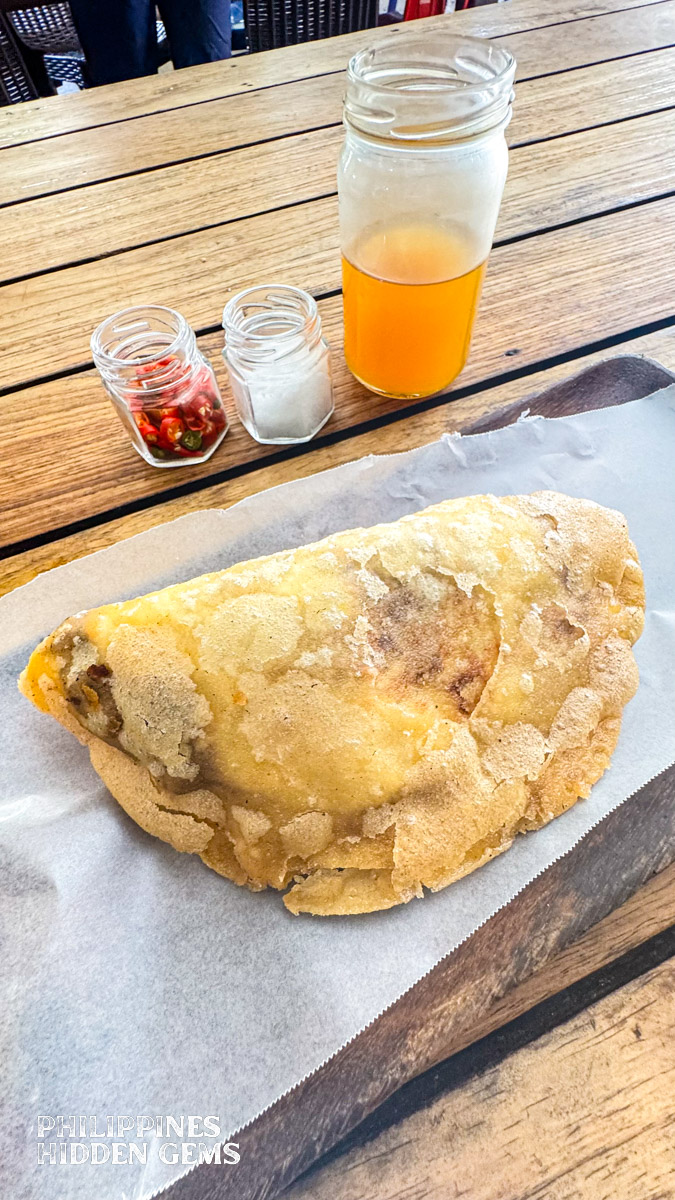
They let you mix your own condiments/sauce.

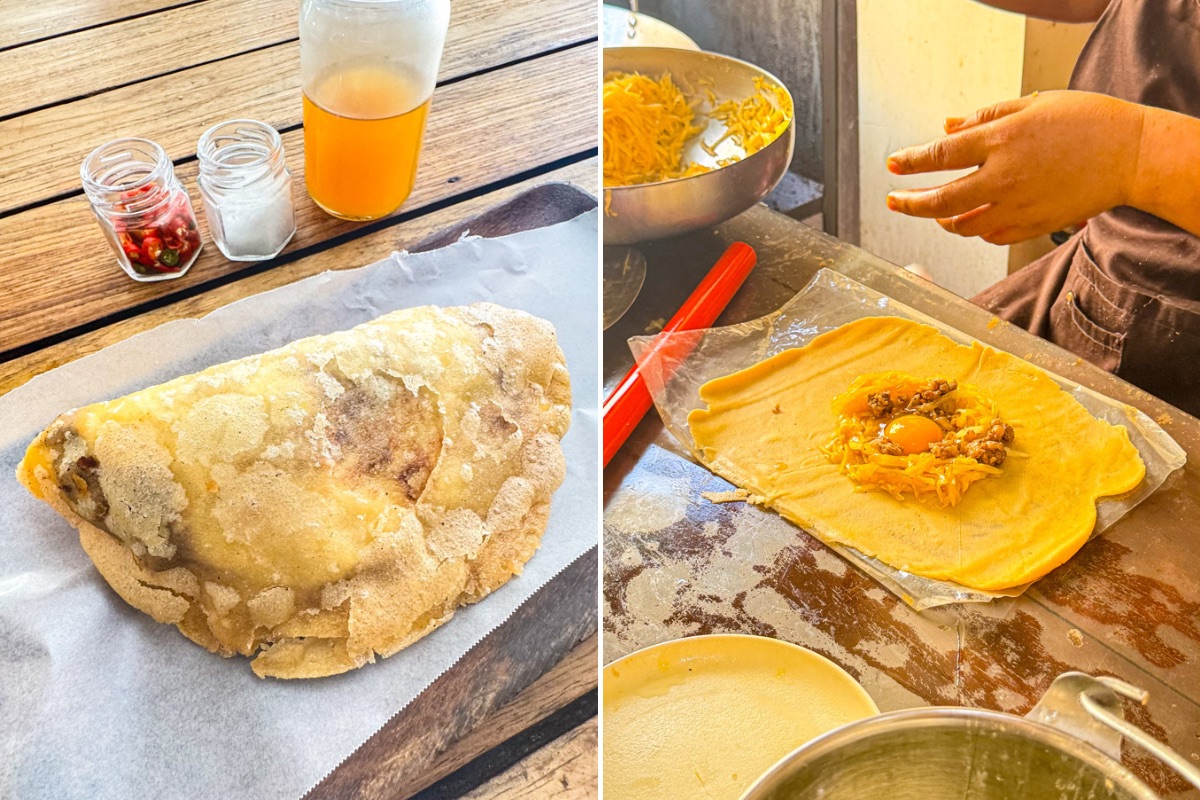
Vigan Empanada might be the most popular food in Vigan. It’s a crescent-shaped, deep-fried shell made from rice flour batter, stuffed with skinless Vigan longganisa, grated green papaya or cabbage, and egg.
The empanada was brought to the Philippines by the Spanish, but Ilocanos made it their own by using rice flour (instead of wheat flour) and filling it with local ingredients like Vigan longganisa and green papaya.
Most people dip it in sukang Iloko (Ilocos vinegar), and every shop has its own version of both the empanada and the dip. So, each stop is a different experience.
What I love about Vigan empanada is how every bite gives you a crunch from the outer shell and a savory filling. Add in some sourness if you’re having it with sukang Iloko!
You’ll find empanada in Vigan in stalls and restaurants all over the city.
Casa Jardin and Irene’s are the two spots most people swear by, and they’ve become some of the best attractions in Vigan in their own right, but I lean more toward the former.
Depending on where you buy, you can customize your order by choosing how much longganisa, vegetables, and egg you want, from none at all up to three times the portion.
3. Bagnet
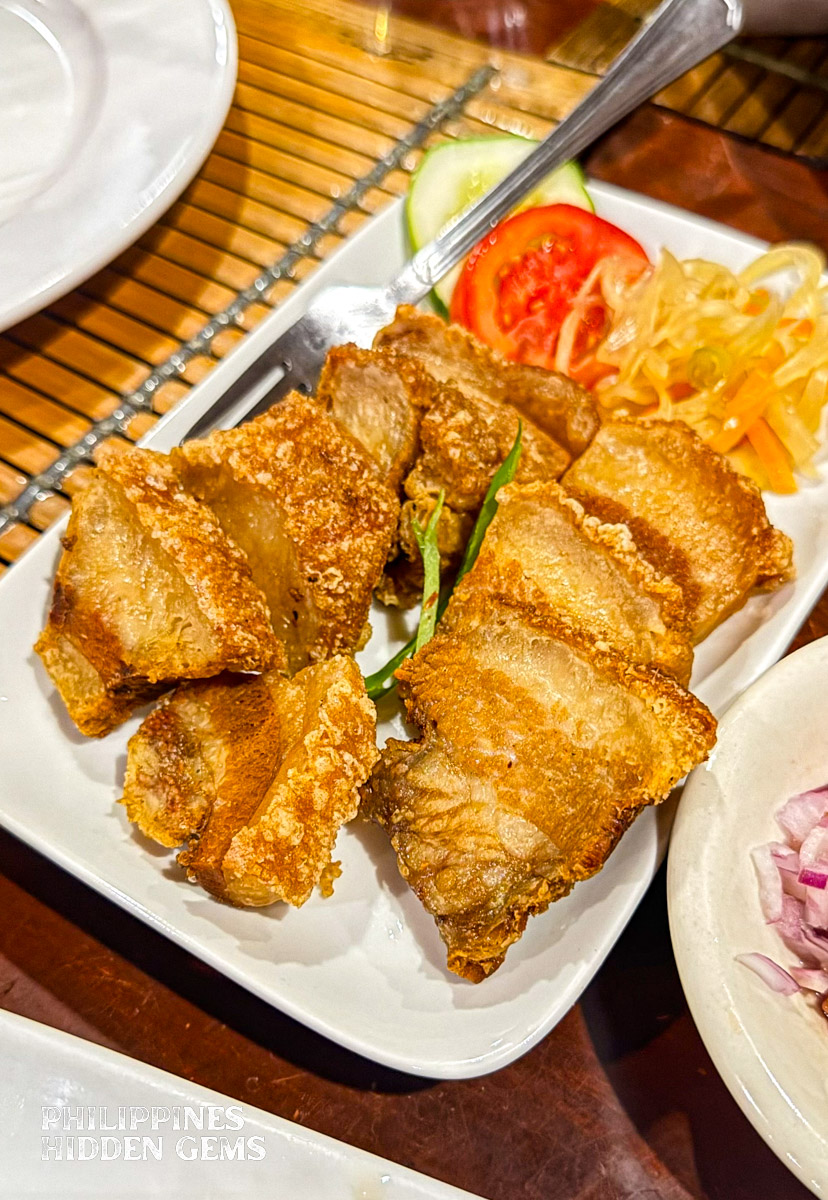
Bagnet is an Ilocano dish of pork belly that has been boiled, sun-dried, then deep-fried. It’s a straightforward dish, but when it’s done right, it’s so good it’ll make you close your eyes.
Perfectly fried crispy pork skin with tender meat and chewy fat all in one bite? Yes! More, please!
You can have it with rice, sometimes dipped in sukang Iloko, or paired with a dipping sauce of tomatoes, fermented fish paste, and onion.
It also sometimes serves as the protein topping in pinakbet, a vegetable dish I’ll get to later.
You can find bagnet in many Vigan restaurants, and if you want to bring some home, you can also find it at the public market.
4. Bibingka


Not gonna lie, when I first encountered Vigan bibingka many years ago, it was not what I expected at all.
As someone from the Greater Manila Area, the bibingka I grew up having is traditionally fluffy and cake-like. But that’s not saying Vigan bibingka is less delicious!
Vigan’s version is officially called Royal Bibingka. Unlike the traditional bibingka cooked over charcoal in banana leaves, this one is baked in the oven in cupcake-sized molds.
Made of glutinous rice flour, coconut milk, eggs, sugar, and milk, it’s a dense, chewy, and sticky rice cake, topped with grated or melted cheese. Something similar to mochi or cassava cake.
Bibingka from Vigan is a common pasalubong item you can buy in various shops, but Tongson’s and Marsha’s are the most popular ones!
📢 Join the community! Make sure you join our Philippines Hidden Gems – Travel Community. This is the place to ask any questions about your trip, to be inspired, and to connect with other Philippines travelers. Click here to join!
5. Tinubong
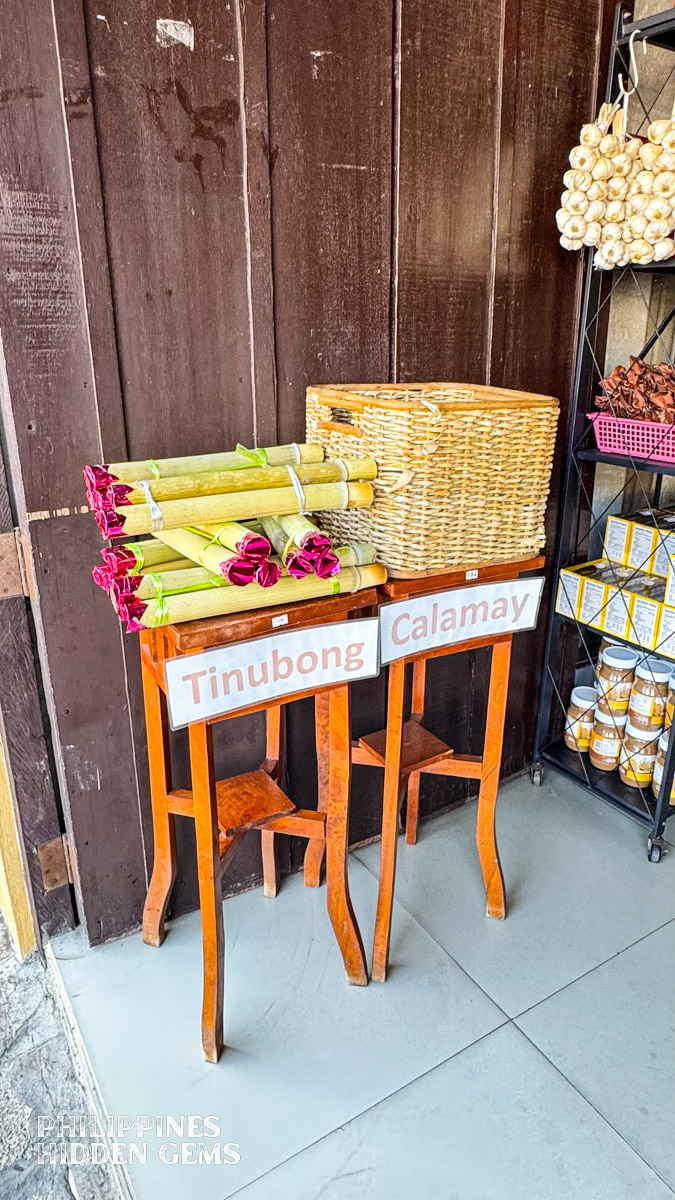
Tinubong is a sweet rice delicacy from Ilocos, cooked inside a bamboo tube called tubo, which is where it gets its name (literally “placed in a tube.”)
It’s made by stuffing a mix of glutinous rice flour, coconut milk, sugar, and shredded coconut into the bamboo tube, then grilling it over charcoal until cooked, but not burnt.
Once it’s ready, you crack the bamboo open, either by beating it or splitting it with a knife, to get to the rice cake inside. Then you get a sweet, sticky, moist rice cake that’s impossible to stop eating.
You can find tinubong in souvenir shops and markets, usually sold in bundles since one is never enough. Trust me on this.
Must-Try Ilocano Dishes in Vigan
These dishes aren’t unique to Vigan, but you’ll find some of the best versions of them here.
Ilocano food leans bold and bitter, and usually uses every part of the animal. So, the best way to approach it is to come hungry and a little open-minded!
6. Poqui-Poqui

Poqui-Poqui is a classic Ilocano dish made of eggplant that was smashed, grilled, and then sauteed with aromatics like garlic, onions, and tomatoes, and scrambled egg.
The funny name is believed to come from “poki,” a Hawaiian word for “cut up” or “mash,” brought back by Ilocano workers who migrated to Hawaii’s sugarcane and pineapple plantations in the early 20th century.
Poqui-Poqui is soft, creamy, and savory, and often seasoned with fish sauce, salt, and pepper.
You can find it in Vigan restaurants and eateries, but my favorite place to have it is in Kusina Felicitas!
7. Sinanglao

I love soup, even though I’m from a tropical country where it doesn’t always make sense to crave something hot. But I’ll admit, soup made of innards like sinanglao took me a bit more courage to try.
Sinanglao (or sinanglaw) is a hearty, traditional soup from the Ilocos region.
It’s made of beef innards like tripe and intestines, flavored with beef bile and kamias (sour fruit with a cucumber-like texture) that give it a bitter and sour kick. It also has bits of onion that add a crunch.
Since it’s made of innards, expect it to be very affordable.
I got adventurous and tried it at First Sinanglaoan, which locals say is the best. It’s hearty, comforting, and best paired with rice!
8. Pinakbet

Pinakbet is an Ilocos vegetable medley dish. Its name comes from the word pinakebbet, which means “shrunk.” This refers to how the vegetables shrink after being simmered in a claypot.
The mix of vegetables can be anything that’s grown in the backyard. What’s usually used are bitter melon, eggplant, okra, string beans, and squash. This mix is flavored with fish bagoong (fermented fish paste).
It’s savory and earthy with a mix of sweetness and bitterness, depending on the vegetable included.
Over time, the dish spread out across the country, and its variations emerged!
You can find it in most Vigan restaurants and eateries.
9. Dinengdeng
Dinengdeng (also called inabraw) is an Ilocano vegetable soup. Everything is simmered in a light broth flavored with fermented anchovy paste.
The name comes from idengdeng, an Ilocano word for “to strain,” which refers to how the fermented fish sauce gets strained before it’s added to the broth.
What’s in the soup depends on the season or what’s available in the backyard. You’ll usually find eggplant, okra, string beans, squash, bitter melon, and malunggay leaves.
People often confuse dinengdeng with pinakbet, but the former is brothier and simpler, typically served with grilled or fried fish on the side instead of mixed in.
You’ll find it in local restaurants and home kitchens around Vigan.
10. Warek-Warek
Warek-Warek (also called dinakdakan) is an Ilocano dish of grilled pork parts, usually ears, jowls, and liver, chopped up and tossed with onions, ginger, chili, and calamansi (a native Philippine citrus) juice.
The name comes from the Ilocano word for “to mix vigorously,” which refers to how everything gets tossed together at the end.
What makes warek-warek stand out is the creamy dressing, traditionally made from mashed pig’s brain, though mayonnaise is the more common substitute these days.
It’s tangy, savory, and slightly smoky from the grilling.
You can find warek-warek at local restaurants and eateries.
11. Pipian
Pipian might be the most unique dish on this list. It’s a Mexican-inspired chicken stew that found its way to Vigan through the Manila-Acapulco galleon trade in the 16th century.
It’s made with chicken, ground toasted rice (which gives it that thick, almost porridge-like texture), achuete for color, and kamias for a sour kick.
But what really sets it apart is epazote (locally called pasotes), a Mexican herb that, for some reason, only grows in Ilocos Sur.
The result is tangy and a little medicinal-smelling, which takes some getting used to.
You can try pipian at some Vigan restaurants like Kusina Felicitas and Café Bigaa.
Bonus: Worth Trying While You’re Here
These last few aren’t traditional Ilocano dishes, but they’re worth squeezing in if you have the time and the appetite for it.
12. Avocado Ice Cream at Vangie, Calle Crisologo
![A standing word figure that says I [heart] Vigan" and a hand that holds a cone of avocado ice cream.](https://philippineshiddengems.com/wp-content/uploads/2026/07/vigan-ilocos-sur-ellie-7.jpg)

Vangie is a “dirty ice cream” cart on Calle Crisologo, and despite the name, it’s nothing to be alarmed about.
Filipino dirty ice cream (sorbetes) earned its nickname simply because it’s sold by street vendors instead of commercial shop.
The name stuck as a joke, but it’s just hand-churned ice cream made with coconut or carabao milk (instead of cow’s milk and eggs) that gives it that slightly different, denser texture from regular ice cream.
Vangie is like any other dirty ice cream cart, but it’s a unique part of the Calle Crisologo experience. It’s also a great way to cool off after walking around in the heat if you’re visiting in the summer.
Avocado is one of their go-to flavors, and unlike in the West, where avocado is mostly a savory thing (hello, avocado toast), Filipinos have always treated it as a dessert fruit or drink, usually with sugar and milk.
If you’ve never had avocado ice cream before, it’s worth trying at least once. It’s creamy and mildly sweet!
13. Leche Flan at Marsha’s at 1995 Studio and Cafe

Leche flan is a Filipino dessert with Spanish roots, made from egg yolks, condensed milk, and a layer of caramelized sugar on top.
It’s dense, creamy, and sweet, with a jiggly texture that melts in your mouth.
Marsha’s, located inside 1995 Studio and Cafe, is one of Vigan’s go-to spots for it.
They’re better known as a pasalubong shop for Ilocano delicacies like Royal Bibingka, but their leche flan consistently gets called out as a favorite by regulars.
It’s a great stop if you’re already at the cafe for coffee or a meal and want something sweet to end it.
14. Coffee at Amian Cafe


Amian Cafe sits right on Calle Crisologo, and the name comes from the local word for “northern wind.”
It’s one of the newer cafes in Vigan, having opened in 2023, but it’s quickly become one of the most recommended coffee stops in the city.
Their specialty is Kahel, their orange coffee (kahel means “orange”), made with locally sourced beans grown in Ilocos.
The drink adds a layer of authenticity to the whole coffee experience, since the beans are sourced directly from farmers in the region rather than imported.
The first time I tried it, I had it inside the cafe, and had to order another cup for takeaway before I left!
15. Igado at Kusina Felicitas
Igado is an Ilocano dish made of pork liver and tenderloin simmered in soy sauce and vinegar, with carrots, bell peppers, and green peas.
The name comes from higado, the Spanish word for liver, which makes sense because the dish leans into that flavor.
People often compare it to menudo, but where menudo leans tomato-based, igado is tangier and saltier from the soy-vinegar combo.
It’s not exclusive to Vigan, but it’s still very Ilocano, and you’ll find it at Kusina Felicitas.
16. Pinakbet Pizza at Cafe Leona

Cafe Leona started offering native-inspired pizzas almost 20 years ago, and pinakbet pizza is by far their most popular one.
It’s topped with the same vegetables you’d find in a regular pinakbet, cooked in bagoong and finished with mozzarella cheese.
The bagoong adds an umami depth that plays well with the cheese, and the vegetables keep it from feeling too heavy.
It’s an only-in-Vigan dish worth trying, even if you’re skeptical going in.
Cafe Leona is one of the most popular restaurants in Vigan, so much so that it’s considered one of the top tourist spots in Ilocos Sur.
Conclusion: Food in Vigan
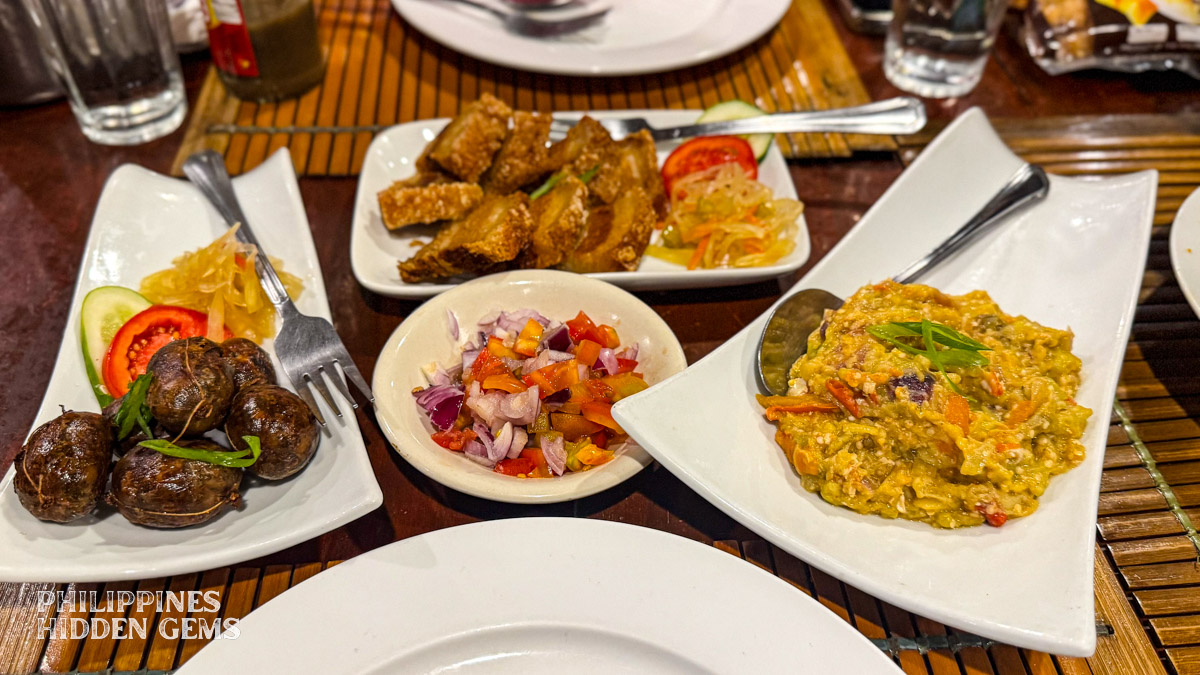
There’s a lot of the best food in Vigan worth trying. Some dishes will surprise you. Some might take a bit of courage.
But that’s part of what makes eating your way through Vigan so fun!
🗺️ Travel Resources for Your Ilocos Sur Trip
Planning to visit Vigan or explore the rest of Ilocos Sur? Here are the websites and tools to help you book transportation, hotels, tours, and other travel needs.
How to Get to Ilocos Sur – Book a direct bus from Manila to Vigan through Partas, Farinas Transit, or check routes and prices on 12Go for updated schedules and seat selection.
Where to Book Your Stay – Find colonial-style hotels in Vigan or beachfront stays in towns like Narvacan and Santiago via Booking.com, Agoda, Airbnb, or Vrbo for group stays or unique heritage homes.
Getting Around the Province – Rent a car through Rentalcars.com or Discovercars.com for more freedom, hire tricycles for short town rides, ride a bus or jeepney for long trips within the province, or arrange private vans for group tours through your hotel or local travel agencies.
Book Tours and Activities – Discover Calle Crisologo, Baluarte Zoo, and hidden spots like Pinsal Falls with local guides or book curated tours through Klook, Viator, or GetYourGuide.
Stay Connected – Stay online with an Airalo eSIM, rent pocket WiFi from Klook if you’re traveling with friends, or buy a local SIM from Smart or Globe at convenience stores and terminals in Vigan or nearby cities.
Cash, ATMs, and Payments – Bring pesos for food stalls, tricycles, and small shops, as many places don’t accept cards, and rural areas may have limited ATM access.
Travel Insurance – Protect your trip with flexible coverage from SafetyWing, HeyMondo, or World Nomads, especially if you’re joining outdoor adventures like ziplining or hiking.
Check Out These Recommended Articles:
- Where to Eat the Best Empanada in Vigan
- Best Restaurants in Vigan and Other Great Food Spots
- Best Attractions in Vigan: Things to Do & Places to Visit
- Vigan Itinerary: How to Spend 2-3 Days in This Heritage Town
- Where to Stay in Vigan: 12 Best Hotels for Every Budget

About the Author
Hi! I’m Ellie, a matcha lover, creative, and one of the writers behind Philippines Hidden Gems. I travel to document joys: sights that leave you in awe, a patch of nature that asks for nothing, a meal that surprises you, a new restaurant or cafe worth lingering in, and museums and galleries that slow you down. The Philippines has no shortage of these, and I have a particular soft spot for its culinary scene, local businesses, and the stories behind them!